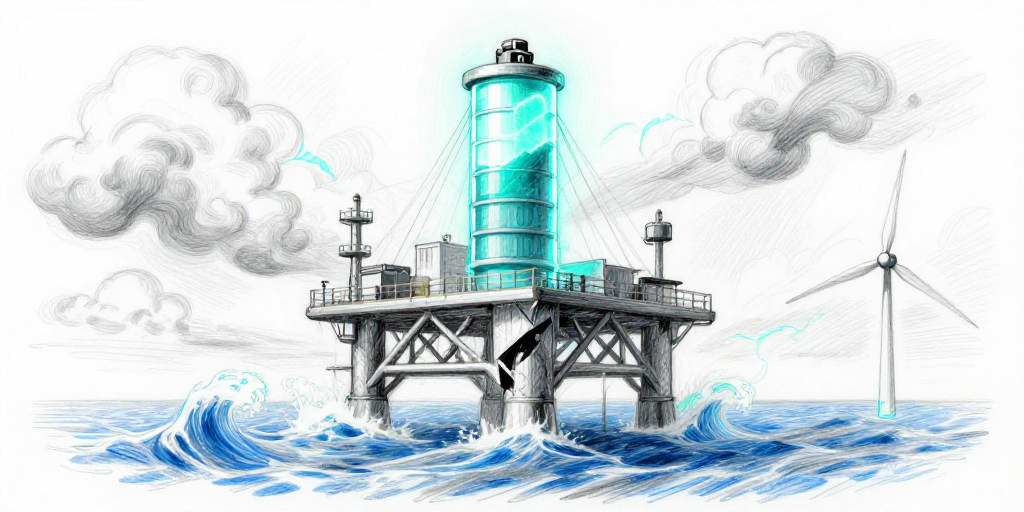
Energy Markets: Production, Storage, and Regulatory Dynamics in 2026
The global energy landscape in early 2026 is characterized by a delicate balance between traditional hydrocarbons and the accelerating deployment of renewable technologies. Production volumes remain a critical lever for supply, while storage infrastructure and regulatory frameworks shape how markets respond to supply shocks and policy shifts. This article examines the technical and economic factors influencing both sectors and contextualizes them within prevailing geopolitical developments.
Production Outlook
Conventional Energy
Oil and natural gas producers are navigating a gradual decline in output in many established basins. Technological advances in hydraulic fracturing and horizontal drilling have extended the productive life of mature fields, yet the marginal cost of extraction continues to climb as reserves dwindle. In North America, the U.S. Energy Information Administration projects a modest 2–3 % growth in conventional production for 2026, driven primarily by North Dakota and the Permian Basin. In contrast, emerging markets in the Middle East and Africa are investing heavily in new offshore and onshore projects, supported by sovereign wealth funds that aim to diversify their energy portfolios.
Renewable Energy
Wind and solar installations have outpaced global expectations, with cumulative capacity additions of 30 GW in 2025 and a projected 35 GW in 2026. The cost of photovoltaic modules and wind turbines has fallen by 15–20 % year over year, thanks to economies of scale and supply‑chain efficiencies. Battery storage capacities are expanding at a CAGR of 25 %, enabling utilities to smooth intermittent renewable output and provide ancillary services to the grid. However, the pace of deployment is constrained by land‑use conflicts, permitting bottlenecks, and the need for upgraded transmission infrastructure.
Storage Dynamics
Energy storage has become a pivotal component of market stability. In the natural gas sector, liquefied natural gas (LNG) terminals and underground storage facilities in the U.S., Russia, and Qatar are expanding to mitigate seasonal demand spikes. Storage capacity in the U.S. is expected to increase by 12 % in 2026, largely driven by new projects in the Midwest.
In the electricity domain, large‑scale battery farms are altering market dynamics by providing frequency regulation, spinning reserve, and capacity markets. The integration of batteries with renewable generation sites reduces curtailment and improves return on investment for renewable developers. Moreover, emerging technologies such as flow batteries and solid‑state storage promise further cost reductions and longer cycle life, potentially reshaping the storage cost curve in the next decade.
Regulatory Environment
Regulatory frameworks continue to evolve at a brisk pace, reflecting policy priorities around decarbonization, energy security, and market competitiveness.
Carbon Pricing: Several jurisdictions have implemented or expanded carbon pricing mechanisms. The European Union’s Emissions Trading System (EU ETS) is tightening its allowance supply curve, while the United States has seen a rise in state‑level carbon taxes in California and New York. These measures are incentivizing the adoption of low‑carbon technologies and accelerating the de‑commissioning of high‑emission assets.
Grid Modernization: The U.S. Federal Energy Regulatory Commission (FERC) has issued orders encouraging the deployment of distributed energy resources (DERs) and smart grid solutions. Similar initiatives are underway in Australia and Canada, aiming to improve grid resilience and facilitate the integration of variable renewable generation.
Export Controls: Geopolitical tensions, particularly between the United States and China, have led to stricter export controls on advanced drilling equipment, semiconductor technology, and battery materials. These restrictions are prompting producers to diversify their supply chains and seek alternative sourcing in Europe and Southeast Asia.
Technical and Economic Factors
Cost Competitiveness
The levelized cost of electricity (LCOE) for onshore wind has fallen below that of new coal plants in many regions, making wind a cost‑effective option for utilities. Similarly, the levelized cost of electricity for solar photovoltaic (PV) installations has dipped below 6 ¢/kWh in the U.S. and 7 ¢/kWh in India. These cost reductions are accelerating renewable penetration, particularly in emerging markets with high solar insolation and wind corridors.
In the oil and gas sector, the breakeven price for many shale plays has slipped below $55/barrel, driven by improved drilling efficiency and lower operating costs. However, the volatility of crude prices and the increasing influence of environmental, social, and governance (ESG) criteria are exerting pressure on investment decisions.
Technological Innovation
Advancements in digital twin modeling, artificial intelligence, and real‑time data analytics are revolutionizing field development and asset management. Predictive maintenance tools reduce downtime, while autonomous drilling systems enhance safety and cost efficiency. In the renewable sector, floating offshore wind platforms and airborne wind energy technologies are expanding the geographic footprint of clean power generation.
Geopolitical Considerations
Geopolitical dynamics continue to shape energy markets in several ways:
Sustainability of Supply: The U.S.–Russia energy relationship remains fraught, with sanctions on Russian gas impacting European markets and prompting a shift toward liquefied natural gas and domestic production.
Energy Security: Countries in the Middle East are diversifying their energy mix to reduce dependence on hydrocarbon revenues. Saudi Arabia’s Vision 2030 includes significant investments in renewables and carbon capture.
Trade Wars and Technology Transfer: Trade disputes between major economies have led to technology transfer restrictions, particularly in semiconductor manufacturing and battery chemistries. This has accelerated regional manufacturing initiatives in Europe and Asia.
Climate Agreements: The Paris Agreement commitments are driving policy changes at national levels, encouraging governments to implement renewable targets and phase‑out subsidies for fossil fuels.
Insider Activity and Market Sentiment
Recent insider transactions provide a window into executive confidence and can influence market perceptions. On February 17, 2026, Chief Operating Officer Morin Sebastien purchased 544 shares of Gran Tierra Energy Inc. (TSX: GTI) through the company’s Employee Stock Purchase Plan (ESPP) at $5.61 per share—substantially below the market close of $8.06. The transaction is exempt from Rule 16(b)(3) restrictions, allowing immediate trading.
This purchase aligns with a broader trend of executive buying at discounted prices, reflecting a long‑term commitment to the company’s strategy. The COO’s cumulative holdings, now exceeding 31,600 shares, represent approximately 0.011 % of GTI’s market capitalization. Combined with concurrent purchases by the CEO and other executives, the insider activity signals managerial endorsement of recent strategic moves, notably the onshore partnership in Azerbaijan that could unlock new production upside.
While the absolute volume of these trades is modest relative to the company’s total shares outstanding, their timing—mid‑month following earnings announcements—suggests a measured response to corporate developments rather than reactive speculation. For investors, consistent insider buying at discount prices can serve as a bullish barometer, indicating alignment of interests between management and shareholders.
Conclusion
The energy sector in 2026 is at a crossroads where traditional production must coexist with an accelerating renewable transition. Production and storage capabilities, underpinned by robust regulatory frameworks and technological innovation, are reshaping market dynamics. Geopolitical tensions and climate commitments continue to influence supply chains and policy directions. Within this macro backdrop, insider transactions such as those seen at Gran Tierra Energy provide nuanced insights into executive confidence and can inform investment decisions, albeit within the broader context of market fundamentals and regulatory evolution.