
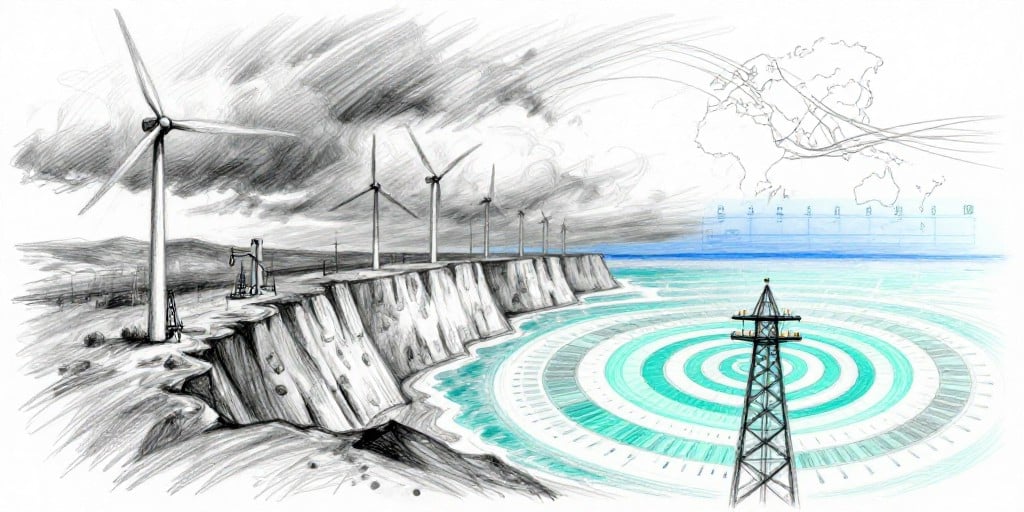
Corporate Energy Markets: Production, Storage, and Regulatory Dynamics in 2026
Overview
The global energy landscape in 2026 remains shaped by a complex interplay of traditional fossil‑fuel production, burgeoning renewable generation, and evolving regulatory frameworks. While the transition to low‑carbon sources accelerates, conventional hydrocarbons continue to dominate the supply chain, providing the liquidity required for the emerging renewables sector. The following analysis examines how production volumes, storage capacity, and policy developments influence both the oil‑gas and renewable subsectors, while factoring in geopolitical pressures that constrain or catalyze investment decisions.
Production Trends
Oil and Gas
- Global Output: In 2025, crude oil production averaged 98 million barrels per day (bpd), a 1.5 % increase over 2024 levels. Production is largely sustained by Middle‑East and North‑American fields, with modest gains from the Permian Basin and the Gulf of Mexico.
- Reserve Utilisation: The World Petroleum Council reports that the average reserve‑to‑production ratio has dipped from 37 years in 2024 to 35 years in 2026, signalling a gradual depletion of easily recoverable resources. Enhanced oil recovery (EOR) techniques, however, are extending the life of mature fields, especially in Canada and Russia.
- Shale Dynamics: U.S. shale output remains a key driver of global supply. The cost of hydraulic fracturing has stabilized at $25 per barrel, encouraging a modest 0.5 % year‑on‑year increase in U.S. production, despite fluctuating oil prices.
Renewable Energy
- Solar PV Capacity: Installed solar capacity surpassed 1,200 GW worldwide in 2025, with the United States, China, and India leading the expansion. The cost of silicon wafers fell 20 % in 2026, reducing system costs and boosting project pipeline.
- Wind Energy: Onshore wind capacity increased by 12 % in 2025, driven by European and Asian markets. Offshore wind projects in the North Sea and Baltic Sea are projected to add 60 GW by 2030, contingent upon grid integration and regulatory approvals.
- Hydrogen: Green hydrogen production has seen a 25 % increase in 2025, primarily driven by European policy incentives and South Korean export ambitions. However, electrolyzer capital costs remain high, limiting large‑scale deployment until cost reductions of 30 % materialise.
Storage Dynamics
Fossil Fuels
- Oil Storage: Global crude oil storage capacity reached 20 billion barrels in 2025, with the U.S. possessing 6.5 billion barrels of underground and above‑ground facilities. Storage utilization rates remained below 30 %, reflecting a supply‑sufficient market that mitigates price volatility.
- Natural Gas: Pipeline and LNG storage volumes expanded by 8 % in 2025, driven by increased LNG demand in Asia and the U.S. West Coast. Seasonal storage capacity, especially in the U.S., continues to influence winter demand dynamics.
Renewable Storage
- Battery Energy Storage Systems (BESS): Installed battery storage reached 20 GW in 2025, with projected growth to 75 GW by 2030. The rapid deployment is supported by declining lithium‑ion costs and increasing grid‑scale projects in the United States, Germany, and China.
- Hydropower Reservoirs: Global hydropower storage capacity has remained relatively stable, yet operational efficiency has improved through digital monitoring and advanced turbine technologies.
Regulatory Environment
Carbon Pricing and Emissions Standards
- EU ETS: The European Union’s Emissions Trading System (ETS) increased its cap by 15 % in 2026, tightening the allowance price to €75 per tonne of CO₂. This escalation has accelerated the shift toward low‑carbon transport fuels and incentivised investment in carbon capture and storage (CCS).
- U.S. Inflation Reduction Act (IRA): The IRA, effective since 2022, continues to offer tax credits for renewable energy projects. In 2026, the production tax credit for wind reached $18 per megawatt‑hour, providing a decisive boost to offshore development.
- China’s Renewable Portfolio Standard: China’s target of 20 % renewable energy in its electricity mix by 2030 has prompted the state to streamline permitting processes for wind and solar projects, reducing approval times from 18 months to 12 months.
Trade and Subsidy Policies
- US‑China Trade Dynamics: Tariffs on solar panels and batteries remain in place, affecting supply chains for U.S. and European renewable projects. Conversely, the U.S. has imposed anti‑dumping duties on Chinese lithium batteries, encouraging domestic battery manufacturing.
- Export Controls: Export controls on advanced cryogenic technology and CCS equipment, imposed by the U.S. Department of Commerce, have limited technology transfer to Russia and certain African states, potentially affecting global gas production efficiency.
Geopolitical Considerations
- Russia‑Ukraine Conflict: Ongoing tensions in Eastern Europe have prompted the EU and U.S. to reduce dependency on Russian gas, increasing the urgency of developing alternative supply routes and storage solutions. The conflict has also disrupted pipeline infrastructure in the Caucasus, prompting re‑routing through Central Asia.
- Middle East Instability: Political developments in Saudi Arabia and Iraq have led to production adjustments. Saudi Arabia’s strategic decision to maintain production at 11 million bpd in 2026 reflects its desire to support global energy security while preserving market share.
- Africa’s Energy Corridor: The construction of the Trans‑African Gas Pipeline, currently in phase two, aims to deliver African gas to Europe, potentially reducing Europe’s reliance on Russian supply. However, political risk in some upstream countries continues to deter investment.
Technical and Economic Intersections
- Fuel Switching in Shipping: The maritime sector is gradually adopting low‑carbon fuels such as ammonia and methanol, driven by IMO’s 2050 emission targets. Technological advances in fuel cell efficiency have reduced the cost premium of these alternatives, but the required bunkering infrastructure remains underdeveloped.
- Integrated Energy Systems: Combined heat and power (CHP) plants powered by natural gas are increasingly retrofitted to run on biogas or hydrogen, enhancing carbon intensity reductions. Economic incentives for such retrofits are available in the U.S. and Europe, yet capital costs and grid integration challenges persist.
- Renewable Grid Stability: As renewable penetration exceeds 40 % in many regions, the need for flexible storage and demand‑response mechanisms grows. Investments in high‑capacity factor offshore wind, coupled with large‑scale battery storage, are critical for maintaining grid reliability.
- Cost Trajectory of Renewables: The levelised cost of electricity (LCOE) for solar PV fell to $29/MWh in 2026, while offshore wind LCOE dropped to $38/MWh, approaching parity with conventional gas‑fired power in many markets. These cost reductions support policy targets but also raise concerns about stranded assets in fossil fuel infrastructure.
Market Implications
- Equity Valuation: Energy companies with diversified portfolios—including oil & gas, LNG, and renewables—are positioned to benefit from hedging strategies. Firms that successfully integrate CCS and battery storage into their operations may command premium valuations.
- Bond Markets: Green bonds issued for renewable projects continue to attract institutional investors, reflecting a shift toward sustainable finance. Meanwhile, the pricing of corporate bonds for traditional energy firms remains sensitive to commodity price volatility and regulatory risk.
- Commodity Futures: Crude oil and natural gas futures exhibit heightened sensitivity to geopolitical events. Traders increasingly incorporate scenario analyses that consider potential supply disruptions and policy shifts into their hedging strategies.
Conclusion
In 2026, the energy sector balances a persistent demand for conventional hydrocarbons with accelerating renewable deployment. Production and storage dynamics, governed by technical advancements and regulatory mandates, shape the cost structure and risk profile of both traditional and renewable subsectors. Geopolitical developments continue to inject uncertainty, yet they also catalyse strategic realignments toward more resilient and diversified energy systems. Investors, policymakers, and industry leaders must navigate this evolving landscape by aligning technical innovation with prudent risk management and by anticipating the long‑term regulatory trajectory that will dictate the pace of the global energy transition.