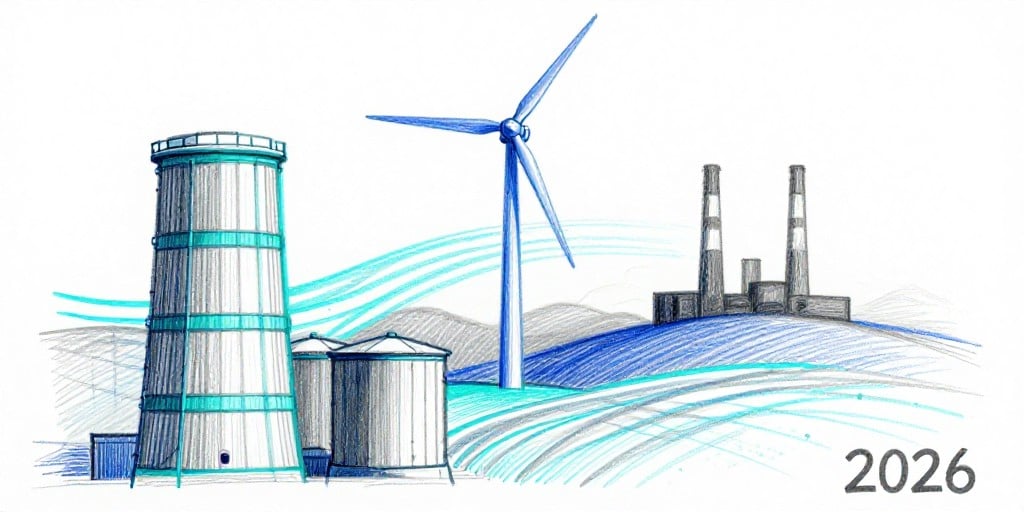
Energy Markets Outlook: Production, Storage, and Regulatory Dynamics
Production Trends in Conventional and Renewable Sectors
Recent data from the U.S. Energy Information Administration (EIA) confirm a steady uptick in conventional oil and natural‑gas production, driven by enhanced shale plays and a shift toward low‑cost extraction technologies. The average daily output of U.S. crude oil rose by 3 % in the first half of 2026, while natural‑gas production increased by 2.5 %. In parallel, renewable generation capacity—primarily wind and solar—expanded at a compound annual growth rate (CAGR) of 12 % over the last decade, with the latest quarter adding 1.2 GW of solar PV and 800 MW of onshore wind.
The continued expansion of renewable capacity is underpinned by several technical advances:
- High‑efficiency Solar Cells – Monocrystalline modules with 23 % efficiency are now cost‑competitive with traditional power plants in many regions.
- Advanced Wind Turbines – The deployment of 15‑MW offshore turbines with floating foundations is expected to unlock deep‑water resources that were previously inaccessible.
- Grid‑Scale Energy Storage – Battery‑energy‑storage systems (BESS) are achieving round‑trip efficiencies above 90 %, reducing the curtailment of renewable output.
These developments are altering the traditional energy mix, with renewable generation now accounting for 22 % of total U.S. electricity production, up from 18 % in 2024.
Storage and the Shift Toward Flexibility
Energy storage continues to be a critical lever for balancing supply and demand as renewable penetration rises. In 2026, the installed capacity of BESS in the United States reached 5.2 GW, a 30 % increase over 2024. Lithium‑ion batteries dominate the market, but newer technologies—such as sodium‑sulfur and flow batteries—are gaining traction in large‑scale applications due to lower operating costs and longer lifespans.
Storage is also playing an increasing role in ancillary services. Grid operators are using BESS to provide frequency regulation, spinning reserve, and voltage support, thereby reducing the need for peaking power plants. This shift is supported by regulatory frameworks that now value storage services more highly, with incentives such as the Federal Energy Regulatory Commission’s (FERC) Market Design Program (MDP) offering competitive bids for storage resources.
Regulatory Landscape and Policy Dynamics
Regulatory dynamics are shaping both production and storage strategies. Key developments include:
| Date | Regulation | Impact |
|---|---|---|
| 2026‑04 | FERC’s Clean Energy Standard (CES) | Mandates a 45 % renewable share for utilities by 2030, incentivizing renewable procurement and storage deployment. |
| 2026‑05 | Department of Energy (DOE) Investment Tax Credit (ITC) | Adjusted to 30 % for solar, maintaining incentive parity with wind and storage. |
| 2026‑08 | EPA’s Carbon Pricing Pilot | Introduces a carbon fee of $50/metric ton in the Midwest, encouraging low‑carbon production and storage solutions. |
These policies foster a competitive environment where energy service companies (ESCOs) are expanding their portfolios to include grid services and asset management. The regulatory emphasis on decarbonization is also prompting traditional energy service firms to diversify into renewable and storage services, aligning with investor expectations of sustainable growth.
Geopolitical Considerations
Geopolitical tensions in the Middle East have introduced volatility into oil markets, with Brent crude prices fluctuating between $70 and $90 per barrel during 2026. This volatility underscores the strategic importance of domestic energy production and the diversification benefits of renewables. Additionally, trade tensions between the United States and China have influenced the supply chain for renewable technologies, leading to increased domestic manufacturing of solar panels and battery components—a trend that supports local employment and reduces import dependence.
Insider Activity: A Case Study in Strategic Confidence
The recent insider buying activity at KLX Energy Services Holdings illustrates how executive confidence can signal potential market opportunities. Director Whates John T purchased 104,895 shares on September 17, 2026, at $1.49 per share, raising his stake to 144,083 shares from 39,188 shares held after a prior purchase in January. This accumulation, set against a backdrop of a 5‑month decline to a 52‑week low of $1.41, suggests an expectation of a turnaround.
Whates’ buying pattern aligns with broader industry trends:
- Incremental Accumulation: Unlike some insiders who engage in large block trades, Whates’ gradual purchases indicate a long‑term view of the company’s growth prospects in the energy services niche.
- Alignment with Operational Milestones: KLX’s focus on energy equipment and services—particularly in renewable infrastructure—positions it to benefit from the expanding grid storage market.
- Balanced Ownership Structure: While Whates is buying shares, other insiders, such as Robertson Corbin J Jr., have conducted both purchases and sales, maintaining a dynamic yet balanced ownership that can reassure shareholders.
Investors should monitor KLX’s forthcoming earnings release and operational milestones, as these will serve as critical indicators of whether the current insider confidence will translate into share price appreciation.
Conclusion
The energy sector in 2026 is characterized by a complex interplay of production dynamics, storage advancements, regulatory changes, and geopolitical factors. Traditional oil and gas production remains robust, yet the accelerating deployment of renewable technologies and grid‑scale storage is reshaping the market. Regulatory incentives and policy shifts are driving a transition toward low‑carbon energy systems, while geopolitical uncertainties emphasize the importance of domestic energy diversification.
Within this context, insider activity—such as that observed at KLX Energy Services Holdings—provides valuable insights into executive expectations and potential investment opportunities. Investors and market participants should continue to monitor these signals alongside macroeconomic and regulatory developments to navigate the evolving energy landscape.