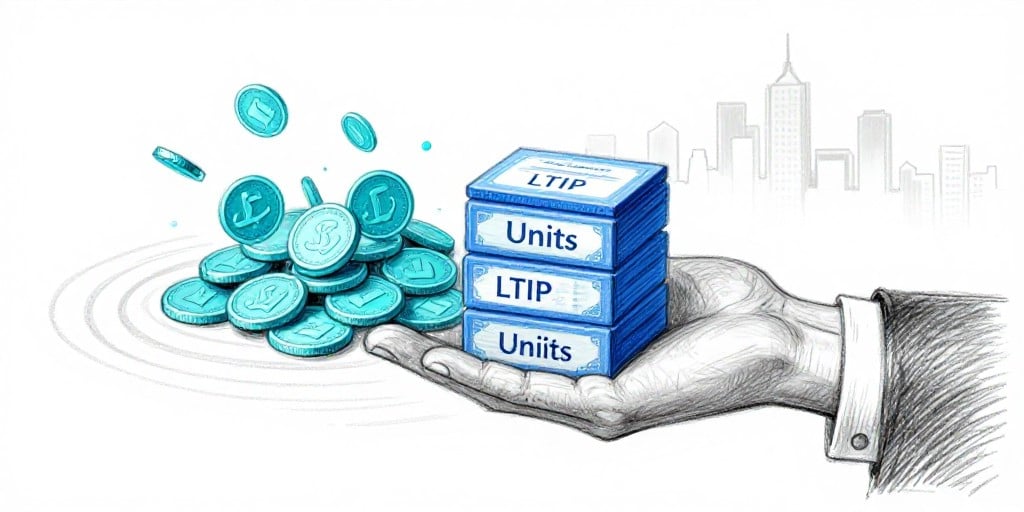
Insider Conversion Signals: Malkin’s LTIP Units Turned Shares
On 7 October 2026, Chairman and Chief Executive Officer Anthony Malkin converted 3,061,902 vested long‑term incentive plan (LTIP) units into operating partnership units, subsequently redeeming them for an equal number of Class A common shares at a nominal price of $0.00 per share. The transaction immediately increased Malkin’s post‑transaction holdings to 3,061,902 shares, adding to the 60,368 shares held on paper. The conversion coincided with a modest 0.01 % uptick in the market that day, while social‑media sentiment remained neutral and overall buzz was at baseline levels.
Implications for Investors
Converting LTIP units into shares signals management confidence in the company’s long‑term value. LTIP units are typically tied to performance metrics and vest over time; turning them into shares allows the CEO to realize immediate value without triggering a taxable event for the company. For investors, the move demonstrates that the leadership team is willing to monetize the incentive structure that aligns management with shareholder returns. It also increases the number of shares held by the CEO, potentially tightening ownership concentration and providing the board with a clearer view of interest alignment.
In a market where the fund’s price has slipped 36 % year‑to‑date but remains near its 52‑week low, this insider liquidity can be interpreted as a bullish signal that management believes the current valuation underestimates the underlying assets.
Malkin’s Historical Insider Activity
Over the past few months, Malkin’s trading history shows a pattern of purchasing LTIP units rather than selling them. In February and March 2026, he accumulated roughly 1.6 million LTIP units, increasing his overall holdings to over 7.5 million vested units. Unlike many peers who are buying newly granted LTIP units, Malkin’s conversions suggest a deliberate strategy to convert future potential gains into current equity. This behavior aligns with a long‑term stewardship philosophy: he rewards himself only when the company’s performance justifies exercising vested units and then converts those units to shares to lock in upside for personal wealth accumulation.
Implications for the Company’s Future
The conversion and redemption mechanism is built into the operating partnership structure, enabling the company to facilitate similar moves for other executives and investors in the future. The fact that the CEO has already exercised a large conversion may encourage the board to consider adjusting LTIP parameters, possibly offering more units or different vesting schedules to retain top talent. For the fund’s investors, the move reduces the pool of unconverted LTIP units that could otherwise dilute equity or trigger future capital calls. With a market cap of roughly $774 million and a share price hovering at $4.58—well below its 52‑week low—this insider liquidity could help support a recovery if the company implements strategic acquisitions or asset re‑allocation initiatives.
Takeaway for Market Participants
Malkin’s conversion highlights a strategic alignment between management incentives and shareholder value, potentially boosting confidence in the company’s governance. While the immediate price impact is modest, the long‑term effect could be positive, especially if the fund leverages the unlocked liquidity to pursue growth or refinance its portfolio. Investors should monitor subsequent filings for any changes in LTIP issuance or redemption policies, as these will signal the board’s commitment to balancing executive incentives with shareholder interests.
| Date | Owner | Transaction Type | Shares | Price per Share | Security |
|---|---|---|---|---|---|
| 2026‑10‑07 | MALKIN ANTHONY E (Chairman & CEO) | Buy | 3,061,902.00 | N/A | Class A Common Stock |
| N/A | MALKIN ANTHONY E (Chairman & CEO) | Holding | 60,368.00 | N/A | Class A Common Stock |
| 2026‑10‑07 | MALKIN ANTHONY E (Chairman & CEO) | Sell | 3,061,902.00 | N/A | LTIP Units |