Insider Selling Spikes Amid a Bullish Cycle
Executive Summary
Arteris Inc. (NASDAQ: ARTS) has seen a series of structured insider sales by CEO Janac K. Charles under a 10(b)(5)(1) trading plan. While the cumulative volume of more than 45 000 shares sold over two months totals proceeds exceeding $2 million, the transactions were executed at market‑congruent prices and do not appear to erode confidence in the company’s growth trajectory.
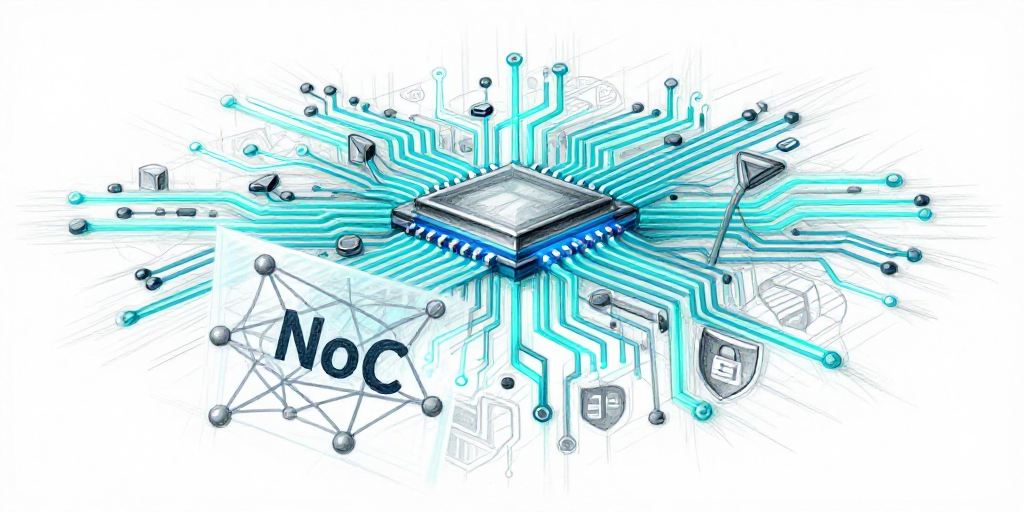
Simultaneously, the semiconductor ecosystem is experiencing rapid technological evolution—network‑on‑chip (NoC) designs, AI‑accelerated processors, and autonomous‑vehicle silicon—alongside escalating cybersecurity threats. These dynamics present both opportunities and risks for firms like Arteris, and they carry significant societal and regulatory ramifications.
1. Insider Transactions – What the Numbers Say
| Date | Owner | Transaction Type | Shares | Price per Share | Security |
|---|---|---|---|---|---|
| 2026‑03‑25 | JANAC K CHARLES (President & CEO) | Sell | 7 012 | 18.03 | Common Stock |
| 2026‑03‑26 | JANAC K CHARLES (President & CEO) | Sell | 32 988 | 18.35 | Common Stock |
| — | JANAC K CHARLES (President & CEO) | Holding | 217 538 | — | Common Stock |
| — | JANAC K CHARLES (President & CEO) | Holding | 56 252 | — | Common Stock |
The 10(b)(5)(1) plan is a pre‑arranged, rule‑compliant mechanism that allows executives to sell shares in predetermined tranches, thereby limiting market impact and mitigating insider‑trading concerns.
Key Observations
- Structured Liquidity – The staggered sales align with the CEO’s pre‑set plan rather than with sudden market events.
- Price Integrity – Average sale prices (~$18.1) are within 2 % of the contemporaneous market price, indicating no aggressive liquidation.
- Retention of Control – Even after the recent sales, Charles holds over 273 000 shares, preserving a significant controlling stake.
These facts suggest a deliberate, rule‑compliant liquidity strategy rather than a signal of distress.
2. Arteris’ Market Position and Growth Dynamics
- Market Capitalization: Approximately $725 million.
- Revenue Streams: Focus on NoC IP for automotive, networking, and mobile processors, sectors projected to grow at > 15 % CAGR over the next decade.
- Valuation Metric: Negative price‑earnings ratio, typical for high‑growth, early‑stage semiconductor firms that invest heavily in R&D before achieving profitability.
- Strategic Advantage: A diversified IP portfolio mitigates sector‑specific volatility and offers cross‑vertical licensing opportunities.
3. Emerging Technologies & Cybersecurity Threat Landscape
3.1. Network‑on‑Chip (NoC) and AI‑Driven Processors
- Trend: NoC architectures reduce latency and power consumption, essential for autonomous vehicles and high‑performance computing.
- Security Implication: The increased inter‑connectivity of SoCs elevates the attack surface. A compromised NoC can facilitate lateral movement across system components.
3.2. Autonomous‑Vehicle (AV) Silicon
- Trend: Growing adoption of silicon‑based perception, decision‑making, and control units.
- Security Implication: Supply‑chain attacks (e.g., hardware Trojans) can be catastrophic, leading to vehicle malfunction or data exfiltration.
3.3. AI Acceleration & Edge Computing
- Trend: On‑device inference engines require specialized ASICs.
- Security Implication: Model theft, backdoor insertion, or side‑channel leakage can compromise intellectual property and user privacy.
4. Societal and Regulatory Implications
| Aspect | Impact | Regulatory Landscape |
|---|---|---|
| Supply‑Chain Trust | Public safety and national security concerns. | CHIPS Act (U.S.) mandates secure design and manufacturing practices. |
| Data Privacy | Edge devices process personal data. | GDPR (EU), CCPA (U.S.) require privacy‑by‑design. |
| Cyber Resilience | Critical infrastructure dependence. | NIST SP 800‑53 controls for hardware and firmware security. |
| Intellectual Property | Potential for model or IP theft. | TRIPS Agreement, sector‑specific patents. |
Regulators are tightening oversight of semiconductor supply chains, demanding rigorous verification of component provenance and vulnerability assessments. Firms must adopt secure‑by‑design principles and document compliance to avoid penalties and reputational damage.
5. Actionable Insights for IT Security Professionals
- Implement Secure Firmware Development Life Cycle (FDLC)
- Integrate static and dynamic analysis tools at every stage.
- Conduct formal verification of NoC protocols to detect subtle concurrency bugs.
- Adopt Hardware Security Modules (HSMs) for Key Management
- Protect cryptographic keys used in secure boot, firmware updates, and device authentication.
- Enforce Supply‑Chain Transparency
- Utilize blockchain or tamper‑evident logs for component provenance.
- Validate suppliers against ISO 28000 and NIST SP 800‑161.
- Perform Regular Penetration Testing and Red Team Exercises
- Simulate attack vectors specific to AV silicon, such as power‑analysis attacks or fault injection.
- Establish a Dedicated Incident Response Plan for Hardware Breaches
- Define communication protocols, escalation paths, and recovery procedures.
- Leverage Threat Intelligence Feeds
- Monitor for emerging vulnerabilities in NoC architectures (e.g., recent CVE reports).
- Promote a Culture of Security‑by‑Design
- Educate engineering teams on secure coding practices, secure boot, and hardware isolation.
6. Conclusion
Arteris’ insider sales, while noteworthy, are consistent with a disciplined liquidity strategy and do not undermine confidence in the company’s trajectory. The firm’s focus on NoC IP and diversified revenue streams positions it favorably amidst a semiconductor boom.
However, the concurrent rise in sophisticated cyber threats—especially those targeting interconnected hardware and AI acceleration—demands a proactive, layered security approach. Regulatory bodies are intensifying scrutiny of supply chains and data protection, making compliance both a legal requirement and a competitive differentiator.
IT security professionals should therefore adopt holistic strategies that combine secure firmware development, robust supply‑chain verification, and rigorous threat monitoring to safeguard both the company’s assets and the broader society that increasingly depends on semiconductor technology.