
Corporate News: Strategic Analysis of AST SpaceMobile Amidst Shifting Telecom Dynamics
1. Executive Summary
AST SpaceMobile, a pioneer in low‑Earth‑orbit (LEO) satellite broadband for mobile devices, remains a focal point for investors and industry observers. Rakuten Group’s steadfast 5‑6 % stake in the company signals confidence in its long‑term value proposition, while recent insider sell‑offs raise concerns about short‑term liquidity and earnings expectations. This article evaluates the broader telecom and media landscape—network infrastructure, content distribution, and competitive dynamics—while examining subscriber trends, platform performance, and technology adoption across related sectors.
2. Telecom Market Context
2.1 Network Infrastructure Evolution
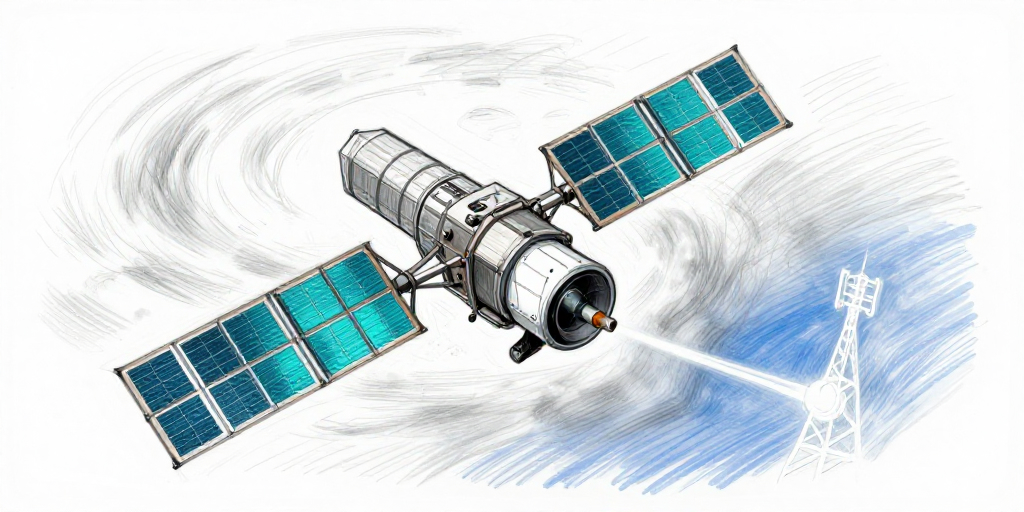
The transition from 4G to 5G has intensified the demand for reliable, high‑bandwidth backhaul. In many rural and underserved regions, terrestrial fiber and macrocell deployments lag behind, creating a service gap that LEO satellites can bridge. AST SpaceMobile’s constellation, projected to comprise 3,000–4,000 satellites by 2030, offers a complementary backhaul solution with low latency and global coverage.
Key infrastructure metrics to monitor include:
- Launch cadence: The rate at which AST’s satellites are deployed versus planned milestones.
- Ground station density: The number of Earth‑station gateways required to support the constellation’s throughput.
- Spectrum licensing: Allocation of L-band and Ka-band frequencies crucial for mobile broadband services.
2.2 Content Distribution and Consumer Demand
The convergence of media and telecom services—“telco‑media”—has amplified the need for seamless content delivery. Streaming providers are increasingly negotiating for direct satellite links to reduce latency and buffering, especially during peak usage hours. AST’s partnership model with mobile operators positions it to offer aggregated services (voice, data, video) under a single subscription, potentially driving higher average revenue per user (ARPU).
3. Competitive Dynamics
3.1 Direct Satellite Competitors
Amazon’s acquisition of Globalstar introduces a formidable competitor that leverages Amazon Web Services’ cloud infrastructure and logistics expertise. Amazon’s entry raises the competitive threshold in terms of scale, capital availability, and integrated ecosystem offerings.
Other notable players include SpaceX’s Starlink, which already commands a sizable consumer and enterprise base, and OneWeb, which has secured significant carrier partnerships in Europe and Asia.
3.2 Terrestrial Alternatives
Terrestrial 5G rollouts by incumbents such as Verizon, AT&T, and T‑Mobile continue to expand, especially in densely populated markets. However, their coverage gaps, especially in remote areas, still provide an opening for satellite providers. The competition will hinge on:
- Cost per bit: Satellite backhaul costs vs. terrestrial fiber.
- Latency: LEO’s low‑orbit advantage vs. geostationary (GEO) satellites.
- Service bundling: Ability to integrate satellite broadband into existing carrier plans.
4. Subscriber and Platform Performance
4.1 Subscriber Trends
AST’s current subscriber base is modest compared to terrestrial carriers, yet its growth trajectory has been exponential in pilot regions (e.g., Alaska, rural Australia). Metrics such as subscriber acquisition cost (SAC) and churn rate remain critical. The company’s recent earnings miss and negative price‑to‑earnings ratio of –66.42 indicate that the market has not yet priced in a sustainable revenue model.
4.2 Platform Metrics
Platform performance is gauged through:
- Signal quality and throughput: Measured in Mbps per user and latency in milliseconds.
- Network reliability: Uptime percentage and frequency of handover failures.
- Scalability: Ability to support increasing data loads without degradation.
Early adopters report satisfactory performance in low‑density environments, but scalability challenges persist as user density rises.
5. Technology Adoption Across Sectors
5.1 Automotive and IoT
Satellite connectivity is increasingly integrated into connected vehicles and IoT deployments, where traditional cellular coverage is unreliable. AST’s technology could unlock new revenue streams in fleet management, telematics, and autonomous navigation.
5.2 Broadcast and Media
Satellite’s global reach facilitates live event broadcasting to remote audiences. Media conglomerates are exploring satellite‑based distribution to bypass terrestrial bottlenecks during high‑traffic events.
5.3 Enterprise and Government
Government agencies require secure, resilient communications, especially in disaster response scenarios. Enterprise clients are evaluating satellite as a redundancy layer for critical applications.
6. Insider Activity: Signals and Implications
| Date | Owner | Transaction Type | Shares | Price per Share | Security |
|---|---|---|---|---|---|
| 2026‑04‑14 | Hiroshi Mikitani | Sell | 1,690,000 | $91.42 | Class A Common Stock |
| 2026‑04‑15 | Hiroshi Mikitani | Sell | 1,350,000 | $86.22 | Class A Common Stock |
The bulk sell‑off by President Mikitani, alongside similar transactions by CFO Andrew Martin, COO Shanti Gupta, and President Scott Wisniewski, signals a possible reassessment of the company’s short‑term valuation. Potential drivers include:
- Liquidity needs: Personal or corporate cash requirements.
- Tax planning: Realizing capital gains/losses in the current fiscal period.
- Strategic repositioning: Perception that the stock is overvalued relative to projected earnings.
For institutional investors, these flows necessitate a closer look at AST’s burn rate, cost management, and projected capital expenditures for constellation expansion.
7. Strategic Outlook
7.1 Potential Catalysts
- Carrier Partnerships: Securing agreements with large mobile operators (e.g., Vodafone, Deutsche Telekom) could provide immediate revenue and network access.
- Regulatory Milestones: Successful completion of spectrum licenses and ground‑station approvals will validate the company’s operational readiness.
- Technological Milestones: Demonstrating consistent low‑latency, high‑throughput performance in dense urban scenarios will broaden market appeal.
7.2 Risks
- Capital Intensity: The high upfront costs of satellite manufacturing and launches may strain cash flows.
- Competitive Pressures: Amazon and SpaceX possess superior capital and integrated ecosystems.
- Execution Delays: Any postponement in constellation deployment or partnership negotiations could erode investor confidence.
8. Investor Implications
- Long‑Term Investors: The unwavering stake held by Rakuten Group suggests a belief in the company’s long‑term upside. Investors should assess the viability of monetizing the LEO network and the likelihood of achieving breakeven within the next 3–5 years.
- Short‑Term Traders: Insider sell‑offs provide a barometer for potential volatility. Monitoring subsequent insider activity, coupled with earnings releases, will help anticipate price swings.
- Portfolio Diversification: Given the high volatility and speculative nature of satellite broadband stocks, prudent allocation and risk management are advised.
9. Conclusion
AST SpaceMobile stands at the intersection of cutting‑edge space technology and the evolving demands of global connectivity. Rakuten’s sustained investment underscores a belief in the long‑term strategic value of LEO broadband, even as insider selling signals caution regarding short‑term profitability. The broader telecom and media markets are undergoing rapid transformation, with network infrastructure, content distribution, and competitive dynamics reshaping the value proposition for satellite providers. Investors and analysts must balance the potential for high growth against the inherent risks of capital intensity, execution delays, and intensified competition.