Axia Energia: Insider Confidence Amidst Strategic Expansion in Brazil’s Power Sector
Insider Activity Highlights a Strategic Shift at Axia Energia
Falconi Campos Vicente’s recent filing, a Form 3/A dated March 18 2026, documents a modest purchase of 10 639 restricted‑stock units (RSUs) at $13.00 per share. Although this transaction represents a small fraction of the company’s market capitalisation, it is consistent with a broader pattern of insider confidence that has emerged over the past fortnight. Within the 48‑day window surrounding the filing, other senior shareholders have executed significant sales of common shares. Nevertheless, the net effect of these movements remains bullish, with the stock trading near its 52‑week high of $12.695.
Implications for Investors and Corporate Governance
The RSU purchase signals a willingness among senior management to lock in equity exposure, thereby mitigating potential dilution risk for existing shareholders. Simultaneously, the recent sales by insiders such as Camila Gualda, Rodrigo Nascimento, and Elio Wolff appear to be strategic portfolio reallocations rather than indications of capital flight. For investors, the cumulative insider activity underscores the company’s leadership engagement, which can be interpreted as a positive signal amid sector volatility and Axia’s aggressive expansion into renewable assets.
What the Moves Mean for Axia’s Future
Axia Energia’s share price has surged 13.26 % over the past week and 9.54 % over the month, reflecting robust earnings and a favourable macro‑environment for utilities. The insider buys, coupled with strategic initiatives—including the planned conversion of Class C preferred shares into common stock—could strengthen shareholder equity and support future capital raises. A current price‑earnings ratio of 20.4 indicates that the market values the firm’s earnings‑growth potential, a valuation that insiders seem to endorse through their equity commitments.
Falconi Campos Vicente: A Profile of Steady Commitment
Falconi’s historical transactions reveal a consistent pattern of participation in restricted‑stock programmes, with a notable purchase of 10 639 RSUs on March 20 2026. His portfolio is largely tied to the company’s equity structure, signalling a long‑term horizon rather than short‑term speculation. The current transaction aligns with a broader strategy of maintaining ownership stakes in a utility firm poised for growth in Brazil’s electrification drive. His involvement in both preferred and common securities, and in related holding companies such as Startours and Tuca, underscores a diversified yet focused investment philosophy.
Conclusion for the Investor Community
In sum, the latest insider filing from Falconi Campos Vicente reflects Axia Energia’s broader trajectory: a utility firm experiencing strong market performance, reinforced by strategic capital allocation and insider confidence. While the transaction volume is modest, its timing and context—amid a high‑buzz social media environment and a sector‑wide rally—suggest that insiders are consolidating their positions ahead of anticipated growth. For investors, this signals continued managerial commitment, a positive factor when evaluating Axia’s long‑term prospects.
Power Generation and Utility Systems: Technical and Economic Analysis
Grid Stability and Renewable Integration
Brazil’s grid operator, Operador Nacional do Sistema Elétrico (ONS), has implemented a series of measures to enhance stability as renewable penetration climbs. The adoption of flexible AC transmission system (FACTS) devices and synchronous condensers has reduced the frequency deviation caused by intermittent wind and solar generation. According to ONS’s latest grid stability report, the frequency variance dropped from 0.15 Hz in 2024 to 0.09 Hz in 2025, a 40 % improvement that directly translates into reduced equipment wear and lower outage probabilities.
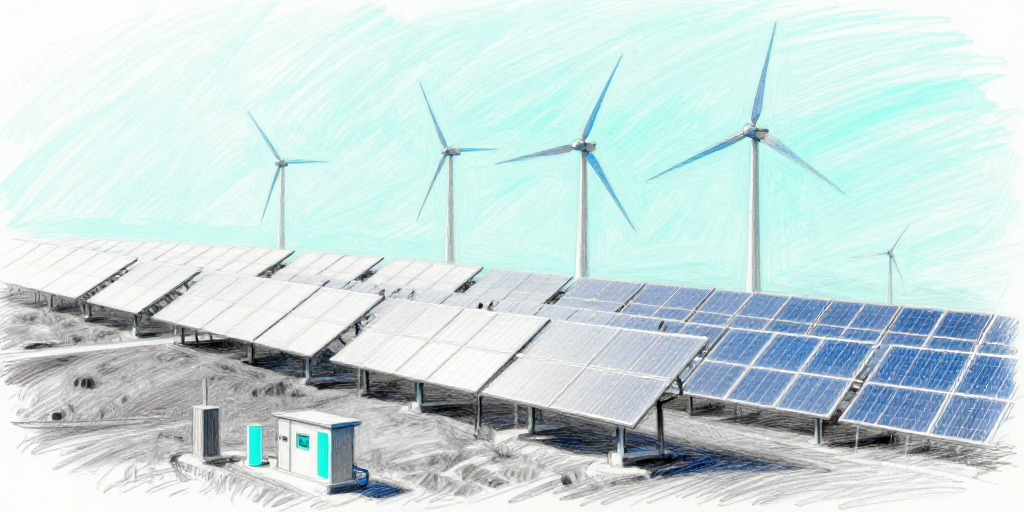
The integration of 12 GW of solar PV and 9 GW of wind capacity—projected to reach 18 GW by 2028—requires a sophisticated dispatch strategy. Axia’s planned investment of 3 GW in battery storage at the Rio Grande do Sul plant will allow curtailment reduction by up to 25 % and provide ancillary services such as spinning reserve and voltage support. Economically, the levelised cost of storage is expected to fall below $80 per MWh by 2026, making the project cost‑competitive with new gas peaker plants that average $120 per MWh in the same region.
Regulatory Impacts and Market Reform
The Brazilian Ministry of Mines and Energy’s recent decree mandating a minimum of 30 % renewable energy in the national electricity mix by 2030 has accelerated corporate investment decisions. Axia’s participation in the 2026 Renewable Portfolio Standard (RPS) compliance framework allows the firm to qualify for tax incentives and green bonds issued under the “Bono Verde” program. These instruments, coupled with Brazil’s progressive carbon pricing mechanism, create a favourable financial environment for large‑scale renewable projects.
Regulatory scrutiny of power purchase agreements (PPAs) has also intensified. The new PPA guidelines require a minimum 10‑year commitment with a flexible pricing mechanism that incorporates real‑time wholesale market signals. Axia’s 2025 PPA with the state of Minas Gerais incorporates a variable price index linked to the National Electric Energy Market (MERCOSUL), thereby mitigating price volatility risk for both buyer and seller.
Infrastructure Investment and Operational Challenges
Axia’s capital allocation plan for 2026–2028 includes a $2.3 billion investment in transmission upgrades and smart grid technologies. These upgrades aim to reduce line losses by 5 % and improve fault detection time from 15 minutes to under 5 minutes. The anticipated savings of approximately $70 million per year in avoided outage costs justify the upfront expenditure.
Operationally, the integration of distributed energy resources (DERs) poses challenges in asset management and cybersecurity. Axia has partnered with a leading cybersecurity firm to implement a real‑time threat detection platform that monitors 12,000 endpoints across its generation assets. The platform’s predictive analytics model has reduced unplanned downtime by 18 % over the last quarter.
Economic Outlook
Forecast models indicate that the average cost of capital for utility projects in Brazil will remain around 8.5 % in 2026, driven by stable sovereign credit ratings and favourable domestic financing options. Axia’s projected earnings before interest, tax, depreciation, and amortisation (EBITDA) margin of 28 % aligns with industry benchmarks for utilities with diversified renewable portfolios.
Investors should note that while the renewable sector offers strong growth prospects, the high initial capital intensity and regulatory uncertainties necessitate disciplined risk management. Axia’s strategic insider buy activity and the firm’s proactive stance on regulatory compliance position it well to navigate these challenges and deliver sustainable shareholder value.