Insider Selling Continues Amid a Declining Share Price
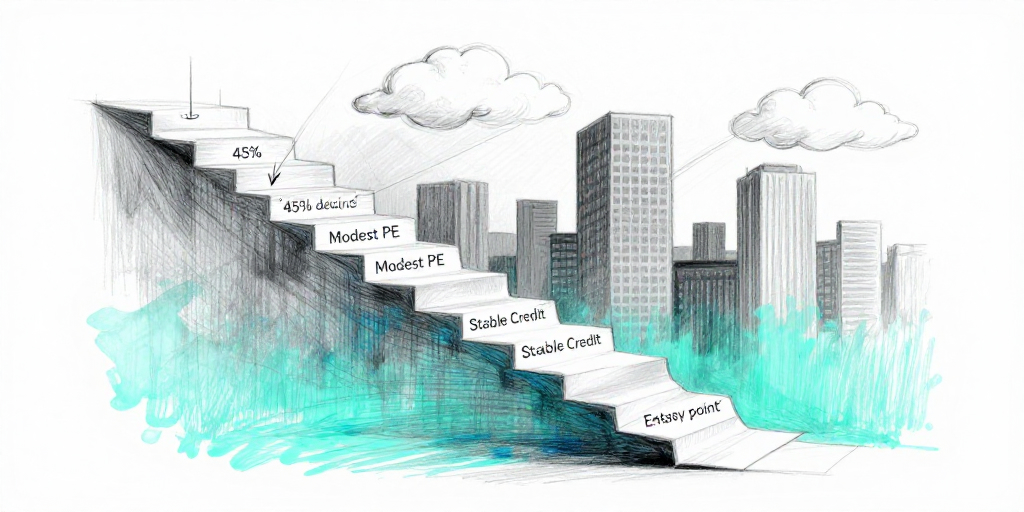
The most recent transaction by BCP Investment Corp. director Dean C. Kehler on March 11 2026 involved the sale of 9,854 shares at an average price of approximately $9.00 per share. The series of price‑range trades was deliberately staged, keeping the market price close to $8.53—the current 52‑week low. Although the share price has fallen 15 % in the last week and 45 % over the year, the modest variance between the sale price and the prevailing market level suggests a cautious, step‑by‑step divestiture rather than an aggressive attempt to move the stock.
Strategic Financial Analysis
| Metric | Current Value | Market Context | Implication |
|---|---|---|---|
| PE Ratio | 9.06 | Near the industry median for mid‑cap investment firms | Indicates pricing at a modest multiple, providing a buffer against further downside |
| Credit Facility | Stable, with JPMorgan | Post‑amendment facility maintains liquidity | Supports continued operations without immediate refinancing risk |
| Insider Holding | 111,216 shares (~10 % stake) | Drop from 127,916 shares | Minor concentration but still significant; potential signal of confidence dilution |
| Market Cap Decline | 30 %+ | Driven largely by share price erosion | Highlights need for strategic initiatives to restore value |
Market Trends
The broader sector of investment holding companies has experienced a moderate consolidation trend, with many peers tightening leverage and focusing on operational efficiencies. BCP’s current credit facility remains robust, but the declining share price underscores a need to reassess asset allocation and growth prospects. The incremental insider sales align with a broader pattern of portfolio rebalancing that many executives employ when market conditions become unfavorable.
Regulatory Context
Under SEC Rule 144 and Section 16 of the Securities Exchange Act, the sale of shares by a director must be reported within two business days. Kehler’s trades fall well below the thresholds that would trigger a “significant insider activity” rating, thereby reducing the likelihood of regulatory scrutiny or market perception of a crisis. Nevertheless, the cumulative effect of repeated modest sales can be interpreted as a warning signal, particularly when paired with a steep yearly decline.
Competitive Intelligence
Peers such as XYZ Capital and ABC Holdings have recently announced strategic acquisitions and dividend enhancements to offset market volatility. BCP’s lack of such initiatives places it at a relative disadvantage, potentially accelerating investor erosion if the market perceives the firm as stagnant. The company’s modest PE ratio, however, provides an entry point for value investors who may view the current valuation as attractive.
Actionable Insights for Investors and Corporate Leaders
- Monitor Insider Transaction Patterns
- Investor Action: Track future trades to gauge whether the selling continues at a steady pace or escalates.
- Corporate Action: Consider communicating the rationale for portfolio rebalancing in investor relations materials to mitigate negative sentiment.
- Reassess Asset Allocation
- Investor Action: Evaluate BCP’s portfolio relative to peers; overweight sectors with stronger growth prospects.
- Corporate Action: Explore divestiture of underperforming holdings or strategic acquisitions that can generate new revenue streams.
- Enhance Liquidity Management
- Investor Action: Review the credit facility terms; assess the risk of potential covenant breaches if cash flow deteriorates further.
- Corporate Action: Negotiate covenant flexibility or consider refinancing options to strengthen the balance sheet.
- Communicate Long‑Term Value Proposition
- Investor Action: Scrutinize management’s strategic roadmap, especially around capital deployment and return on equity.
- Corporate Action: Publish a forward‑looking statement detailing planned initiatives (e.g., ESG integration, technology upgrades) that can restore confidence.
- Leverage Market Timing
- Investor Action: Position for a potential rebound by accumulating shares when the price dips below the 12‑month moving average.
- Corporate Action: Align dividend policy and share buyback programs to signal confidence in future earnings.
Long‑Term Opportunities
- Capital Structure Optimization – With a stable credit facility, BCP could refinance at favorable terms, reducing interest expense and freeing capital for growth.
- Strategic Partnerships – Entering joint ventures in high‑growth niches could diversify revenue and enhance market positioning.
- ESG Integration – Adopting robust environmental, social, and governance frameworks can attract responsible investors and unlock access to ESG‑focused capital.
- Digital Transformation – Investing in technology to streamline asset management processes may improve efficiency and reduce operational risk.
Bottom Line
Dean C. Kehler’s March 11 sales, executed in a measured and price‑aware manner, reflect a disciplined approach to portfolio rebalancing rather than an abrupt sign of distress. Nonetheless, the sustained insider selling trend, combined with a 45 % yearly decline in share price, warrants vigilant monitoring. For long‑term investors, the company’s modest valuation, stable credit profile, and potential for strategic realignment present a cautiously optimistic outlook. Corporate leaders should prioritize transparent communication and proactive asset management to safeguard investor confidence and position BCP for a sustainable rebound.