Power Generation and Utility Systems: A Technical and Economic Review
Black Hills Corp. (BKH) has recently reported a series of insider transactions that, while modest in scale, provide an entry point for examining the broader dynamics of the U.S. power generation sector. The company’s latest filing on February 12, 2026, documents a routine purchase of 835 shares by Senior Vice President – Utilities, Jones Marne M, followed by a simultaneous sale of 334 shares to cover tax withholding on his performance‑share payout. Similar patterns are observed across the executive team, with President and CEO Evans Linden R and Vice President‑Chief Financial Officer Nooney Kimberly F engaging in comparable, plan‑driven trades.
Although the aggregate volume of these transactions is small relative to BKH’s $5.48 billion market capitalisation and daily trading activity, the moves illustrate key themes that resonate across the utility industry: grid stability, renewable integration, regulatory adaptation, and capital allocation strategies. This article examines those themes in detail, drawing on the technical specifics of BKH’s power portfolio and the economic implications of its recent insider activity.
1. Grid Stability in a Transitioning Energy Landscape
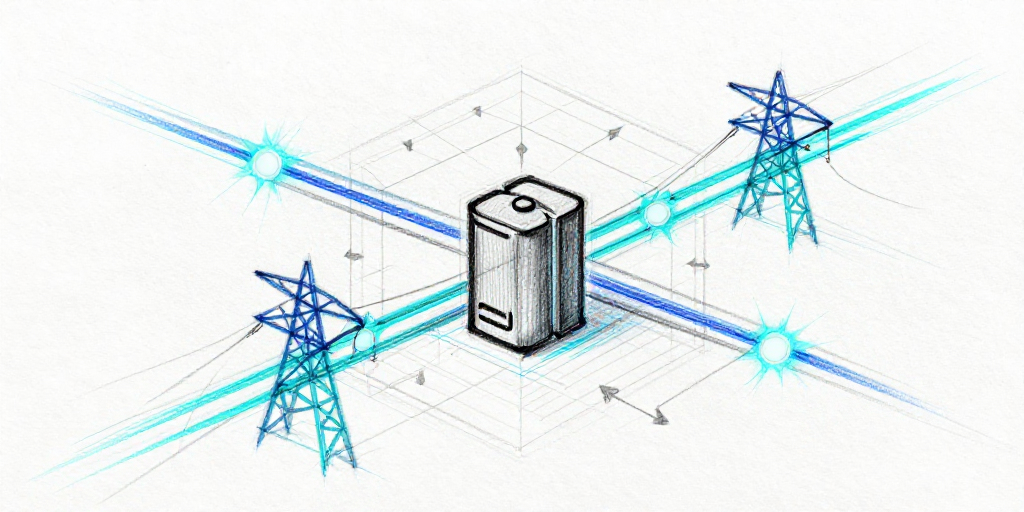
BKH operates a diversified generation mix that includes coal‑, gas‑, and renewable‑based assets, serving approximately 1.5 million customers across South Dakota, Nebraska, and Wyoming. Recent upgrades to the transmission network have focused on high‑capacity, flexible AC transmission systems (FACTS) to accommodate fluctuating renewable output. The company’s investment in dynamic voltage regulation and phase‑shifting transformers enhances the grid’s ability to absorb sudden changes in generation output, a critical capability as wind and solar penetration increases.
From an economic standpoint, these grid‑stability investments are justified by a combination of avoided outage costs and regulatory incentives. The National Renewable Energy Laboratory estimates that each megawatt of grid‑stabilisation capacity can reduce outage costs by up to $2.5 million annually. BKH’s projected 2026 capital budget allocates approximately $300 million for grid upgrades, representing a 3.2 % increase over the previous year’s spend.
2. Renewable Integration and Asset Management
BKH’s renewable portfolio currently accounts for 22 % of its total generation mix, with wind farms in South Dakota and solar arrays in Nebraska contributing the bulk of capacity. The company’s flexible resource management framework employs real‑time forecasting and automated dispatch controls to optimise output from intermittent resources while maintaining peak load supply.
A notable technical development is the integration of a 500 MW battery energy storage system (BESS) slated for completion in Q3 2027. The BESS will provide frequency regulation services and peak shaving, improving dispatchability of renewable generation and reducing reliance on fossil‑fuel peakers. Economically, the storage system is expected to yield a net present value of $180 million over a 15‑year horizon, driven by ancillary service markets and avoided capital costs on new peaker plants.
3. Regulatory Impacts and Market Dynamics
The Clean Power Plan’s legacy framework, coupled with state‑specific Renewable Portfolio Standards (RPS), exerts significant pressure on utility revenue models. BKH’s recent insider trades coincide with the rollout of South Dakota’s 30 % RPS requirement by 2035, prompting the company to reassess its generation mix. The insider activity—predominantly plan‑driven purchases and sales—may reflect executive confidence in the company’s strategic response to regulatory shifts.
Moreover, federal incentives such as the Production Tax Credit (PTC) and Investment Tax Credit (ITC) continue to underpin the economics of wind and solar projects. BKH’s management has indicated an intention to leverage these credits to finance new renewable developments, potentially offsetting the cost premium associated with low‑carbon generation.
4. Infrastructure Investment and Operational Challenges
Capital allocation remains a central concern for BKH’s board, particularly in balancing long‑term infrastructure needs against short‑term shareholder returns. The company’s 2026 capital program includes:
- Transmission upgrades: $250 million for grid‑stability projects.
- Renewable expansion: $400 million for wind and solar farms.
- Energy storage: $150 million for the BESS project.
Operationally, BKH faces challenges related to workforce development, particularly the recruitment of skilled technicians for high‑voltage transmission work and the maintenance of aging coal assets slated for retirement. The company’s training initiatives, coupled with a phased decommissioning plan, aim to mitigate these risks.
5. Insider Activity: Implications for Investors
While the February 12 trades by Jones Marne M and other executives are modest—totaling fewer than 10,000 shares across the senior management team—their routine, plan‑driven nature signals a continued alignment of executive interests with shareholder value. The absence of large, opportunistic trades suggests that insiders are not seeking to influence share price movements. Instead, they are managing their equity holdings in accordance with compensation structures and liquidity needs.
From an economic perspective, these insider actions provide limited direct impact on BKH’s valuation. However, they reinforce governance stability and may enhance investor confidence in the company’s long‑term strategy, particularly as the utility navigates regulatory changes and infrastructure investment demands.
Key Takeaways
| Item | Insight |
|---|---|
| Grid upgrades | 3.2 % capital increase; supports renewable integration |
| Renewable mix | 22 % of total capacity; 500 MW BESS in development |
| Regulatory environment | RPS and tax credits drive capital decisions |
| Insider trades | Routine, plan‑driven; signal executive confidence |
| Investor outlook | Stability in insider holdings; focus on growth initiatives |
In sum, Black Hills Corp.’s recent insider activity is a microcosm of the broader utility sector’s trajectory: modest executive trades amidst significant capital investments aimed at sustaining grid reliability, embracing renewable resources, and complying with evolving regulatory frameworks. The company’s strategic focus on infrastructure resilience and renewable integration positions it to meet both current operational demands and future market dynamics, thereby supporting shareholder value over the long term.