Insider Activity and Its Strategic Context
Monnig Taylor, the Chief Technology Officer and Chief Operating Officer of CleanSpark, executed a 536‑share purchase on 13 August 2026 under a Rule 10b5‑1(c) plan that was adopted in May. The trade occurred at a settlement price of $12.08, a marginal 0.05 % increase from the prior close. Subsequent transactions—a 211‑share sale and a 54‑share sale on 14 August—follow the same pattern of rule‑based, market‑price executions.
These moves are consistent with Taylor’s long‑term holdings, which total approximately 169 000 shares across common stock, restricted units, performance units, and options. The profile of his trades—small, predictable, and devoid of large off‑balance‑sheet transactions—indicates routine portfolio management rather than an attempt to signal confidence or concern about CleanSpark’s direction.
In parallel, other senior executives—CEO Matthew Schultz, CFO Gary Vecchiarelli, and EVP Garrison Scott Eugene—have completed dozens of similar Rule 10b5‑1 transactions in the past month. Their activities reflect a disciplined approach to insider trading, underscoring a shared belief that the company’s strategic shift from Bitcoin mining to AI‑enabled data‑center services is a long‑term, sustainable path.
Emerging Technology and the Cybersecurity Landscape
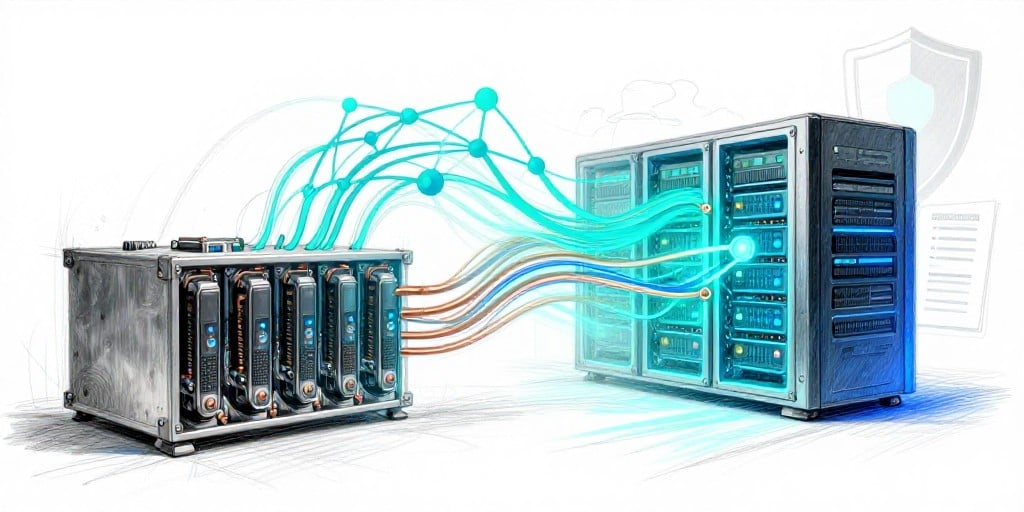
CleanSpark’s pivot involves repurposing its mining facilities for high‑performance computing (HPC) and artificial‑intelligence (AI) workloads. While this transition promises more predictable revenue streams, it also introduces new cybersecurity challenges:
| Emerging Technology | Typical Cyber Threat | Example | Regulatory Relevance |
|---|---|---|---|
| AI‑enabled HPC | Model theft, adversarial attacks | 2024 incident: OpenAI’s model leakage from a compromised GPU cluster | GDPR, CCPA, NIST AI Risk Management Framework |
| Cloud‑based data centers | Supply‑chain attacks on virtual infrastructure | 2023: SolarWinds supply‑chain compromise | SEC Regulation S‑P, ISO 27001 |
| Edge computing for IoT | Device spoofing, data exfiltration | 2025: Smart‑grid ransomware attack on an edge node | NERC CIP, IoT Cybersecurity Improvement Act |
| Blockchain‑based resource allocation | Sybil attacks, consensus‑layer exploits | 2024: Ethereum 2.0 validator misbehavior | FinCEN, FATF Guidance on Crypto |
These threats illustrate that as CleanSpark expands its service portfolio, it must expand its security posture beyond traditional mining‑related safeguards.
Societal and Regulatory Implications
Privacy and Data Sovereignty The AI workloads CleanSpark will host may involve sensitive customer data. Jurisdictions such as the European Union and California impose stringent privacy mandates (GDPR, CCPA). Non‑compliance can result in fines exceeding $100 M.
Energy Consumption and Environmental Impact Re‑engineering mining rigs for HPC can reduce carbon intensity, aligning with ESG criteria increasingly demanded by institutional investors. Failure to demonstrate reduced emissions may affect CleanSpark’s ESG scores and access to green financing.
Regulatory Oversight of AI Services The U.S. Federal Trade Commission and the European Commission are developing AI‑specific regulation. CleanSpark’s AI offerings must adhere to transparency, explainability, and bias‑mitigation requirements.
Cyber Insurance and Liability With higher attack surface, CleanSpark’s cyber‑insurance premiums are likely to increase. Insurers are demanding granular security metrics (e.g., zero‑day patch rates, penetration‑test results).
Real‑World Examples
| Company | Issue | Outcome |
|---|---|---|
| Tesla | 2020 AI model theft via unsecured GPU cluster | Re‑architected GPU security, introduced hardware‑level isolation |
| Equifax | 2017 data breach via unpatched Apache Struts | Over $4 B in settlements, mandatory security overhaul |
| Microsoft Azure | 2023 supply‑chain attack on virtual machine images | Implemented immutable infrastructure, signed binaries |
| NVIDIA | 2024 HPC cluster ransomware targeting GPU firmware | Patching firmware via OTA updates, strict vendor vetting |
These cases underscore that even highly sophisticated enterprises can fall prey to emerging threats if their security controls are not continuously updated.
Actionable Insights for IT Security Professionals
- Implement Zero‑Trust Architecture
- Enforce least‑privilege access to all HPC nodes.
- Use micro‑segmentation to contain potential breaches within the data‑center.
- Adopt Continuous Monitoring and Automated Threat Hunting
- Deploy AI‑driven analytics to detect anomalous GPU usage patterns.
- Correlate logs from on‑prem and cloud environments for real‑time threat detection.
- Strengthen Supply‑Chain Security
- Require signed firmware and immutable images for all hardware components.
- Conduct regular third‑party risk assessments of hardware and software vendors.
- Integrate Security into the DevOps Pipeline (SRE‑Sec)
- Incorporate security testing into CI/CD for AI models.
- Use container‑security scanning for AI workloads.
- Establish Governance for AI Ethics and Compliance
- Create an AI ethics board to review model training data and outcomes.
- Maintain audit trails for data usage to satisfy regulatory audits.
- Plan for Incident Response and Business Continuity
- Draft a ransomware‑specific playbook that addresses HPC workloads.
- Conduct tabletop exercises that include stakeholders across IT, legal, and finance.
- Leverage Standards and Frameworks
- Map security controls to NIST CSF, ISO 27001, and NIST AI Risk Management Framework.
- Use CIS Benchmarks for GPU and HPC security configurations.
By proactively addressing these areas, IT security teams can help CleanSpark navigate the complexities of its strategic pivot while safeguarding against evolving cyber threats.