Corporate News
Insider Selling Spree at PBF Energy: What It Means for Investors
The most recent 4‑form filing discloses that Control Empresarial de Capitales S.A. de C.V. sold 120 000 shares of PBF Energy at an average price of $38.33 on March 2 2026, a day after the stock closed at $39.76. This transaction is part of a broader pattern of aggressive divestitures by the same entity, which has steadily trimmed its stake from roughly 30.2 million shares at the beginning of the year to 27.4 million today. The sale occurred when the stock rose only 0.13 % and when social‑media sentiment was markedly positive (score +36) and buzz was elevated (56.7 %).
Implications for the Company’s Outlook
Control Empresarial’s cumulative sales amount to more than 10 % of the outstanding shares, and the pace of the sell‑off has accelerated in February and March. Such a concentrated selling wave can be interpreted in several ways:
- Portfolio Rebalancing – The parent company may be redirecting capital to higher‑yield opportunities or to fund debt repayment.
- Valuation Signal – The timing, coincident with the peak of the 52‑week high, could reflect a belief that the stock is overvalued relative to its underlying fundamentals.
- Risk Management – PBF Energy’s P/E ratio of –27.66 and a price‑to‑book of 0.79 suggest the shares are trading below intrinsic value, yet the recent put‑option activity indicates a growing appetite for downside protection among traders.
For investors, the insider sales may serve as a warning sign, but they might also represent a rational reallocation strategy that does not necessarily presage a decline in earnings.
What Investors Should Watch
| Area | Observation |
|---|---|
| Liquidity and Shareholder Base | The steady depletion of Control Empresarial’s stake will gradually increase liquidity and potentially lower the cost of capital if the company can sell shares at a premium in the future. |
| Volatility and Sentiment | The current high buzz level shows heightened discussion among retail investors, which can amplify short‑term price swings. |
| Strategic Moves | Keep an eye on any announced strategic initiatives or capital‑expenditure plans that may justify the sale. A shift toward renewable or low‑carbon assets could be a catalyst for future growth that is not yet reflected in the price. |
Profile of Control Empresarial de Capitales S.A. de C.V.
Historically, Control Empresarial has been a disciplined seller, executing large block trades in a relatively narrow price window (typically $32–$40 for PBF shares). The entity’s transaction history shows a preference for selling during periods of relative price stability, often after earnings releases or dividend announcements. In the past 12 months, it has sold more than 13 million shares, with the median trade size exceeding 200 000 shares. Its selling pattern is consistent with a passive, long‑term investment strategy focused on portfolio rebalancing rather than opportunistic short‑term speculation.
Bottom Line
While insider selling can erode confidence, the context here suggests a strategic portfolio shift rather than panic. The stock’s valuation remains attractive to value investors, and the company’s core refining business continues to generate cash flow in a stable commodity environment. For the prudent investor, the insider activity may simply be a reminder to monitor PBF Energy’s fundamentals and to stay vigilant for any changes in the company’s strategic direction or market conditions that could alter its risk‑return profile.
| Date | Owner | Transaction Type | Shares | Price per Share | Security |
|---|---|---|---|---|---|
| 2026‑03‑02 | Control Empresarial de Capitales S.A. de C.V. | Sell | 120,000.00 | 38.33 | Class A Common Shares |
| 2026‑03‑03 | Control Empresarial de Capitales S.A. de C.V. | Sell | 99,000.00 | 40.33 | Class A Common Shares |
Energy Markets Analysis
Production, Storage, and Regulatory Dynamics
The global energy market remains in a state of flux, with traditional fossil‑fuel production confronting a rapid expansion of renewable supply chains. Production volumes from conventional sources—oil, natural gas, and coal—have plateaued or declined in many jurisdictions, while renewable output from wind, solar, and hydroelectric projects has accelerated, driven by falling capital costs and supportive policy frameworks.
Technical Factors
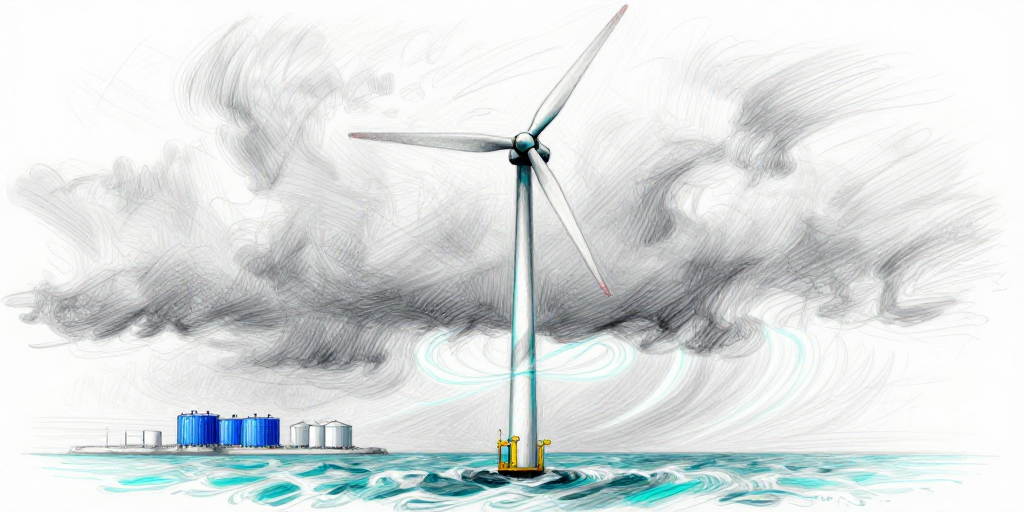
- Efficiency Gains – Modern offshore wind turbines now operate at over 50 % capacity factor, while solar photovoltaic installations achieve 20 %–25 % due to advanced cell technologies.
- Storage Integration – Battery‑energy‑storage systems (BESS) and pumped‑storage hydro are becoming integral to grid stability, allowing renewable intermittency to be mitigated. Lithium‑ion batteries now provide 10 %–15 % of global energy storage capacity, with cost reductions of 30 % over the past five years.
- Digitalization – Real‑time monitoring, AI‑driven predictive maintenance, and grid‑management platforms enhance operational efficiency across both traditional and renewable assets.
Economic Factors
- Commodity Prices – Crude oil and natural‑gas prices have fluctuated within $55–$70 per barrel in 2025, reflecting geopolitical tensions in the Middle East and supply constraints in the United States.
- Capital Allocation – Investment flows have shifted, with renewables commanding over 55 % of global energy infrastructure spending in 2025, up from 40 % in 2019.
- Policy Incentives – Tax credits, feed‑in tariffs, and carbon pricing mechanisms continue to incentivize renewable deployment, while regulatory compliance costs for fossil‑fuel operations rise due to stricter environmental standards.
Geopolitical Considerations
- Supply Chain Diversification – The reliance on rare earths for battery manufacturing has prompted strategic diversification initiatives by the United States, China, and the European Union.
- Energy Security – European nations are accelerating decarbonization to reduce dependence on Russian gas, while U.S. policy focuses on enhancing domestic natural‑gas production and LNG export capacity.
- Emerging Markets – Countries in Asia and Africa are aggressively expanding renewable portfolios to meet growing electricity demand, creating new market entry points for equipment manufacturers and service providers.
Traditional vs. Renewable Energy Sectors
| Sector | Current Status | Growth Drivers | Challenges |
|---|---|---|---|
| Oil & Gas | Mature production, declining marginal returns | LNG demand, petrochemical derivatives | Volatility, regulatory pressure, carbon costs |
| Coal | Declining usage in developed economies | Limited in some emerging markets | Environmental sanctions, carbon taxes |
| Wind | Rapid global deployment | Technological advances, falling costs | Grid integration, permitting hurdles |
| Solar | Rapidly scaling | Decreasing panel costs, battery integration | Land use, resource variability |
| Hydro | Mature but limited new capacity | Run‑of‑river projects, small‑scale hydro | Environmental impact, diminishing returns |
Conclusion
The intersection of production dynamics, storage capabilities, and regulatory landscapes is reshaping the energy sector. While traditional assets continue to generate cash flows, their growth potential is increasingly constrained by geopolitical risks and environmental imperatives. Renewable technologies, bolstered by technical efficiencies and favorable economic signals, are positioned to capture a larger share of future energy demand. Investors and policymakers must navigate this evolving terrain, balancing short‑term profitability with long‑term sustainability objectives.