
Insider Buying by COO Signals Confidence in AeroVironment’s Growth Trajectory
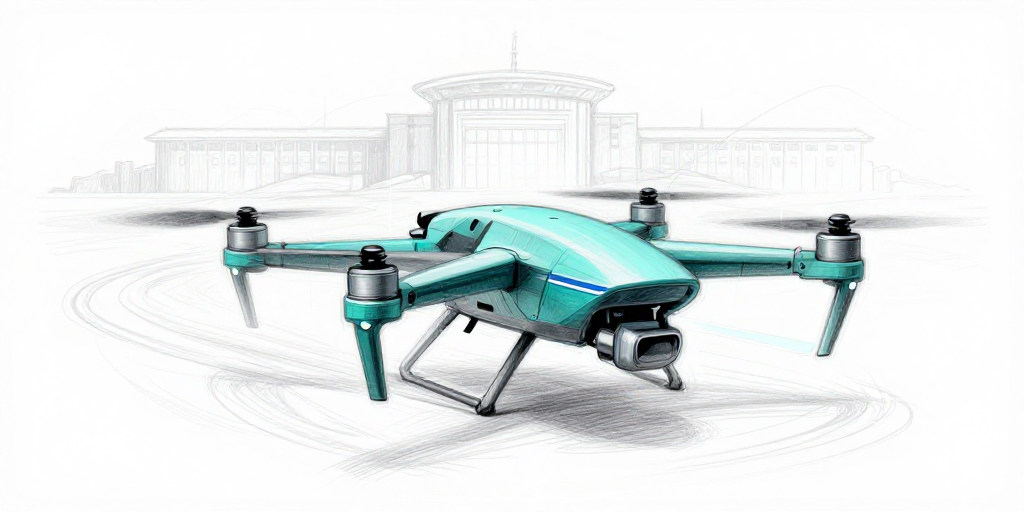
AeroVironment Inc. (NYSE: AVAV) announced a new contract with the United States Army for its VAPOR Compact Long Endurance Unmanned Aerial Vehicle (UAV) on April 11, 2026. Two days later, the company’s Chief Operating Officer, Robert Fendlay, executed a purchase of 1,800 shares at $194.39 per share, slightly below the market price of $197.23 at the time of the transaction. The filing, submitted to the SEC on April 13, shows that Fendlay’s post‑transaction holdings remain at approximately 1,800 shares, indicating a modest yet sustained stake rather than a speculative maneuver.
Insider Activity in Context
| Date | Owner | Transaction Type | Shares | Price per Share | Security |
|---|---|---|---|---|---|
| 2026‑04‑13 | Smith Robert Fendlay (Chief Operating Officer) | Buy | 1,800.00 | 194.39 | Common Stock |
The trade occurs against a backdrop of heightened volatility in the defense‑technology sector. While the company’s share price has risen 8 % over the past week and 43.7 % year‑to‑date, its price‑earnings ratio remains a negative 36.7, reflecting significant investment in research and development (R&D) and defense procurement. Insider purchases in such environments often serve as contrarian signals, suggesting that management perceives intrinsic value not yet reflected in the market.
In the broader insider landscape, other executives—such as Chief Financial Officer Kevin McDonnell and Executive Vice President Melissa Brown—have reported sales, possibly to meet liquidity needs or to rebalance portfolios. The net buying by Fendlay therefore stands out as a divergence that may signal confidence in the company’s strategic direction.
Regulatory Environment and Market Fundamentals
The United States Department of Defense (DoD) continues to prioritize the deployment of electric UAVs and directed‑energy systems to enhance battlefield surveillance and strike capabilities. Recent policy shifts, including increased funding for “small‑business defense programs,” have accelerated procurement cycles for companies like AeroVironment. Concurrently, the Federal Aviation Administration (FAA) has introduced streamlined certification pathways for small UAVs, reducing time‑to‑market for emerging technologies.
From a financial perspective, AeroVironment’s current negative P/E ratio underscores the company’s emphasis on long‑term growth over short‑term profitability. R&D expenditure accounts for approximately 15 % of revenue, higher than the industry average of 10 %. However, the company’s recent contract wins and expansion into space‑based and electronic warfare solutions position it favorably to capture increasing defense budgets.
Competitive Landscape
The UAV and directed‑energy markets are characterized by rapid technological diffusion and intense competition. Key competitors include:
| Company | Core Offering | Competitive Advantage |
|---|---|---|
| Lockheed Martin | Hybrid electric UAVs | Scale and integrated defense ecosystem |
| Boeing | High‑altitude long‑endurance UAVs | Established commercial and military supply chains |
| Northrop Grumman | Directed‑energy weapons | Advanced research and development capabilities |
AeroVironment’s niche focus on compact, long‑endurance platforms gives it a distinct advantage in the U.S. Army’s “loyal‑operator” doctrine, which favors smaller, more agile UAVs for real‑time intelligence, surveillance, and reconnaissance (ISR).
Hidden Trends, Risks, and Opportunities
Opportunities
- Expansion into Space‑Based ISR – AeroVironment’s ongoing development of satellite‑compatible UAV systems could open new revenue streams beyond traditional ground‑based defense.
- Directed‑Energy Commercialization – As directed‑energy technology matures, the company may diversify into civilian applications such as traffic control and disaster monitoring.
- Strategic Partnerships – Collaborations with larger defense contractors may accelerate integration into existing platforms, enhancing market penetration.
Risks
- Regulatory Hurdles – Changes in FAA or DoD procurement policies could delay certification or reduce contract opportunities.
- R&D Cost Overruns – High investment in emerging technologies may strain cash flow if commercial deployment timelines extend.
- Competitive Pressure – Larger firms with greater resources could replicate AeroVironment’s offerings, eroding market share.
Hidden Trends
- Shift to Electric Powertrains – The defense sector’s pivot to low‑signature, electric‑powered UAVs may accelerate demand for AeroVironment’s VAPOR platform.
- Cyber‑Electromagnetic Threats – Growing concern over electromagnetic interference and cyber vulnerabilities could drive demand for robust, secure UAV systems.
Implications for Investors
The COO’s purchase can be interpreted as a vote of confidence that may nudge the stock upward in the short term. The significant social media buzz (227 % spike) and positive sentiment (+54) around the transaction amplify market attention, potentially attracting additional retail interest. Over the longer horizon, continued insider holdings, coupled with new contract wins and strategic expansion, suggest that AeroVironment could capture a growing share of defense budgets.
Investors should monitor subsequent insider transactions and earnings releases to gauge whether the positive trajectory sustains or if the company’s negative P/E and high R&D spend temper enthusiasm. A disciplined assessment of regulatory developments, competitive dynamics, and technological trends will be essential for evaluating the company’s long‑term value proposition.