Corporate News: Manufacturing and Industrial Technology Outlook Amid Insider Activity
The recent insider trading activity at Ducommun Inc. highlights a broader narrative within the manufacturing and industrial technology sector. While the transaction details—10,440 shares sold by Chief Financial Officer Suman B. Mookerji at an average price of $130.83—are modest relative to the company’s float, the context of a week‑long pattern of choppy trading by senior executives underscores the importance of examining capital allocation, productivity initiatives, and technological trends that drive long‑term economic value.
Capital Investment and Asset Allocation in a High‑Technology Environment
Ducommun’s operating model is heavily concentrated in high‑performance materials for aerospace and defense applications. These markets demand continual investment in research and development (R&D) as well as in manufacturing infrastructure that can accommodate rapid design iterations and stringent quality standards. In this light, the CFO’s sale of shares, executed at a price near the prevailing market level of $129.21, can be interpreted as part of a routine portfolio rebalancing strategy that frees capital for potential capital expenditures (CapEx) in emerging technologies such as additive manufacturing and advanced composite processing.
From a capital budgeting perspective, firms in the industrial technology space typically evaluate projects using discounted cash flow (DCF) models that account for:
- Productivity gains through process automation and digital twins.
- Cost‑of‑capital adjustments reflecting the risk profile of defense contracts.
- Strategic alignment with national defense spending trends.
The insider activity thus offers a lens into how executives may be positioning personal finances in alignment with the company’s strategic CapEx plans. It also suggests that, in the near term, Ducommun may allocate resources toward scaling its additive manufacturing capabilities, which have proven to reduce lead times by up to 30 % while maintaining the high reliability standards required by commercial and military aircraft manufacturers.
Technological Trends Driving Productivity
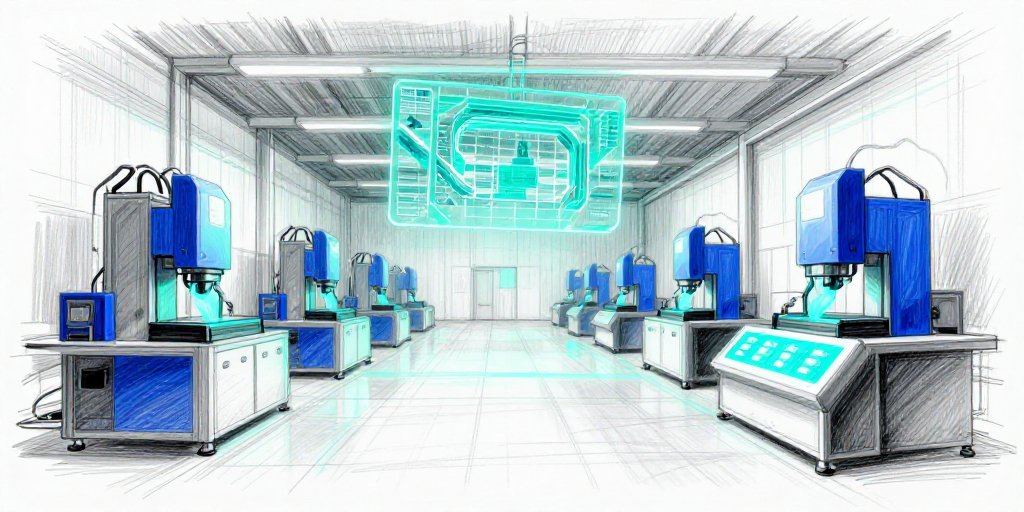
Additive Manufacturing (AM) Integration Ducommun has announced a new partnership with a leading AM supplier to develop composite parts that meet the stringent requirements of modern fighter jets. By adopting a hybrid AM–conventional manufacturing pipeline, the company can achieve higher part density and reduced material waste, thereby enhancing overall productivity.
Digital Twins and Predictive Maintenance The implementation of digital twins—virtual replicas of physical components—enables real‑time monitoring of production parameters. Predictive analytics derived from sensor data can identify bottlenecks before they occur, reducing downtime and accelerating throughput.
Advanced Composite Materials Recent R&D breakthroughs in carbon fiber reinforced polymers (CFRP) have led to materials that exhibit superior strength-to-weight ratios. Manufacturing processes that incorporate continuous fiber placement and automated curing significantly increase cycle speeds while improving consistency.
These trends are not isolated to Ducommun; they reflect a broader industrial shift toward Industry 4.0, where digitalization and automation converge to create smarter, more agile manufacturing ecosystems.
Economic Impact and Market Dynamics
The defense manufacturing sector is highly sensitive to geopolitical developments and fiscal policy. In the United States, defense spending has seen a steady upward trajectory, with the Department of Defense allocating a record $778 billion to the 2026 fiscal year. This environment creates a stable demand curve for high‑performance composites, fostering confidence among investors despite the company’s current negative price‑earnings ratio of –56.46.
Moreover, the rise in commodity prices—particularly aluminum and specialty alloys—has pressured margins across the industry. Ducommun’s focus on composite materials offers a cost‑optimization hedge, as composites can often replace metal components, lowering material costs while improving vehicle performance. The resulting productivity gains translate into competitive advantages that can offset raw material inflation.
Insider Trading as a Signal for Investors
While the CFO’s sale did not occur at a premium to market value, the clustering of trades among top executives may signal:
- Portfolio rebalancing in anticipation of potential capital injections or merger activity.
- Strategic realignment of executive compensation tied to long‑term performance metrics.
- Liquidity management in preparation for upcoming capital‑raising events.
From a valuation perspective, the market’s reaction—an 8.1 % rise in Ducommun’s share price following the transaction—suggests that investors perceive the sale as a neutral event. However, sustained insider selling could erode confidence if it precedes a decline in share price, underscoring the importance of monitoring subsequent filings and any shifts in executive holdings.
Conclusion
The insider activity at Ducommun provides a microcosm of the broader industrial technology landscape, where capital allocation, technological advancement, and macroeconomic factors intertwine to shape corporate trajectories. For stakeholders, the key lies in observing how Ducommun leverages emerging manufacturing technologies to enhance productivity, navigates commodity pressures, and capitalizes on defense spending momentum. This strategic positioning, coupled with prudent financial management reflected in insider transactions, will determine the company’s ability to deliver long‑term value in a rapidly evolving industrial sector.