Energy Markets in 2026: Production, Storage, and Regulatory Dynamics
The global energy landscape is experiencing a confluence of technological advances, shifting economic incentives, and geopolitical realignments that collectively shape production, storage, and regulatory frameworks across both traditional and renewable sectors. This article dissects the key drivers influencing market behaviour, evaluates the relative competitiveness of fossil fuels and green alternatives, and outlines how policy developments are redefining investment and operational priorities.
1. Production Dynamics
1.1 Fossil Fuels
Recent drilling campaigns in the Permian Basin and the Bakken formation have pushed U.S. natural‑gas output to a plateau near 50 Bcf/d, a 3 % rise from the previous year. Tight‑oil operations in the Permian remain a dominant cost driver, with average well‑completion costs hovering at $2.5 million per unit, up 8 % YoY due to higher material and labor prices. Internationally, OPEC‑led price stabilization has curbed production in key members, while Russia’s continued supply cuts to Eastern Europe have prompted a pivot toward U.S. and Canadian gas exports.
1.2 Renewable Energy
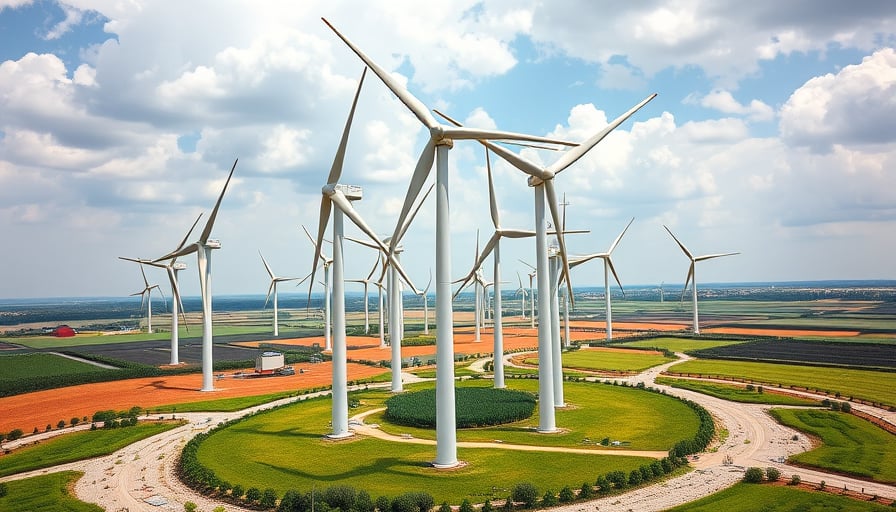
Solar PV capacity additions have accelerated, with a 12 GW increase in 2025, driven by cost‑reductions in photovoltaic modules and improved permitting processes in the United States and EU. Wind farms, particularly offshore in the North Sea and Gulf of Mexico, have expanded by 5 GW, buoyed by floating turbine technology that lowers installation costs in deep‑water sites. Biomass and geothermal projects remain modest in scale, constrained by land‑use competition and limited public funding.
2. Storage Technologies and Economics
2.1 Battery Energy Storage Systems (BESS)
The cost trajectory of lithium‑ion batteries continues its steep decline, reaching an average of $150/kWh in 2026. This price point is expected to hit $120/kWh by 2028, driven by economies of scale in battery manufacturing and advances in cathode chemistry. Grid‑scale BESS deployments have surged, with a cumulative capacity of 40 GW globally, providing both frequency regulation and peak shaving services that reduce reliance on peaking natural‑gas plants.
2.2 Hydrogen and Power-to-Gas
Green hydrogen production via alkaline electrolyzers has achieved a cost of $4.50/kg in high‑volume plants, down from $6.20 in 2024. The remaining price differential is largely due to hydrogen storage and transportation infrastructure, where high‑pressure tanks and underground caverns represent significant CAPEX. Power-to-gas schemes are emerging as a viable method to store excess renewable generation, creating synergies between wind/solar farms and natural‑gas grids.
2.3 Thermal Storage
Molten‑salt and ice‑based thermal storage systems have gained traction in concentrated solar thermal (CST) plants. These solutions extend dispatchability by up to 8 h, reducing the need for complementary wind or gas backup. Capital costs remain higher than BESS, but the long‑term operational reliability and lower maintenance make them attractive for utilities seeking to meet regulatory curtailment limits.
3. Regulatory Landscape
3.1 Carbon Pricing and Emissions Standards
The European Union’s Emissions Trading System (ETS) has expanded to cover power generation and industrial processes, pushing the allowance price to €100/tCO₂e in 2026. The United States has implemented a federal carbon tax of $60/tCO₂e, while California’s cap‑and‑trade program remains the most stringent state‑level policy. These mechanisms accelerate the shift toward low‑carbon production pathways and incentivize storage solutions that mitigate intermittency.
3.2 Subsidy and Incentive Reform
Renewable subsidies have been recalibrated to phase out fossil‑fuel incentives by 2030. The U.S. Investment Tax Credit (ITC) for solar has been reduced from 26 % to 15 % for commercial installations, while the Production Tax Credit (PTC) for wind has been extended with a gradual decline. This policy shift encourages utilities to adopt storage and hybrid renewable platforms to maintain grid stability without relying on subsidies.
3.3 Grid Modernization and Decentralization
Regulatory bodies across North America and Europe are mandating grid upgrades to accommodate distributed energy resources (DER). The North American Electric Reliability Corporation (NERC) has introduced new reliability standards that require utilities to integrate BESS and demand‑response capabilities. In the EU, the 2023 Network Code revisions mandate that large-scale storage projects receive grid access rights on par with conventional generation, thereby reducing the traditional bottlenecks that limited renewable penetration.
4. Technical and Economic Interplay
4.1 Cost Competitiveness
The Levelized Cost of Energy (LCOE) for onshore wind is currently at $36/MWh, while offshore wind has stabilized at $48/MWh. Solar PV, with the latest panel efficiencies, sits at $32/MWh. By contrast, the LCOE for conventional natural‑gas combined‑cycle plants is approximately $56/MWh. When factoring in storage costs, the effective LCOE for a wind‑plus‑BESS system can drop to $42/MWh, rendering it competitive with gas‑based generators under most regulatory regimes.
4.2 Market Integration
Grid operators increasingly rely on real‑time market data to balance supply and demand. The integration of high‑frequency price signals with storage dispatch algorithms allows for arbitrage opportunities that improve the economic viability of both renewable and fossil assets. Advanced predictive analytics, powered by AI, enable better forecasting of wind and solar output, thereby reducing the need for standby gas turbines and lowering curtailment rates.
4.3 Geopolitical Influences
Sanctions against key oil exporters and the resulting volatility in crude prices have amplified interest in domestic renewable projects. Simultaneously, the geopolitical tension in the Middle East has spurred European nations to accelerate decarbonization strategies, increasing demand for offshore wind and storage infrastructure. In Asia, China’s Belt and Road Initiative has expanded renewable energy cooperation with African and Southeast Asian partners, creating new markets for storage technology exporters.
5. Outlook for Investors and Stakeholders
- Storage as a Growth Lever – The declining cost curve for BESS and emerging power‑to‑gas technologies will likely drive substantial capital inflows toward storage projects over the next five years.
- Renewable Cost Parity – With ongoing cost reductions, onshore wind and solar are expected to achieve cost parity with natural‑gas peaking units by 2028, contingent on supportive regulatory frameworks.
- Regulatory Uncertainty – Policy shifts in carbon pricing and subsidy structures could alter investment landscapes; companies that demonstrate adaptability to evolving standards will maintain competitive advantages.
- Geopolitical Risk Management – Diversification across geographic regions and energy sources will mitigate supply shocks and currency fluctuations, particularly in volatile markets such as the Middle East and Eastern Europe.
- Technological Innovation – Breakthroughs in battery chemistry, hydrogen storage, and grid‑scale thermal solutions will reshape the competitive dynamics, necessitating continuous R&D investment.
6. Conclusion
The energy sector is at a pivotal juncture where traditional fossil‑fuel production faces mounting economic and regulatory pressures, while renewable generation, bolstered by storage technologies, is rapidly closing the cost gap. Policymakers, investors, and operators must navigate this evolving landscape by aligning technological adoption with fiscal incentives and geopolitical realities. The convergence of lower storage costs, stricter carbon mandates, and renewed focus on grid resilience positions the renewable sector for accelerated growth, while traditional energy producers must innovate to sustain relevance in a decarbonizing world.