
Corporate News
Energy Market Outlook: Production, Storage, and Regulatory Dynamics
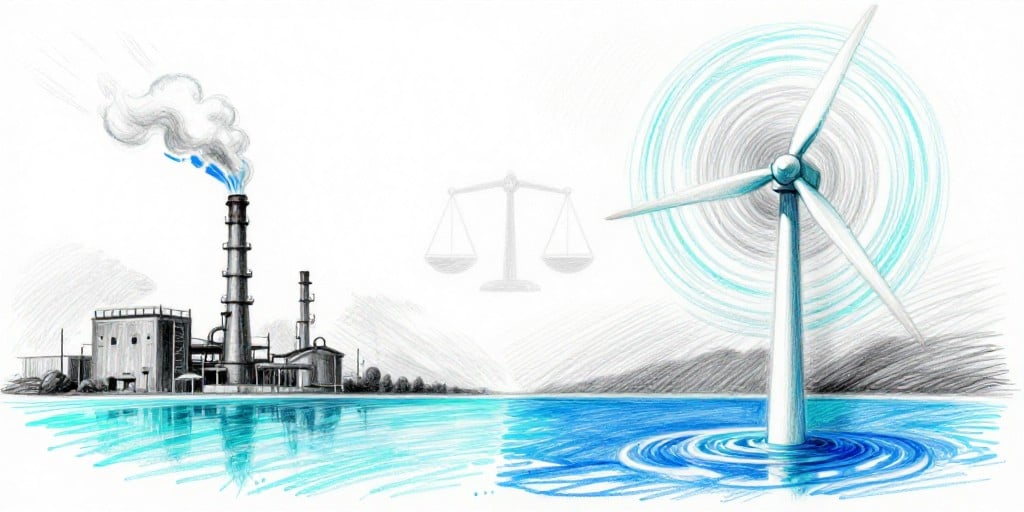
In the evolving landscape of global energy, the interplay between traditional fossil fuels and renewable sources continues to be shaped by a range of technical, economic, and geopolitical factors. Recent market data indicate that production trends, storage capacities, and regulatory developments are converging to create both opportunities and challenges for investors and operators across the sector.
Production Dynamics
Traditional energy producers are facing a mixed outlook. On the oil and gas side, shale plays in North America remain the primary source of new output, driven by advances in horizontal drilling and hydraulic fracturing. However, plateauing reserves in mature basins, coupled with heightened environmental scrutiny, are pressuring firms to diversify. In contrast, coal output in many emerging economies has already begun to decline as countries commit to decarbonisation pledges. The United States and Canada are accelerating their shift away from coal-fired generation, which is reflected in declining capacity factors for coal plants.
Renewable production, especially solar photovoltaic (PV) and wind, is experiencing rapid growth. The International Energy Agency (IEA) projects that the cost of utility‑scale solar PV will fall to below $0.04 per kilowatt‑hour (kWh) by 2035, while onshore wind will see a similar cost trajectory. Technological breakthroughs—such as bifacial solar panels, floating offshore wind platforms, and advanced battery storage—are further enhancing the viability of renewables. In addition, the global deployment of distributed generation, including rooftop PV and micro‑grid solutions, is reshaping demand profiles and reducing peak load pressures on traditional power plants.
Storage and Grid Integration
Energy storage remains a critical enabler for high‑penetration renewable portfolios. Lithium‑ion batteries dominate the market due to their declining cost curve, but other technologies—solid‑state batteries, flow batteries, and compressed air energy storage—are gaining traction in specific use cases. In 2024, storage deployments reached an all‑time high, with cumulative installed capacity exceeding 30 GW worldwide. This growth is driven by grid operators seeking to mitigate the intermittency of wind and solar, and by utility companies aiming to defer expensive peaking plant upgrades.
Grid integration challenges are twofold: physical grid upgrades are required to accommodate bi‑directional flows, and regulatory frameworks must evolve to value storage services such as frequency regulation, spinning reserve, and voltage support. Some regions, notably in Europe and California, have introduced time‑of‑use tariffs and demand‑response programs that reward storage participation, thereby accelerating adoption.
Regulatory and Policy Landscape
Regulatory actions are increasingly central to shaping energy markets. In the United States, the Department of Energy’s updated Energy Transition Plan calls for a net‑zero emissions target by 2050, while the Environmental Protection Agency (EPA) is tightening methane emissions standards for the oil and gas sector. These measures are creating a more stringent compliance environment that favors cleaner technologies.
In Europe, the European Commission’s Green Deal and the Renewable Energy Directive set ambitious targets that oblige member states to increase their renewable share of electricity generation to 40 % by 2030. The European Union Emission Trading System (ETS) is being restructured to cover power sector emissions more comprehensively, thereby raising the cost of fossil fuel combustion.
Globally, geopolitical tensions—particularly the Russia‑Ukraine conflict—have accelerated the shift away from Russian gas supplies. European utilities are diversifying supply chains and investing in LNG terminals, which are also opening up new trade corridors for the United States and Canada. Meanwhile, Asian markets are rapidly expanding offshore wind capacity in China, Japan, and South Korea, driven by national renewable targets and falling turbine costs.
Economic Considerations
From an economic perspective, the cost of capital for renewable projects has fallen dramatically. The spread between renewable and traditional project financing is narrowing, largely due to the increasing prevalence of green bonds and other sustainability‑linked financial instruments. These instruments are not only attractive to institutional investors but also help project developers secure lower interest rates.
Conversely, traditional producers face higher debt servicing costs as lenders impose stricter environmental, social, and governance (ESG) criteria. The shift towards ESG‑aligned financing is forcing oil and gas companies to adopt more stringent carbon reduction pathways or risk higher borrowing costs.
Impact on PBF Energy and Similar Firms
The dynamics outlined above have direct implications for companies like PBF Energy, which operates within the traditional energy space yet also engages with renewable supply chains through long‑term offtake agreements. While insider selling by Control Empresarial de Capitales S.A. de C.V. does not materially alter PBF Energy’s operational capabilities, it underscores the importance of diversified ownership and robust governance structures in navigating a market that is increasingly regulated and driven by sustainability imperatives.
Investors monitoring PBF Energy should consider how regulatory shifts—such as the tightening of methane emissions standards and the expansion of carbon pricing mechanisms—might influence the company’s cost base and risk profile. Likewise, the firm’s exposure to renewable supply contracts could serve as a hedge against the volatility of fossil fuel prices, providing a more balanced revenue stream.
Conclusion
The convergence of production trends, storage capacity expansion, and evolving regulatory frameworks is reshaping the global energy market. Traditional energy producers must adapt to higher compliance costs and shifting demand, while renewable operators benefit from declining technology costs and supportive policy environments. For investors, the key lies in assessing how individual companies—whether entrenched in fossil fuels or actively integrating renewables—navigate this multifaceted landscape, especially in light of recent insider transactions that signal changing ownership dynamics and potential shifts in strategic focus.