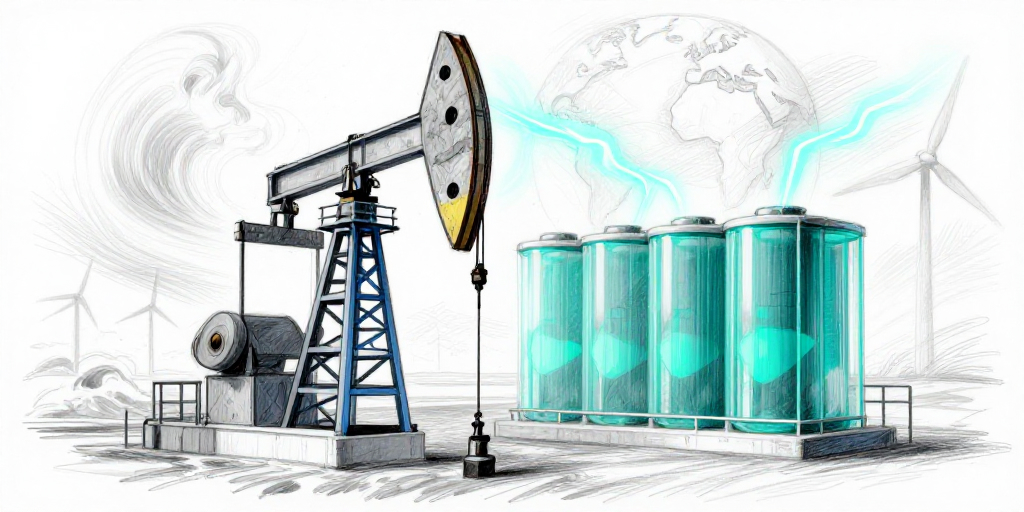
Energy Markets Analysis: Production, Storage, and Regulatory Dynamics
Production Trends in Conventional and Renewable Sectors
The global energy landscape is undergoing a pronounced shift driven by both technological advancements and policy imperatives. In the conventional sector, oil and gas production remains robust in key basins such as the Permian, Bakken, and North Sea, with cumulative output stabilizing at a plateau of approximately 8 million barrels per day (bbl/d). Technological innovations—particularly hydraulic fracturing and horizontal drilling—continue to enhance recovery rates, but geological constraints and declining reserves in mature plays are beginning to temper long‑term growth prospects.
Conversely, renewable generation capacity has expanded at an annualised rate exceeding 10 % over the past five years. Wind and solar photovoltaic (PV) installations dominate this growth, propelled by declining capital expenditure (CAPEX) and improving component efficiency. Wind projects in the United States and Europe now deliver an average capacity factor of 45 %, while utility‑scale solar plants maintain a 22 % capacity factor. The rapid deployment of storage technologies—most notably lithium‑ion and emerging solid‑state batteries—has begun to mitigate intermittency, with global battery storage capacity surpassing 30 GW in 2025 and projected to reach 150 GW by 2030.
Storage: Economic Viability and Market Integration
Storage capacity is pivotal for aligning supply with demand, particularly as renewable penetration increases. The cost of lithium‑ion batteries has fallen by roughly 60 % over the last decade, bringing the levelised cost of storage (LCOS) down to $80–$120 per megawatt‑hour (MWh) for 2025‑2026 deployments. This cost trajectory aligns storage with competitive positions relative to conventional peaking power, especially in markets with high renewable curtailment and significant price volatility.
Regulatory frameworks are evolving to recognise storage as a critical grid asset. In the United States, the Federal Energy Regulatory Commission (FERC) has issued Order 841 to streamline the integration of battery storage into the wholesale market, while the California Energy Commission (CEC) has expanded its market participation rules to allow storage to offer ancillary services. Similar initiatives are underway in the European Union, where the Clean Energy Package mandates the inclusion of storage in the European Energy Exchange (EPEX) markets and supports capacity remuneration mechanisms for battery assets.
Economic Drivers Across Energy Sectors
Several macroeconomic factors influence the trajectory of both traditional and renewable energy markets:
Oil Prices and Fiscal Policy The recent rebound in Brent crude to $85 per barrel has reinforced the economic viability of lower‑cost conventional projects. However, heightened fiscal scrutiny—particularly in high‑yield jurisdictions such as Nigeria and Brazil—could impose additional cost burdens. Carbon pricing initiatives, such as the UK’s Carbon Price Floor (CPF) and the EU Emissions Trading System (ETS), further elevate operating costs for gas‑fired power plants, potentially accelerating the shift toward renewables.
Renewable CAPEX and Supply Chain Dynamics The supply chain for wind turbines and PV panels remains sensitive to geopolitical tensions in the Middle East and Asia. Disruptions in the supply of rare earth elements (REEs) and critical raw materials have introduced cost volatility. Nonetheless, the global push for decarbonisation—manifested in the Paris Agreement and national net‑zero targets—continues to drive investment, with the International Energy Agency (IEA) projecting a 30 % increase in renewable CAPEX by 2030.
Electricity Demand Growth and Electrification Electrification of transportation and heating is poised to elevate electricity demand by 15 % over the next decade. This demand growth provides a compelling case for expanding generation capacity across both renewable and conventional sources, albeit with a growing emphasis on decarbonised supply to meet climate commitments.
Interest Rates and Financing Conditions Rising global interest rates have modestly increased the cost of capital for energy projects. Yet, the high dividend yields of renewable projects and their favourable risk profile relative to fossil fuel ventures have helped sustain robust financing flows. In addition, green bonds and sustainability‑linked loans are increasingly employed to fund renewable and storage projects, offering lower borrowing costs and appealing to ESG‑focused investors.
Geopolitical Considerations
Geopolitical dynamics exert a profound influence on energy markets:
Russia‑Ukraine Conflict The conflict has disrupted natural gas supplies to Europe, prompting a surge in LNG imports and a rapid deployment of wind and solar projects in the region. It has also accelerated the European Union’s energy security agenda, leading to increased investment in domestic energy sources and storage capabilities.
US‑China Relations Trade tensions between the United States and China affect the global supply of renewable technologies, especially in the solar sector where China dominates manufacturing. Potential tariffs on PV modules could increase costs for U.S. and European projects, while the U.S. seeks to reduce import reliance through domestic manufacturing incentives.
Middle Eastern Geopolitics Political instability in oil-producing regions continues to affect oil supply stability and price volatility. While this underscores the value of diversifying energy portfolios, it also enhances the appeal of low‑cost renewables and storage as stable, long‑term assets.
Regional Energy Agreements The Energy Charter Treaty and the Gulf Cooperation Council (GCC) agreements facilitate cross‑border trade of electricity and hydrocarbons, supporting regional market integration and creating opportunities for shared infrastructure, such as cross‑border transmission lines and joint storage facilities.
Outlook for Energy Market Participants
For investors and corporates operating within the energy sector, the confluence of declining renewable CAPEX, supportive regulatory frameworks, and persistent geopolitical uncertainties creates a landscape of both risk and opportunity. Conventional assets may continue to yield attractive returns in regions with favourable commodity prices and regulatory environments, whereas renewable and storage projects offer compelling prospects in markets prioritising decarbonisation and grid resilience.
Strategic portfolio diversification, proactive engagement with emerging regulatory regimes, and robust supply‑chain risk mitigation will be essential for capitalising on the evolving dynamics of production, storage, and regulatory policy in the global energy markets.