
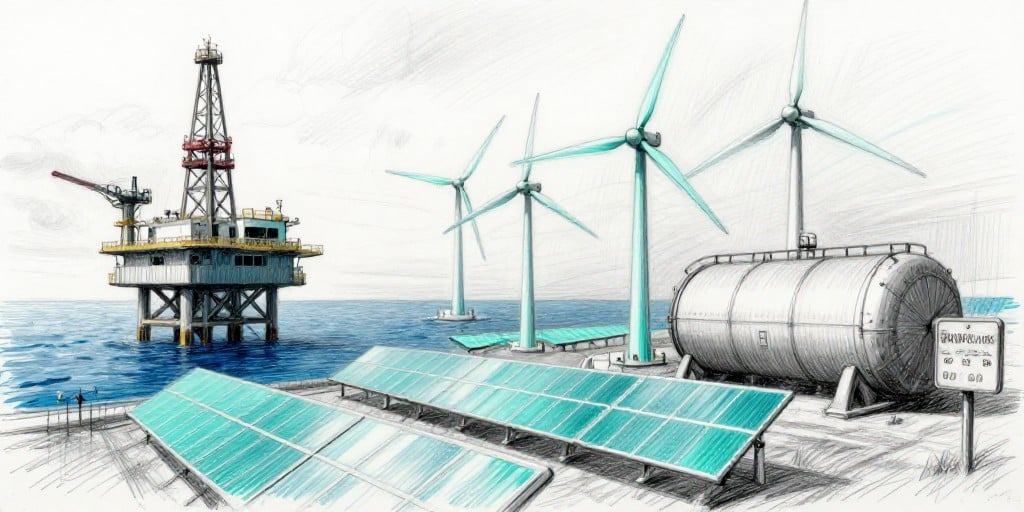
Energy Markets Analysis: Production, Storage, and Regulatory Dynamics
Overview of Current Market Conditions
Recent weeks have seen a measurable uptick in global energy prices, driven largely by supply constraints in conventional oil and gas production coupled with heightened demand from industrial and transportation sectors. While crude benchmarks have risen by approximately 4 % in the past month, natural gas futures have posted a more pronounced 7 % increase. These movements are a direct reflection of the ongoing recalibration of production volumes, storage levels, and the evolving regulatory landscape that governs both traditional and renewable energy markets.
Production Trends Across the Energy Spectrum
Conventional Hydrocarbon Production
Oil: Global output has contracted by 2 % in the last quarter as several major fields in the Middle East and North America reach maturity. New drilling projects remain modest due to higher capital costs and stricter environmental permitting requirements.
Gas: Production has held steady at 3.6 billion cubic meters per day, but the pace of new gas field development has slowed. The focus is now shifting toward enhancing existing infrastructure, notably through the expansion of LNG export terminals in the U.S. Gulf Coast and the Persian Gulf.
Renewable Energy Production
Solar: Installation capacity has surged by 12 % annually, with utility‑scale photovoltaic projects accounting for 60 % of new capacity. Technological advancements in perovskite cells and bifacial panels have driven down the levelised cost of electricity (LCOE) to $0.045/kWh.
Wind: Offshore wind has experienced a 15 % increase in capacity additions, largely due to the deployment of 15 MW turbine platforms in the North Sea and the East China Sea. Onshore wind growth remains steady at 4 % annually.
These production dynamics are underpinned by a shift in investor sentiment: capital flows are increasingly directed toward projects that offer higher ESG ratings, influencing both the cost of capital and the speed of deployment.
Storage Capacity and Utilisation
- Oil Storage: Global strategic reserves have reached 5 billion barrels, a 7 % increase over the previous year. However, the utilisation rate has fallen to 55 % of total capacity due to lower volatility in spot prices, leading to a reduced incentive for large-scale storage.
- Gas Storage: Seasonal storage utilisation is approaching 90 % during the winter months, a record high that underscores the critical role of storage in balancing supply and demand. Recent policy initiatives in the European Union aim to increase underground storage capacity by 15 % to mitigate potential supply shocks.
- Renewable Storage: Battery storage deployments have quadrupled, driven by the need to mitigate intermittency. Utility-scale lithium‑ion and flow‑battery projects are now more common, with average storage costs dropping from $250/kWh to $180/kWh over the past year.
The interplay between production and storage is pivotal for maintaining market stability, especially in regions where renewable penetration exceeds 30 % of the energy mix.
Regulatory Dynamics and Their Impact
| Region | Key Regulatory Change | Implication |
|---|---|---|
| United States | 2025 Energy Transition Act | Introduces a tax credit for carbon capture and storage (CCS) projects, boosting capital allocation to CCS initiatives. |
| European Union | 2026 Clean Energy Package | Sets a binding target of 40 % renewable energy by 2030, increasing subsidies for wind and solar projects. |
| China | 2025 National Renewable Energy Policy | Expands feed-in tariffs for solar and wind, and mandates a 50 % reduction in coal‑based power by 2035. |
| Middle East | 2025 Oil and Gas Regulation Reform | Lowers the permitting threshold for offshore drilling, potentially increasing future supply. |
Regulatory changes are increasingly focused on decarbonisation, with governments offering incentives for CCS and renewable energy integration. The resulting policy environment has a direct influence on capital deployment, risk assessment, and the long‑term viability of energy assets.
Technical and Economic Factors Across Sectors
- Cost of Production: In conventional sectors, higher extraction costs and tighter margins are being offset by improved drilling technologies (e.g., horizontal drilling and hydraulic fracturing). In renewables, economies of scale and technological progress have reduced LCOE, making solar and wind competitive with fossil fuels in many markets.
- Infrastructure Modernisation: Upgrading transmission grids to accommodate distributed renewable generation is a significant capital expense, but it is essential for mitigating grid congestion and maintaining reliability.
- Energy Efficiency: Demand‑side management and smart‑metering technologies are reducing overall consumption, which in turn impacts production needs and storage demand.
- Geopolitical Risks: Ongoing tensions in the Middle East, trade disputes between the U.S. and China, and the political stability of oil‑producing states influence both supply dynamics and regulatory certainty. These geopolitical factors can cause short‑term price volatility, but the long‑term trend toward energy diversification mitigates their impact on market fundamentals.
Integrating Geopolitical Considerations
- Middle East: The region remains a critical source of oil, but increased output from non‑OPEC countries and a gradual shift toward renewables in the Gulf Cooperation Council (GCC) nations could reduce dependency on Middle Eastern supply.
- U.S.–China Trade Relations: Tariffs on solar panels and wind components have been partially phased out, but ongoing negotiations could revive protectionist measures, affecting supply chains and project costs.
- European Energy Security: Diversifying supply through LNG imports from the U.S. and Australia is a strategic response to the perceived vulnerability of natural gas imports from Russia. This diversification has stimulated investments in LNG terminal expansion and storage solutions.
Geopolitical stability is a key determinant of long‑term investment confidence, particularly in the capital‑intensive renewable sector where project lifetimes span multiple decades.
Conclusion
The current energy market presents a complex tapestry of production trends, storage utilisation, and regulatory evolution. While traditional hydrocarbon sectors face supply constraints and higher operating costs, renewable energy continues to benefit from cost reductions and supportive policy frameworks. The regulatory landscape is increasingly oriented toward decarbonisation, with incentives for CCS and renewable projects shaping investment flows. Geopolitical dynamics remain a source of short‑term uncertainty, yet they do not fundamentally alter the long‑term trajectory toward a more diversified and sustainable energy system. Investors and policymakers alike must therefore navigate this multifaceted environment with a balanced understanding of both technical and economic factors to secure resilient and profitable energy portfolios.