
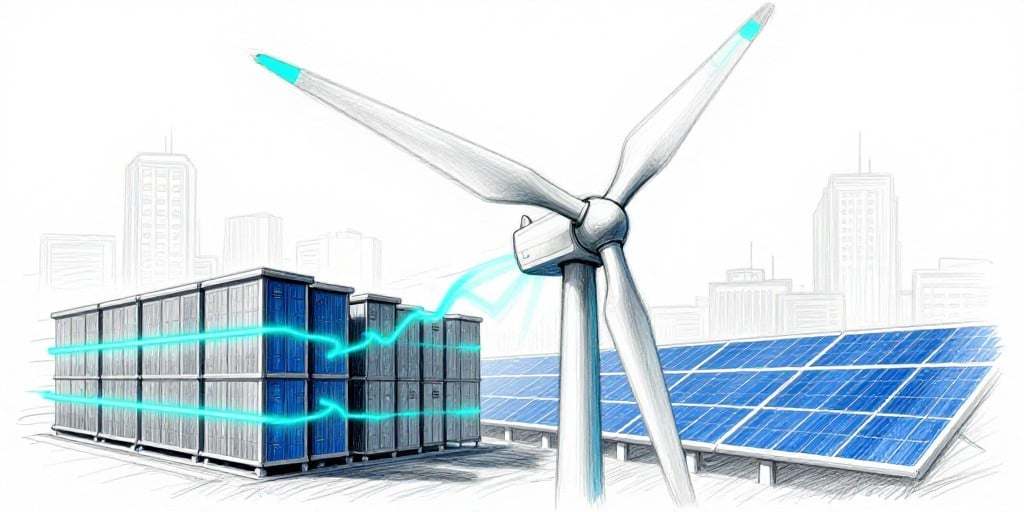
Analysis of Energy Markets: Production, Storage, and Regulatory Dynamics
1. Introduction
The global energy landscape is undergoing a profound transformation driven by technological advances, shifting demand patterns, and evolving regulatory frameworks. While traditional fossil‑fuel production continues to dominate many regions, renewable sources are rapidly scaling, supported by cost reductions and policy incentives. This article examines the key technical and economic drivers influencing both sectors, with a particular focus on production capacity, energy storage capabilities, and the regulatory environment that shapes investment and operational decisions. Geopolitical factors are also integrated to illustrate their impact on market trajectories.
2. Production Dynamics
2.1 Traditional Energy Production
- Oil & Gas Reserves: Despite a gradual decline in new discoveries, proven reserves in the Middle East and the United States remain robust. Technological innovations such as horizontal drilling and hydraulic fracturing have extended the productive lifespan of existing fields, leading to a modest plateau in production levels through the mid‑2030s.
- Coal: While coal remains a significant source of electricity in emerging economies, its share of the global energy mix is decreasing due to stringent emissions standards and the competitiveness of natural gas and renewables.
2.2 Renewable Energy Production
- Photovoltaics (PV): The cost of silicon‑based solar panels has fallen by over 70 % in the last decade, primarily due to economies of scale and improvements in manufacturing. Global PV capacity is projected to grow at a compound annual growth rate (CAGR) of 22 % through 2030.
- Wind: Offshore wind has experienced a surge in deployment, driven by higher capacity factors and declining turbine costs. Technological advancements in blade design and grid integration are enabling wind farms to operate at 50‑55 % capacity factors, surpassing many onshore installations.
- Hydrogen: Electrolyzers powered by renewable electricity are becoming cost competitive, especially in regions with abundant solar or wind resources. The green hydrogen sector is expected to witness a CAGR of 30 % in production capacity through 2035, contingent upon supportive policy frameworks.
3. Energy Storage Considerations
3.1 Technical Aspects
- Battery Technologies: Lithium‑ion batteries remain the dominant storage technology for grid‑scale applications, offering high round‑trip efficiencies (~90 %). Solid‑state batteries and flow batteries are emerging alternatives, promising higher energy density and longer lifespans.
- Pumped Hydro & Compressed Air: These mature storage options provide large‑scale capacity, albeit limited by geographic constraints. Advances in pumped‑storage technology, such as the use of underground caverns, are expanding the feasibility of such solutions.
3.2 Economic Drivers
- Cost Trajectory: Battery storage costs have declined by approximately 45 % annually over the past five years. This trend is expected to continue as production scales and supply chain efficiencies improve.
- Value Proposition: Storage is increasingly justified through ancillary services, grid stability, and demand‑shifting capabilities. Revenue streams from frequency regulation and capacity markets are enhancing the return on investment for storage projects.
4. Regulatory Dynamics
4.1 Traditional Energy
- Carbon Pricing: The implementation of carbon taxes and cap‑and‑trade schemes in the EU, China, and the United States is accelerating the transition away from high‑carbon fuels. Carbon pricing is projected to account for 8–12 % of global energy costs by 2030.
- Subsidy Reforms: Many governments are reducing direct subsidies for fossil fuels, redirecting financial support toward renewables and energy efficiency measures.
4.2 Renewable Energy
- Feed‑in Tariffs (FiTs): FiTs continue to be a key policy tool, guaranteeing a fixed price for renewable electricity over a contract period. However, a shift toward auction‑based procurement is reducing FiT rates, encouraging cost‑competitiveness.
- Net Metering: Policies allowing consumers to offset their consumption with rooftop generation are expanding, fostering distributed generation.
5. Geopolitical Considerations
- Supply Chain Vulnerabilities: The concentration of critical materials (e.g., lithium, cobalt, rare‑earth elements) in a few countries has heightened concerns about supply disruptions. Diversification of supply chains and strategic stockpiling are emerging policy responses.
- Energy Security: Regional conflicts and diplomatic tensions can constrain oil and gas supplies, reinforcing the strategic value of domestic renewable resources.
- International Climate Agreements: The Paris Agreement and subsequent national commitments to net‑zero emissions are shaping regulatory trajectories, creating a conducive environment for renewable investment.
6. Integrated Outlook
The convergence of declining renewable costs, advancing storage technologies, and tightening carbon regulations is reshaping the energy production paradigm. While traditional energy sources will continue to play a role, especially in energy‑dense industries, the trajectory favors a diversified mix that balances reliability, affordability, and environmental stewardship. Investors and policymakers must navigate these intertwined technical and economic factors while remaining cognizant of geopolitical risks that could disrupt supply chains or alter market incentives.