
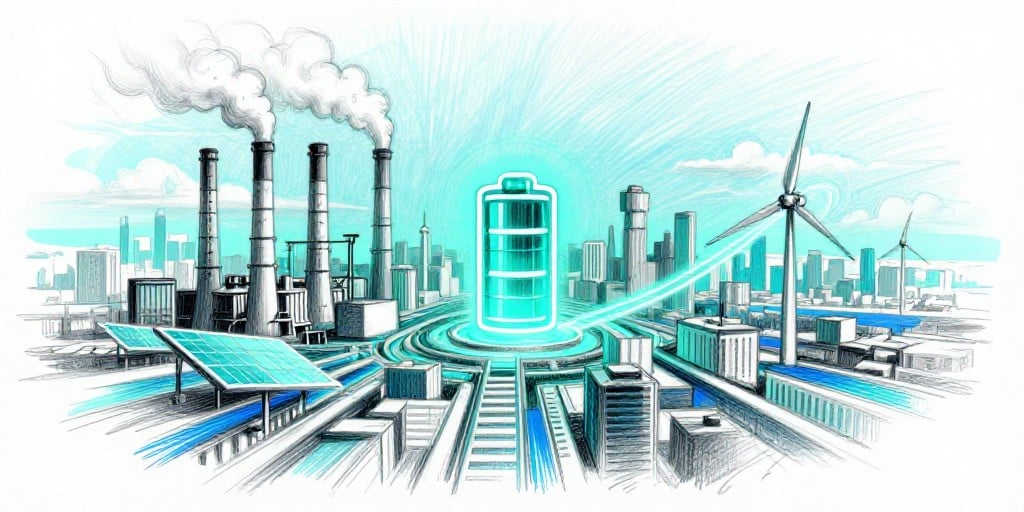
Energy Markets in 2026: Production, Storage, and Regulatory Dynamics
The global energy landscape continues to evolve under the pressure of geopolitical tensions, advancing technology, and shifting regulatory frameworks. In 2026, traditional fossil‑fuel production remains the backbone of the energy supply, yet renewable sources are rapidly gaining ground. The interplay between these sectors is reflected in production volumes, storage capabilities, and the regulatory environment that governs their operations.
Production Trends
Fossil Fuels
- Oil: Production worldwide has stabilized at approximately 95 million barrels per day. Major producers such as Saudi Arabia, Russia, and the United States maintain output levels that satisfy current demand, but a modest decline is projected as mature fields near depletion and new drilling projects face regulatory hurdles.
- Natural Gas: Global natural‑gas output is forecast to increase by 1–2 % annually. This growth is driven by new LNG export facilities in the United Arab Emirates and Qatar, alongside heightened demand from Asia‑Pacific economies that are still heavily reliant on gas for power generation.
- Coal: While some coal‑rich nations are transitioning away from thermal power, coal production remains steady in China and India, albeit with a gradual shift towards cleaner coal technologies and carbon capture and storage (CCS).
Renewables
- Solar Photovoltaic (PV): Solar installations have surpassed 1 petawatt‑hour (PWh) of cumulative capacity, with annual additions reaching 100 GW. The declining cost of photovoltaic modules and supportive feed‑in tariffs have spurred rapid deployment, especially in North America, Europe, and the Middle East.
- Wind: Onshore wind capacity now exceeds 300 GW, with offshore wind expanding faster due to favorable wind conditions and improved floating turbine technology. Wind energy accounts for roughly 15 % of global electricity generation.
- Hydropower and Others: Hydropower continues to be a significant renewable source, though its expansion has slowed in many regions due to environmental concerns and limited suitable sites. Biomass and geothermal projects remain niche but essential for diversified energy portfolios.
Storage Developments
The growth of renewable energy has heightened the need for flexible storage solutions to balance supply and demand.
- Battery Energy Storage Systems (BESS): Lithium‑ion batteries dominate the market, with total global storage capacity surpassing 100 GWh. Battery costs have fallen by more than 60 % since 2015, enabling utility‑scale projects that stabilize grid frequency and provide peak‑load relief.
- Pumped‑Hydro Storage: Pumped‑hydro projects continue to expand, particularly in China and the United States. These facilities provide long‑duration storage, essential for mitigating the variability of solar and wind generation.
- Hydrogen Storage: Ammonia and hydrogen are emerging as viable vectors for long‑term and long‑distance energy transfer. Pilot projects in the Netherlands and Saudi Arabia aim to produce green hydrogen via electrolysis powered by renewables, then store it in underground caverns.
Regulatory Dynamics
Governments worldwide are refining policies to align energy production with climate targets, economic stability, and national security objectives.
- Carbon Pricing: A growing number of countries have implemented carbon taxes or cap‑and‑trade schemes. The European Union’s Emissions Trading System (ETS) now covers roughly 30 % of EU greenhouse‑gas emissions, exerting pressure on both fossil‑fuel producers and the industrial sector.
- Renewable Portfolio Standards (RPS): Many jurisdictions, including the United States, Canada, and several European nations, have set ambitious RPS targets, mandating that a specific percentage of electricity come from renewable sources by 2030–2040. These mandates drive investment in solar, wind, and storage projects.
- Investment Incentives: Tax credits, subsidies, and grants remain pivotal in accelerating renewable deployment. The U.S. Inflation Reduction Act (IRA) provides significant incentives for solar and battery storage projects, while similar measures are being adopted in Europe and Asia.
- Geopolitical Considerations: Energy security concerns are reshaping trade agreements and supply chain strategies. The U.S. and European Union are diversifying gas supplies away from Russian pipelines, whereas China is investing heavily in renewable infrastructure abroad to secure a stable feedstock for its industrial base.
Technical and Economic Factors Affecting Energy Sectors
| Factor | Impact on Traditional Energy | Impact on Renewable Energy |
|---|---|---|
| Commodity Prices | Higher oil and gas prices increase revenue, but also raise operating costs for renewable projects that rely on fossil‑fuel backup. | Low fossil‑fuel prices reduce the competitive edge of renewables, potentially slowing investment. |
| Technological Advancements | Improved drilling techniques and CCS can extend the lifespan of fossil‑fuel fields. | Advancements in PV efficiency, battery chemistry, and offshore wind technology reduce capital expenditures and improve return on investment. |
| Supply Chain Disruptions | Geopolitical conflicts can restrict access to drilling equipment and maintenance services. | Rare earth element scarcity may impact the manufacturing of wind turbines and batteries, affecting project timelines. |
| Policy Uncertainty | Regulatory changes can abruptly alter the economics of fossil‑fuel projects, especially in regions with aggressive decarbonization plans. | Stable, supportive policies are essential for securing long‑term financing for renewable projects; policy shifts can derail existing commitments. |
Geopolitical Considerations
- US–China Rivalry: The competition extends beyond trade into the energy sector, with both nations investing heavily in renewable technologies to reduce dependence on foreign fossil fuels.
- Middle East Dynamics: Political instability can affect oil supply chains, prompting diversifying strategies in European energy markets that emphasize renewables and storage solutions.
- Russia–Ukraine Conflict: The disruption of gas supplies from Russia has accelerated European investment in LNG import terminals and renewable projects, reshaping the continent’s energy mix.
Outlook
The convergence of declining renewable costs, supportive policies, and increasing investor appetite suggests a steady shift towards cleaner energy sources. However, the fossil‑fuel sector is unlikely to disappear in the short term due to entrenched infrastructure, existing demand, and geopolitical uncertainties. Storage technologies, particularly batteries and pumped‑hydro, will play a pivotal role in enabling this transition by providing the flexibility needed to integrate intermittent renewable resources into the grid.
In conclusion, the energy market in 2026 is characterized by a complex interplay of production dynamics, storage advancements, and regulatory pressures. Stakeholders—ranging from policymakers to investors—must navigate these factors to capitalize on opportunities and mitigate risks inherent in the evolving energy landscape.