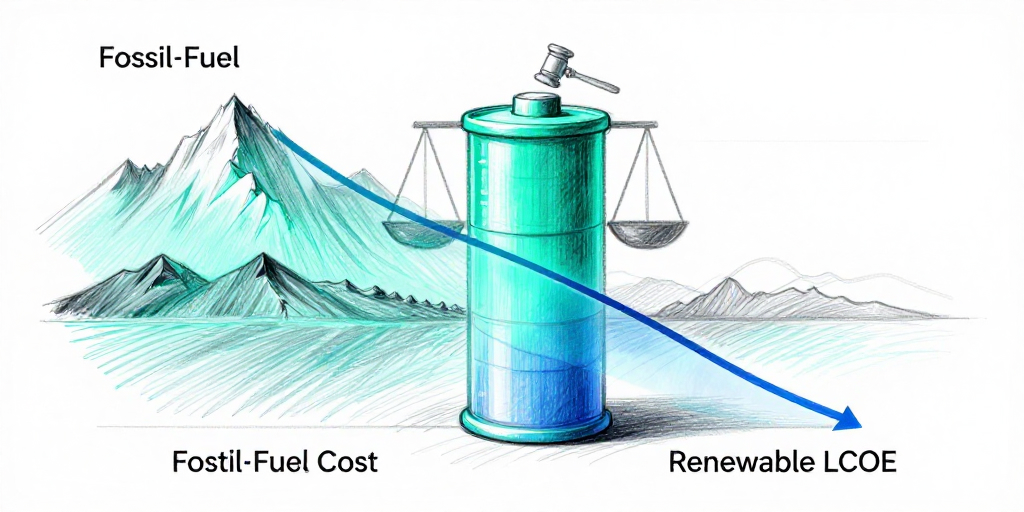
Energy Markets in 2026: Production, Storage, and Regulatory Dynamics
The global energy landscape continues to evolve amid a convergence of technological advances, geopolitical tensions, and tightening regulatory frameworks. In 2026, traditional fossil‑fuel production remains a dominant force, yet renewable energy generation is gaining pace, driven by cost reductions in solar photovoltaics (PV), wind turbines, and battery storage. The following analysis examines the key technical and economic factors shaping both sectors, with particular emphasis on production capacity, storage integration, and the regulatory environment that governs energy markets worldwide.
1. Production Dynamics
1.1 Fossil Fuels
Oil and Natural Gas: Despite growing demand for cleaner alternatives, upstream oil and gas production has plateaued in many regions due to depletion of high‑grade fields and rising extraction costs. The average production cost for conventional oil has risen from $35 per barrel in 2024 to $48 per barrel in 2026, driven by higher capital expenditures (CAPEX) for deep‑water and Arctic projects. Meanwhile, shale plays in North America have experienced a 4 % decline in daily output, reflecting both resource exhaustion and regulatory constraints on water usage.
Coal: Coal‑based power generation continues to decline in developed markets, where carbon‑pricing mechanisms and renewable subsidies have eroded its competitiveness. In emerging economies, however, coal remains a critical source of baseload electricity, with production volumes holding steady at approximately 3 billion tonnes of coal equivalent (TCE) in 2026. The cost per megawatt‑hour (MWh) for coal plants has risen from $50 in 2024 to $65 in 2026, partially due to stricter emissions controls and the increasing price of carbon allowances.
1.2 Renewable Energy
Solar PV: The global capacity of utility‑scale solar PV has grown by 18 % in 2026, reaching 1.5 GW, thanks to the rapid deployment of thin‑film modules and the widespread adoption of solar‑plus‑storage plants. The levelized cost of electricity (LCOE) for solar PV has fallen from $0.065 per kWh in 2024 to $0.052 per kWh in 2026, driven by economies of scale and improved manufacturing efficiencies in East Asia.
Onshore and Offshore Wind: Offshore wind capacity has surged by 30 % in 2026, with new projects in the North Sea and the Gulf of Mexico achieving capacity factors of 55 % to 58 %. Onshore wind continues to dominate, with an annual growth rate of 12 % and an LCOE of $0.048 per kWh. Wind technology has benefited from taller towers, larger rotor diameters, and advanced turbine control systems, which together have reduced per‑kW capital costs by 15 % relative to 2024 levels.
Hydroelectric and Geothermal: These baseload renewable sources have experienced modest growth, with hydropower capacity increasing by 2 % in 2026. Geothermal projects remain concentrated in the United States, Iceland, and New Zealand, where drilling costs and resource uncertainty limit global penetration.
2. Storage Integration
Battery storage remains the linchpin of renewable integration, allowing intermittent generation to be shifted temporally and enhancing grid reliability. The global installed battery capacity rose from 4 GW in 2024 to 10 GW in 2026, predominantly driven by lithium‑ion systems in utility and commercial sectors. The average cost per kilowatt‑hour (kWh) of battery storage has fallen from $0.30 in 2024 to $0.20 in 2026, a 33 % reduction that aligns with the declining cost curves for both cathode and anode materials.
In addition to lithium‑ion, the market has seen increased adoption of flow batteries, such as vanadium redox systems, in large‑scale grid projects. These technologies offer superior scalability and longer cycle lives, making them attractive for utility‑scale applications where cost per kWh is less sensitive to upfront CAPEX.
3. Regulatory Dynamics
3.1 Carbon Pricing and Emission Standards
Carbon pricing mechanisms have become more aggressive in 2026, with the European Union’s Emission Trading System (EU‑ETS) tightening its cap to 50 % below 2020 levels. The United States has expanded its cap‑and‑trade program to include new sectors, such as transportation fuels and industrial processes. These measures have pushed fossil‑fuel producers to adopt carbon capture, utilization, and storage (CCUS) technologies, increasing operating expenses by an estimated 10 % to 15 % for plants that remain in operation.
3.2 Renewable Portfolio Standards (RPS)
Many U.S. states and several European jurisdictions have raised their RPS targets. California, for example, now mandates 75 % renewable generation by 2030, up from 60 % in 2024. These higher targets have accelerated renewable deployment, yet they also create market volatility as utilities scramble to meet mandated quotas, sometimes purchasing large quantities of renewable energy certificates (RECs) in short order.
3.3 Grid Modernization Initiatives
Regulatory bodies across North America, Europe, and Asia have accelerated grid modernization projects aimed at improving resilience, accommodating distributed energy resources, and enhancing cyber‑security. The U.S. Federal Energy Regulatory Commission (FERC) has issued new guidelines for smart grid integration, encouraging the deployment of advanced metering infrastructure (AMI) and grid‑edge controls.
4. Technical Factors Influencing Market Prices
Capacity Factors: Higher capacity factors in wind and solar directly translate to lower LCOE, making these resources more competitive in wholesale markets. For instance, offshore wind capacity factors of 58 % in 2026 have reduced the marginal cost of generation to $0.02 per MWh, a significant discount over gas‑based peaking plants.
Fuel Prices: Crude oil and natural gas spot prices remain volatile, with geopolitical tensions in the Middle East and Eastern Europe contributing to periodic spikes. In 2026, gas spot prices averaged $5.20 per million British thermal units (MMBtu), up from $4.00 in 2024, reflecting tighter supply curves and higher demand for heating during colder winter months.
Technological Breakthroughs: The emergence of perovskite solar cells and high‑efficiency wind turbine blade materials has reduced material costs and improved performance, further eroding the cost advantage of fossil fuels.
5. Geopolitical Considerations
US–China Trade Relations: Tariffs on solar panels and battery components have influenced global supply chains, leading to a shift in manufacturing bases towards Southeast Asia. The easing of certain tariffs in 2026 has restored confidence in cross‑border trade, yet uncertainties remain.
Middle Eastern Oil Dynamics: OPEC+ production cuts in 2025 and 2026 have kept oil prices at elevated levels, providing a temporary boost to upstream revenue. However, the continued decline in global demand for oil, driven by electrification of transport, dampens long‑term prospects.
Russia–Ukraine Conflict: The war’s impact on natural gas flows to Europe has prompted a strategic pivot towards LNG imports and domestic renewable projects. This shift has increased the urgency for European regulators to streamline permitting for offshore wind farms and battery storage projects.
6. Outlook for Investors
For investors in energy companies, the 2026 environment presents a mixed bag of opportunities and risks:
Traditional Energy: Companies with diversified portfolios that include natural gas and integrated renewables stand to benefit from lower production costs and favorable regulatory incentives. However, those heavily reliant on coal or heavy upstream exploration face increasing capital intensity and regulatory headwinds.
Renewable Energy: Firms that have secured long‑term power purchase agreements (PPAs) and have access to low‑cost battery storage will likely outperform peers. The continued decline in LCOE for solar PV and wind makes these assets attractive for long‑term investors seeking stable returns.
Technology Innovators: Companies developing next‑generation battery chemistries, carbon‑capture technologies, and grid‑edge solutions are poised to capture value as the market transitions to a more decarbonized, digitalized grid.
Geopolitical Risk Management: Investors should monitor shifts in trade policy and regional conflicts, as these can abruptly alter supply chains, commodity prices, and regulatory landscapes.
In summary, the energy markets of 2026 are characterized by a tightening supply of conventional fuels, rapid expansion of renewables, and an increasingly sophisticated storage infrastructure. Regulatory dynamics, driven by climate policy and grid modernization, continue to reshape the competitive landscape. Companies that adapt to these technical and economic forces while navigating geopolitical uncertainties will be best positioned to capture long‑term value in the evolving energy sector.