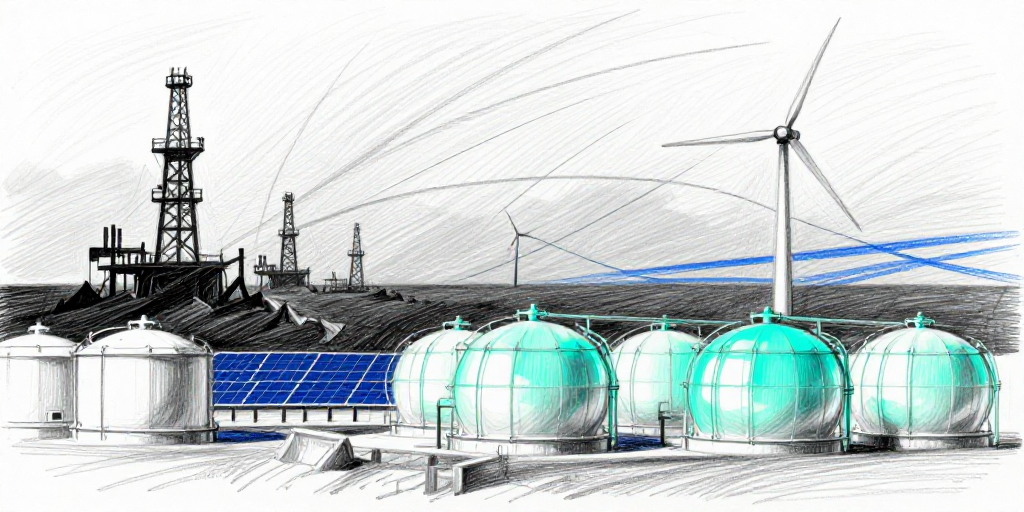
Energy Markets in Transition: Production, Storage, and Regulatory Dynamics
Executive Summary The global energy landscape is undergoing a profound transformation driven by technological advances, shifting consumer preferences, and evolving regulatory frameworks. Traditional fossil‑fuel production remains a cornerstone of the supply chain, yet renewable generation and energy storage are gaining unprecedented momentum. This article examines the technical and economic variables shaping both sectors, with an emphasis on geopolitical factors that influence market stability and investor confidence.
1. Production Trends in Conventional Energy
1.1 Oil and Gas Supply Chain
- Reserves and Extraction Efficiency: Proven reserves continue to be depleted at a rate of approximately 3 % per annum in major oil‑producing regions. However, advancements in hydraulic fracturing and horizontal drilling have extended the productive life of fields in the Permian Basin and the Eagle Ford Group. Enhanced recovery techniques—such as CO₂ injection and chemical stimulation—are expected to lift recovery factors by 5–10 % in the next five years.
- Capital Expenditure (CapEx): Global CapEx in upstream oil and gas is projected to exceed US$350 billion in 2026. While this represents a 12 % decline from peak levels seen in 2015, the concentration of investment in high‑margin assets in North America and the Middle East underscores the need for cost discipline and risk mitigation.
- Geopolitical Sensitivities: The recent escalation in Eastern European energy supplies has underscored the fragility of pipeline logistics. Russia’s gas exports to Europe, subject to OPEC+ production quotas, illustrate how geopolitical tensions can induce price volatility that reverberates across the entire fossil fuel market.
1.2 Coal and Natural Gas as Transition Fuels
- Natural Gas as a Bridge: Liquefied natural gas (LNG) shipments have surged by 18 % year‑over‑year, reflecting the role of gas as a transitional fuel in emerging economies. However, the 2023 Paris Agreement commitments have pressured many jurisdictions to phase out coal in favor of gas and renewables.
- Coal Phase‑Out Trajectory: The International Energy Agency (IEA) projects that coal’s share of global primary energy demand will decline from 27 % in 2023 to 15 % by 2035, driven largely by emissions regulations and carbon pricing mechanisms.
2. Renewable Energy Growth Dynamics
2.1 Solar Photovoltaic (PV)
- Capacity Expansion: Global solar PV installations reached 1.2 GW in 2023, an 8 % increase over the prior year. Economies of scale and the continued decline in module prices—down 32 % since 2015—have accelerated adoption in both utility‑scale and distributed settings.
- Technical Constraints: Intermittency and grid integration challenges remain, particularly in regions with low renewable penetration. Power purchase agreements (PPAs) with time‑of‑use pricing structures are being leveraged to mitigate curtailment risks.
2.2 Wind Power
- Onshore vs. Offshore: While onshore wind has historically dominated, offshore installations are expanding at a 12 % annual rate in the North Sea and the Baltic Sea, fueled by supportive national policies and the declining cost of offshore turbines (currently $1.8 M per MW of capacity).
- Supply Chain Bottlenecks: The shortage of large-diameter steel blades and high‑strength tower components has temporarily slowed deployment, underscoring the importance of diversified supplier networks.
2.3 Emerging Technologies
- Green Hydrogen: Electrolyzer deployment is projected to reach 100 MW by 2025, with costs expected to fall below $4/kWh by 2030. Strategic partnerships between utilities and industrial users are essential to scale the technology.
- Advanced Nuclear: Small Modular Reactors (SMRs) are being tested in the United States and Canada, offering lower upfront costs and flexible deployment options compared to traditional nuclear plants.
3. Energy Storage: Enabling Grid Flexibility
3.1 Battery Energy Storage Systems (BESS)
- Market Penetration: The global BESS market has grown from 15 GWh in 2022 to 45 GWh in 2023, driven by decreasing lithium‑ion cell costs and the need for frequency regulation services.
- Technical Parameters: Energy‑density improvements and thermal management innovations have extended the round‑trip efficiency of large‑scale batteries to 90 %+.
3.2 Pumped Hydro and Compressed Air Energy Storage (CAES)
- Infrastructure Legacy: Pumped hydro remains the most mature storage technology, with a global capacity of 100 GW. However, its geographic constraints limit new deployment.
- CAES Viability: Modern CAES installations, such as the 200 MW facility in Germany, demonstrate the potential for large‑scale, low‑cost storage, particularly when coupled with gas turbines.
3.3 Policy Incentives
- Regulatory Frameworks: The U.S. Energy Policy Act’s storage mandates and the EU’s Clean Energy Package provide subsidies and grid access mechanisms that reduce the levelised cost of storage (LCOS) by 15–20 % over the next decade.
4. Regulatory Landscape and Market Dynamics
4.1 Carbon Pricing Mechanisms
- EU ETS and Regional Carbon Taxes: The European Union Emission Trading Scheme (EU ETS) has raised its carbon price from €23 to €95 per tonne since 2019, signalling a shift towards price‑driven decarbonisation. Similar carbon tax regimes in Canada and the United States are expected to intensify by 2030.
- Implications for Fossil Fuels: Increased compliance costs for oil and gas operators will accelerate the shift to low‑carbon alternatives and enhance the attractiveness of renewable portfolios.
4.2 Grid Modernisation Initiatives
- Smart Grid Deployment: Investment in digital grid technologies—such as advanced metering infrastructure (AMI) and distribution automation—will improve load forecasting accuracy and enable better integration of variable renewable generation.
- Regulatory Flexibility: Grid operators are increasingly adopting performance‑based regulation (PBR) to incentivise cost‑effective capacity expansion and ancillary service provision.
5. Geopolitical Considerations
5.1 Energy Security Post‑COVID‑19
- Supply Diversification: The pandemic exposed vulnerabilities in global supply chains for critical components, such as semiconductor chips for smart grid systems and rare earth metals for wind turbines. Diversified sourcing strategies are now a priority for both conventional and renewable sectors.
- Strategic Stockpiling: Nations are re‑evaluating strategic petroleum reserves (SPRs) to buffer against geopolitical shocks. The U.S. has increased its SPR to 600 million barrels, while the EU is exploring regional SPR cooperation.
5.2 Regional Conflicts and Energy Flows
- Middle East Dynamics: Fluctuations in OPEC+ output commitments can influence global oil prices, directly impacting the profitability of exploration and production (E&P) firms.
- Transatlantic Tensions: Trade disputes between the U.S. and China affect the supply of critical components for renewable energy equipment, potentially delaying deployment timelines.
5.3 Climate‑Related Migration
- Shifting Labor Markets: Rising sea levels and extreme weather events are expected to displace populations in low‑lying coastal regions, influencing labor availability for offshore wind and marine energy projects.
6. Economic Implications for Investors
6.1 Traditional Energy Valuation
- Cost of Capital: Higher discount rates, driven by increased environmental, social, and governance (ESG) scrutiny, are compressing valuations for mature oil and gas assets.
- Cash Flow Projections: The long‑term nature of conventional projects necessitates robust scenario analysis, incorporating price volatility and regulatory changes.
6.2 Renewable Energy Investment
- Return on Investment (ROI): The declining cost curve for renewables, coupled with supportive policy frameworks, enhances the attractiveness of solar and wind projects, particularly in emerging markets with high energy deficit.
- Risk Profile: Technological obsolescence and supply chain constraints represent key risks, yet diversification across asset classes can mitigate concentration exposure.
6.3 Energy Storage as a Value Driver
- Market Growth: The global storage market is forecast to reach 500 GW by 2030, offering high growth potential for battery manufacturers and integrators.
- Competitive Landscape: Early entrants in BESS deployment stand to capture significant market share, especially in regions with aggressive grid modernization plans.
7. Conclusion
The interplay between traditional production methods, renewable generation, and energy storage is reshaping the global energy economy. While fossil fuels remain integral to current supply chains, the accelerating cost reductions and regulatory support for renewables and storage technologies are redefining value creation. Investors, policymakers, and industry stakeholders must navigate a complex matrix of technical innovations, economic realities, and geopolitical risks to harness the full potential of this evolving energy paradigm.