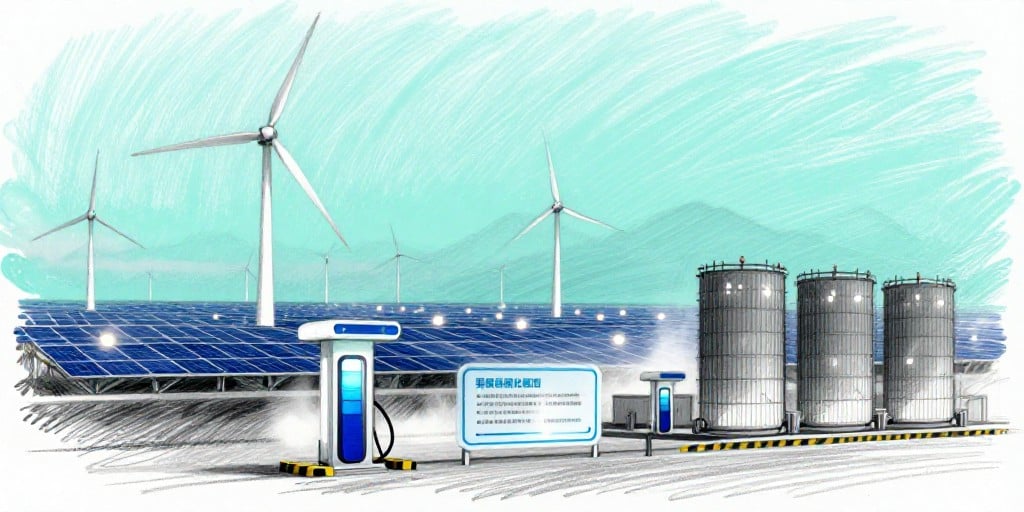
Corporate News – Energy Market Dynamics and Executive Confidence at Expand Energy
Expand Energy Corp. has recently announced a series of insider transactions that underscore the management team’s commitment to long‑term shareholder value. On 26 October 2026, President and Chief Executive Officer Daniel Brown purchased 58,742 restricted stock units (RSUs) and an additional 20,430 performance share units (PSUs). Although the RSUs were acquired at no cash cost, the PSUs—contingent upon achieving predefined total shareholder return (TSR) benchmarks—signal a direct link between executive compensation and the company’s performance.
These moves come at a time when the broader energy landscape is evolving rapidly, with traditional hydrocarbon production, emerging storage technologies, and shifting regulatory frameworks all shaping market dynamics. A detailed examination of the sector reveals a complex interplay of technical, economic, and geopolitical factors that influence both conventional and renewable energy streams.
1. Production Trends in Conventional Energy
1.1 Natural Gas Extraction and Liquefied Natural Gas (LNG) Export
Expand Energy’s recent 8‑K filing highlighted a stable operating margin and growing cash flows from operations, largely driven by a robust natural‑gas production portfolio. Global demand for natural gas has remained resilient, supported by the transition away from coal in many regions and the need for cleaner industrial feedstocks. LNG export volumes, in particular, have seen incremental growth as new terminals in the United States, Canada, and the Middle East come online.
From a technical standpoint, advancements in horizontal drilling and hydraulic fracturing continue to reduce the cost of gas extraction, allowing companies to tap previously uneconomic plays. However, the industry faces significant volatility linked to commodity price swings, seasonal demand shifts, and geopolitical tensions that can disrupt supply chains.
1.2 Production Challenges and Capital Expenditure
Capital expenditure (CapEx) remains a key driver of profitability. Expand Energy’s disciplined CapEx strategy—prioritizing high‑margin wells and strategic acquisition of idle assets—has helped mitigate the impact of fluctuating gas prices. Nonetheless, the sector must navigate the dual pressures of maintaining production levels while investing in next‑generation infrastructure to meet regulatory mandates on methane emissions and water usage.
2. Energy Storage and Grid Integration
2.1 Conventional Storage: Pumped Hydro and Chemical Batteries
Traditional energy storage technologies, such as pumped hydroelectric storage (PHS) and advanced lithium‑ion batteries, continue to play a pivotal role in balancing supply and demand. PHS remains the largest storage capacity globally, yet its deployment is geographically constrained. Lithium‑ion batteries, meanwhile, have benefited from economies of scale, yet face challenges related to raw material supply (lithium, cobalt) and recycling infrastructure.
2.2 Renewable‑Focused Storage: Hydrogen and Power-to-Gas
Hydrogen, produced via power‑to-gas (P2G) pathways, is gaining traction as a flexible storage medium for renewable energy. The ability to store surplus wind or solar power as hydrogen and subsequently reconvert it to electricity or use it as a feedstock offers a compelling pathway to decarbonize sectors that are difficult to electrify directly. However, technical barriers—such as conversion efficiencies below 70 % and high capital costs—must be addressed before widespread commercial adoption.
3. Regulatory Dynamics Shaping the Energy Mix
3.1 Carbon Pricing and Emissions Regulations
Governmental policies aimed at reducing greenhouse‑gas emissions—through carbon pricing mechanisms, emission trading schemes, and stringent methane disclosure requirements—are reshaping the competitive landscape. For conventional producers, these regulations translate into additional compliance costs but also create opportunities for revenue generation via carbon credits and green hydrogen initiatives.
3.2 Renewable Energy Mandates and Incentives
Renewable portfolio standards (RPS) and feed‑in tariffs in key jurisdictions, such as the European Union’s Clean Energy Package and the United States’ Inflation Reduction Act, are accelerating the deployment of wind, solar, and battery storage projects. These incentives often come with performance‑based subsidies that align with the performance‑share unit structure of Expand Energy’s CEO compensation, suggesting a strategic alignment between corporate governance and public policy incentives.
3.3 Cross‑Border Energy Trade and Trade Agreements
Geopolitical considerations—including trade disputes, sanctions regimes, and bilateral energy agreements—directly affect the flow of hydrocarbons and renewable technologies. The recent tensions between the United States and Russia, for instance, have prompted European nations to diversify gas supplies, creating new market opportunities for U.S. LNG exporters. Conversely, the global supply chain for renewable components—such as solar photovoltaic modules and wind turbine blades—remains vulnerable to tariff fluctuations and export controls.
4. Technical and Economic Factors Across Energy Sectors
| Sector | Key Technical Drivers | Economic Considerations |
|---|---|---|
| Conventional Gas | Enhanced drilling techniques, low‑friction pipelines, advanced leak detection | Price volatility, CapEx cycles, regulatory compliance costs |
| Renewable Generation | Improved panel efficiency, offshore wind technology, advanced turbine blades | Capital intensity, subsidy structures, grid integration costs |
| Storage (Battery & Hydrogen) | Energy‑density improvements, cost per kWh decline, electrolyzer efficiency | Capital expenditure, operating costs, raw‑material supply chain risks |
| Hydrogen Production | Green vs. blue hydrogen pathways, electrolysis scale‑up | Feed‑stock costs, policy incentives, market demand for industrial feedstock |
5. Insider Activity: A Signal of Managerial Confidence
The purchase of RSUs and PSUs by CEO Daniel Brown, in addition to the mixed buy‑sell patterns observed among other senior executives, reflects a broader trend of aligning executive incentives with shareholder value. While the RSUs were granted at zero cost—a standard practice for time‑vested units—the PSUs’ performance‑based nature underscores the CEO’s confidence in meeting or exceeding the company’s TSR targets. This alignment can serve as a stabilizing factor for investors during periods of market turbulence, especially given the recent modest declines in the company’s share price.
From a strategic standpoint, the insider transactions dovetail with Expand Energy’s operational focus on expanding natural‑gas and LNG production. The company’s steady operating margin and positive cash flows provide the financial flexibility needed to pursue both conventional and renewable opportunities—such as investing in hydrogen projects or expanding storage capacities—while adhering to evolving regulatory requirements.
6. Geopolitical Context and Market Outlook
The global energy market is increasingly influenced by geopolitical events. Shifts in U.S. foreign policy, European energy security concerns, and the rapid emergence of new actors in the LNG market are reshaping supply routes and pricing dynamics. Simultaneously, climate‑policy initiatives—particularly the European Green Deal and the Paris Agreement commitments—are driving a gradual shift away from fossil fuels towards cleaner alternatives.
For Expand Energy, these dynamics present both challenges and opportunities. The company’s diversified portfolio, coupled with its management’s demonstrated confidence through insider transactions, positions it well to capitalize on the continued demand for natural gas while strategically exploring renewable and storage ventures. Investors should, however, remain cognizant of commodity price volatility, regulatory uncertainties, and the capital intensity associated with new infrastructure projects.
7. Conclusion
Expand Energy’s recent insider transactions, coupled with a robust operational profile and a clear strategic focus on both conventional and renewable energy streams, provide a cautiously optimistic narrative for investors. The alignment of executive incentives with shareholder returns, combined with the company’s ability to navigate complex regulatory and geopolitical landscapes, suggests a trajectory that balances immediate profitability with long‑term growth prospects. As the energy sector continues to evolve, the interplay of production technology, storage innovation, and policy frameworks will remain pivotal in determining the success of firms operating at the nexus of traditional and emerging energy markets.