Corporate Analysis of Insider Activity at Gerdau SA
Overview of the Latest Insider Filing
The most recent Form 3 submission from Gerdau SA (dated March 2026) confirms that board member and executive Johannpeter Claudio retains a substantial equity position, comprising approximately 702 million shares of common stock and 85,600 preferred shares. No new transactions are reported; the filing is a routine update of holdings. The magnitude of this block—constituting a notable fraction of the company’s $4.2 billion market capitalisation—merits close monitoring, as a future divestiture could exert downward pressure on the share price, especially given the current price‑to‑earnings ratio of 25.4.
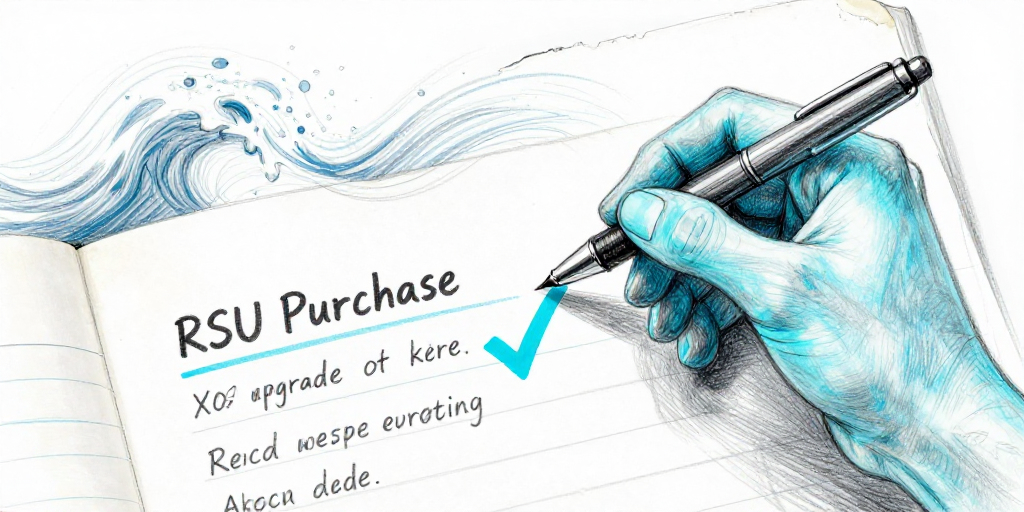
The filing also enumerates a series of restricted‑stock units (RSUs) slated to vest annually from February 12, 2027 to February 12, 2029. These RSUs are denominated in Brazilian reais and represent a forward‑looking incentive that aligns executive interests with shareholder value over the next three years. The vesting schedule suggests that a portion of the board’s wealth will be realised in the near term, potentially diluting existing shareholders if the RSUs are exercised at prices above the prevailing market level.
Market Sentiment and Price Dynamics
Gerdau’s equity trades around $3.28, reflecting a 5.3 % decline over the week and a 20.5 % drop for the month, yet the year‑to‑date performance remains positive at +8.8 %. Social‑media sentiment remains neutral with low buzz levels, indicating that the insider filing has not yet triggered significant speculative activity. This muted reaction offers a window for discerning investors to evaluate the company’s intrinsic value without the noise of short‑term speculation.
Regulatory Environment and Industry Context
Trade Policy and Tariffs The steel sector is highly sensitive to U.S.–China trade dynamics, particularly tariffs on imported steel products. Any tightening of tariff regimes could compress margins for Gerdau’s mini‑mill operations, which rely on locally sourced iron ore and coal.
Environmental Regulations Brazil’s evolving environmental policies, including stricter emissions standards for steel production, could impose additional compliance costs. Gerdau’s mini‑mill strategy—characterised by lower embodied carbon footprints compared to large integrated mills—positions it advantageously in a market increasingly driven by ESG considerations.
Commodity Price Volatility Fluctuations in the prices of iron ore and coal directly affect operating costs. The company’s hedging strategies will be crucial in mitigating exposure to volatile commodity markets.
Competitive Landscape
Mini‑mill vs. Integrated Mill Gerdau’s focus on mini‑mills aligns with industry trends favouring decentralised production that offers greater flexibility and lower capital intensity. Competitors such as ArcelorMittal and Nippon Steel are expanding their mini‑mill footprints, intensifying competitive pressures in emerging markets.
Digitalisation and Automation Firms that adopt advanced manufacturing technologies can achieve lower unit costs and higher product quality. Gerdau’s investment in digital twins and predictive maintenance could provide a competitive edge, but requires sustained capital allocation.
Global Supply Chain Resilience Disruptions in global logistics—exemplified by the recent port congestion in Singapore—have highlighted the need for diversified supply chains. Gerdau’s domestic production capacity in Brazil mitigates some of this risk, though reliance on imported components remains a vulnerability.
Hidden Trends, Risks, and Opportunities
| Category | Insight | Implication |
|---|---|---|
| Hidden Trend – ESG Momentum | Growing investor appetite for low‑carbon steel. | Gerdau’s mini‑mill strategy could attract ESG‑focused capital, potentially supporting a premium valuation. |
| Risk – Regulatory Shift | Potential tightening of Brazil’s emissions regulations. | Could necessitate costly retrofits; however, the company’s current carbon profile may reduce impact. |
| Opportunity – RSU Incentivisation | Scheduled RSU vesting aligns executive wealth with company performance. | May encourage managers to pursue initiatives that enhance long‑term shareholder value, such as cost optimisation and market expansion. |
| Risk – Market Volatility | Current share price volatility could mask underlying operational risks. | Long‑term investors must assess whether the price decline reflects a bubble or a true undervaluation. |
| Opportunity – Digitalisation | Adoption of Industry 4.0 technologies can improve efficiency. | Early investment could yield competitive advantages in cost, speed, and product customization. |
Investor Take‑aways
Leadership Stability – The retention of a sizable equity block by Johannpeter Claudio signals confidence in Gerdau’s strategic direction and governance practices.
Dilution Management – While upcoming RSU vestings may increase the share supply, the company’s growth initiatives and the likelihood of executives exercising at favourable prices should offset potential dilution.
Value Amid Volatility – The current price decline, coupled with a positive year‑to‑date trend, presents an attractive entry point for long‑term investors who believe in Gerdau’s growth trajectory and the broader shift towards sustainable steel production.
Conclusion
The March 2026 Form 3 filing provides a clear snapshot of Gerdau SA’s insider landscape and the timing of future equity incentives. It underscores a narrative of disciplined governance rather than opportunistic liquidation. Investors are advised to monitor the scheduled RSU vestings and any subsequent trading activity, as these events will illuminate the alignment between the board’s interests and shareholder value. Concurrently, the company’s focus on mini‑mill expansion, ESG compliance, and digitalisation positions it to navigate regulatory shifts, commodity volatility, and competitive pressures in the global steel market.