
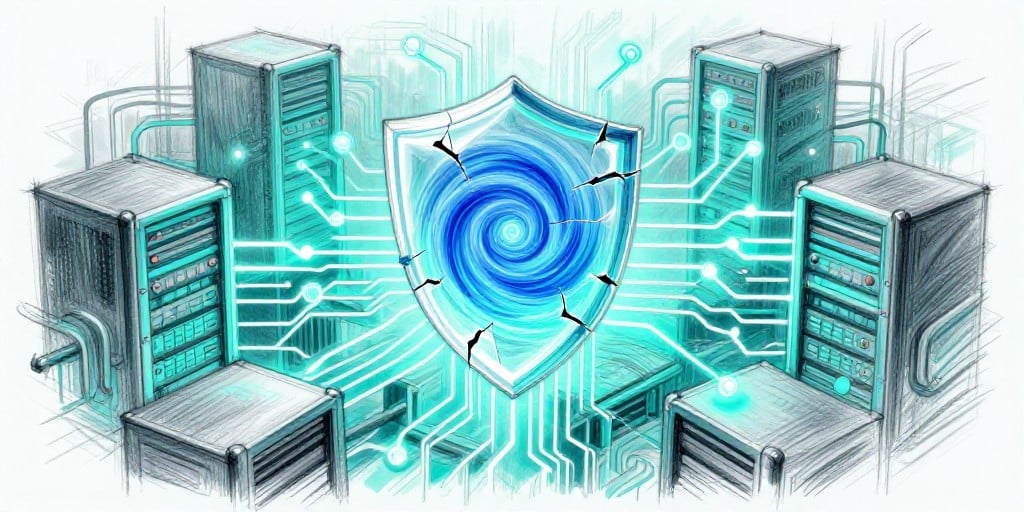
Emerging Cyber‑Threat Landscape: A Corporate Perspective
1. Technological Drivers of New Attack Vectors
The past year has witnessed the convergence of three technological trends that are reshaping the threat environment for enterprises:
- Edge‑Computing and 5G Expansion – The proliferation of low‑latency networks and distributed processing nodes increases the attack surface. Edge devices are often less rigorously secured, making them attractive footholds for attackers looking to pivot into corporate back‑ends.
- Artificial‑Intelligence‑Assisted Reconnaissance – Automated data‑gathering tools, powered by natural‑language processing, can now parse vast volumes of public and dark‑web information to craft highly targeted spear‑phishing campaigns. These tools also generate convincing social‑engineering content in real time.
- Quantum‑Resistant Cryptography – The rapid development of quantum‑computing prototypes has prompted vendors to begin migrating to post‑quantum algorithms. However, the transition phase creates a window where legacy cryptographic protocols remain exposed, allowing attackers to exploit known weaknesses in TLS, SSH, and VPN implementations.
Combined, these shifts raise the probability of multi‑stage breaches that begin with an innocuous edge device compromise and culminate in the exfiltration of sensitive corporate data.
2. Case Studies Illustrating the Threat
| Incident | Description | Impact | Mitigation Lessons |
|---|---|---|---|
| 2025 Global Supply‑Chain Breach | Attackers compromised a firmware update pipeline for a popular IoT sensor used in manufacturing. The malware propagated to over 300,000 endpoints worldwide, enabling lateral movement and data exfiltration. | $1.2 billion in direct and reputational losses. | Mandatory cryptographic signing of firmware, continuous integrity monitoring, and strict update approval workflows. |
| 2026 Cloud‑Native Ransomware | A ransomware strain leveraged Kubernetes misconfigurations to gain cluster‑level access, encrypting databases and staging a ransomware payment demand of $25 M. | $35 M in ransom paid, $10 M in recovery costs. | Enforce least‑privilege IAM policies, enable runtime threat detection, and maintain immutable backup snapshots. |
| 2026 AI‑Powered Phishing Campaign | A state‑sponsored actor used GPT‑4 to generate personalized emails for executives of a Fortune 100 bank, bypassing email‑filtering rules and convincing a CISO to disclose privileged credentials. | Compromise of 20+ internal accounts, leading to a breach of customer data. | Deploy AI‑aware email security, conduct regular phishing simulations, and institute a zero‑trust verification step for privileged access. |
These incidents underline that infrastructure complexity, automation, and human factors jointly contribute to heightened risk.
3. Societal and Regulatory Implications
- Privacy Regulations – The General Data Protection Regulation (GDPR) and the California Consumer Privacy Act (CCPA) now explicitly require enterprises to secure edge devices that process personal data. Failure to comply can trigger fines exceeding 4 % of global annual revenue.
- Cybersecurity Reporting Mandates – The U.S. Securities and Exchange Commission’s proposed “Cyber Incident Disclosure Rule” would obligate listed companies to report material cyber incidents within 72 hours. Early adoption of internal incident‑response playbooks is essential to meet this requirement.
- Public Trust and Brand Integrity – Repeated high‑profile breaches erode consumer confidence, leading to measurable declines in market share. Companies that proactively communicate security postures and incident mitigation plans can mitigate reputational damage.
4. Actionable Insights for IT Security Professionals
| Focus Area | Recommended Actions | KPI / Metric |
|---|---|---|
| Threat Intelligence | Subscribe to curated feeds that include AI‑driven threat indicators (e.g., IOC clusters). Integrate feeds into SIEM for automated correlation. | Mean time to detect (MTTD) < 30 min for high‑severity alerts. |
| Zero‑Trust Architecture | Deploy micro‑segmentation, enforce MFA for all privileged accounts, and adopt least‑privilege access controls for cloud resources. | Percentage of privileged accounts with MFA enabled (target: 100 %). |
| Patch Management | Automate patch deployment across edge and cloud environments. Utilize immutable infrastructure to roll back compromised configurations. | Patch coverage rate for critical vulnerabilities > 95 % within 30 days. |
| Incident Response | Conduct tabletop exercises that simulate edge‑device compromise leading to data exfiltration. Ensure clear communication channels with legal and PR teams. | Time to containment < 6 hours for simulated incidents. |
| Compliance Monitoring | Map all data flows to regulatory requirements. Use automated compliance dashboards to track gaps. | Compliance audit score > 95 %. |
By embedding these practices into daily operations, security teams can transform emerging threats from a liability into a managed risk.
5. Looking Ahead
The cybersecurity landscape is poised for rapid evolution as edge computing matures and AI tools become more accessible. Regulatory bodies are expected to tighten requirements for data protection and incident reporting. Corporations that invest in adaptive security architectures, foster a culture of continuous learning, and maintain rigorous compliance will position themselves to not only withstand but also anticipate sophisticated attacks.
In the context of the recent insider activity at Workday Inc., the company’s continued engagement by key stakeholders provides a muted signal of confidence. Yet, the surrounding market volatility and evolving threat vectors underscore the necessity for vigilant, technology‑driven defense postures. IT security professionals should treat these developments as a reminder that strategic investment in security is as critical as financial investment in growth.