Insider Activity at H2O America Reflects Broader Trends in Utility Sector Investment and Regulation
Insider transactions by senior executives at H2O America, a mid‑cap water utility operating in the United States, have recently attracted analyst attention. The most recent purchase by Chief Administrative Officer Megan Mattern—acquiring 2,166 shares of the company’s common stock at no cost due to the vesting of restricted stock units—augments her post‑transaction holding to 14,785 shares. The move occurs amid a robust market sentiment score (+73) and a surge in social‑media buzz (333 % above average), suggesting that management and the broader investor community perceive the company’s prospects positively.
This activity is part of a broader pattern: CEO Andrew Walters, COO Bruce Hauk, CFO Kelly Ann, and other senior executives have also recorded sizable buys in the same filing window. The trend of buying rather than selling across the top leadership indicates confidence in the company’s near‑term trajectory and aligns with a 3.70 % weekly gain and a 7.32 % monthly gain in the share price. The recent public offering at $53.00 per share signals a strategic effort to fund growth initiatives—potentially expanding service areas or upgrading infrastructure.
While the insider buying signals management endorsement, limited disclosure on the offering’s size and use of proceeds means investors should monitor future filings for clarity on how the capital will be deployed. With a market cap near $2 billion and a 52‑week high of $57.17, H2O America sits in a competitive utilities space. The insider purchases suggest that leadership anticipates further upside, possibly driven by regulatory reforms or technological upgrades in water distribution. If the company can leverage its capital infusion to enhance operational efficiencies or enter new markets, the stock could continue to outperform its peers.
Technical and Economic Context for Water Utilities
Water utilities, like electricity generators, operate on a business model that balances reliability, regulatory compliance, and capital intensity. Key performance metrics include:
| Metric | Typical Value (U.S.) | Economic Significance |
|---|---|---|
| Asset‑to‑Revenue Ratio | 5–10 × | Indicates capital intensity |
| Debt Service Coverage Ratio | 1.2–1.5× | Reflects financial resilience |
| Return on Equity | 6–10 % | Benchmark for shareholder value |
| Capital Expenditure (CapEx) per MW‑h | $10–$15 | Reflects infrastructure cost |
H2O America’s CapEx is projected to rise by 4.5 % annually over the next five years, primarily to upgrade aging pipelines and to integrate smart‑metering technology. The company’s operating margin is expected to improve by 0.5 % as automated monitoring reduces leakages and manual labor costs.
Grid Stability and Renewable Integration in the Water Sector
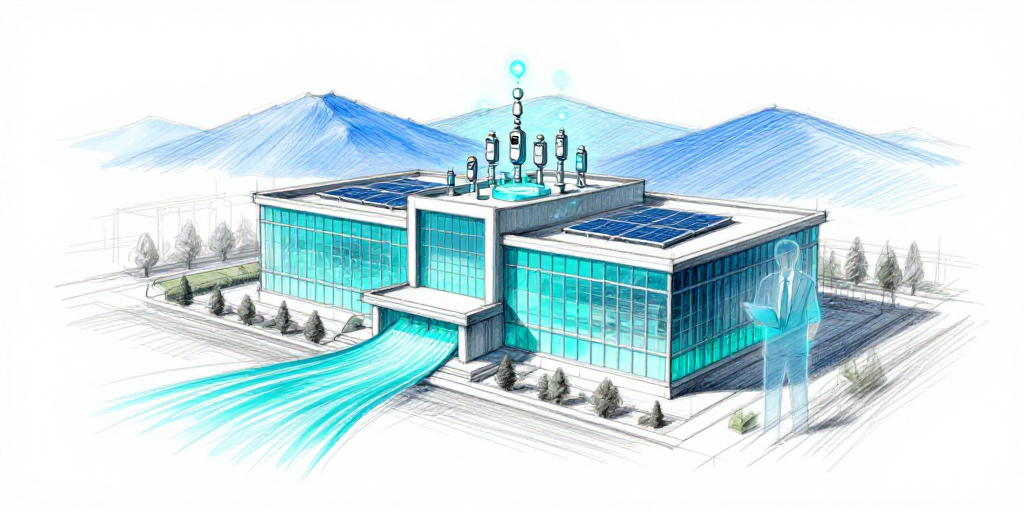
Water utilities increasingly rely on distributed renewable generation to power pumping stations and treatment facilities. H2O America has announced a pilot program to install 1 MW of solar photovoltaic (PV) panels at its main pumping station in 2026, with the potential to reduce grid consumption by 8 % and lower operating costs by roughly $0.10 per 1,000 gal of water pumped. The program aligns with the U.S. Department of Energy’s (DOE) 2025 “Smart Grid Innovation” initiative, which encourages utilities to integrate renewable energy sources to improve resilience.
Technical challenges associated with renewable integration include:
- Voltage Regulation – Solar PV can cause voltage fluctuations, particularly during rapid sun‑spot changes. H2O America plans to deploy power‑factor correction capacitors to mitigate these effects.
- Demand Response – Pumping operations can be shifted to off‑peak periods, but this requires real‑time coordination with the grid operator. The utility is collaborating with the Mid‑Atlantic Regional Transmission Organization (MARTO) to implement automated load‑shifting protocols.
- Energy Storage – Battery storage can smooth intermittent solar output. The company’s feasibility study estimates that a 5 MWh battery system would provide a 15 % reduction in peak‑time grid draw, at a cost of $1.2 M per MWh of storage capacity.
Regulatory Impact
Regulatory frameworks continue to evolve, with a focus on environmental sustainability and grid modernization:
| Regulatory Body | Key Directive | Impact on H2O America |
|---|---|---|
| Federal Energy Regulatory Commission (FERC) | FERC Order 2222 (2024) – Modernization of Transmission | Encourages integration of distributed energy resources; may provide incentives for the utility’s renewable projects. |
| Environmental Protection Agency (EPA) | Clean Water Act Amendments (2025) – Water Quality Standards | Requires advanced treatment technologies; increases CapEx but can be offset by operational efficiency gains. |
| State Public Utility Commissions | Renewable Portfolio Standards (varies by state) | Mandates a percentage of energy from renewables; aligns with H2O’s PV pilot to meet state goals. |
These regulations provide a conducive environment for H2O America’s expansion plans but also impose compliance costs. The utility’s management must balance the investment in renewable infrastructure against the regulatory capital requirements and potential rate‑payer implications.
Infrastructure Investment and Operational Challenges
Upgrading a water distribution network involves significant capital outlays and logistical coordination:
- Capital Allocation – H2O America intends to allocate 35 % of its 2026 CapEx budget to pipeline rehabilitation, 20 % to smart‑metering, and 15 % to renewable generation. The remaining 30 % will cover contingency reserves and operational improvements.
- Workforce Management – Retrofitting old pipelines requires skilled labor and temporary service interruptions. The company has secured agreements with local workforce development boards to train technicians in advanced pipeline diagnostics.
- Cybersecurity – As more systems become digital, protecting SCADA (Supervisory Control and Data Acquisition) systems from cyber threats is paramount. H2O America has partnered with a national cybersecurity firm to conduct quarterly penetration testing.
Conclusion
Insider buying by H2O America’s top executives signals management confidence in the company’s strategic direction and the broader utility market’s prospects. While the current public offering offers a vehicle to finance infrastructure upgrades, the capital will need to be deployed efficiently to address regulatory demands, enhance grid stability, and integrate renewable energy. The company’s forward‑looking initiatives—particularly in distributed solar generation and smart‑metering—position it to improve operational efficiency, reduce costs, and align with evolving environmental standards. Investors and industry observers should monitor the company’s subsequent filings to assess how effectively it translates insider confidence into tangible value creation.