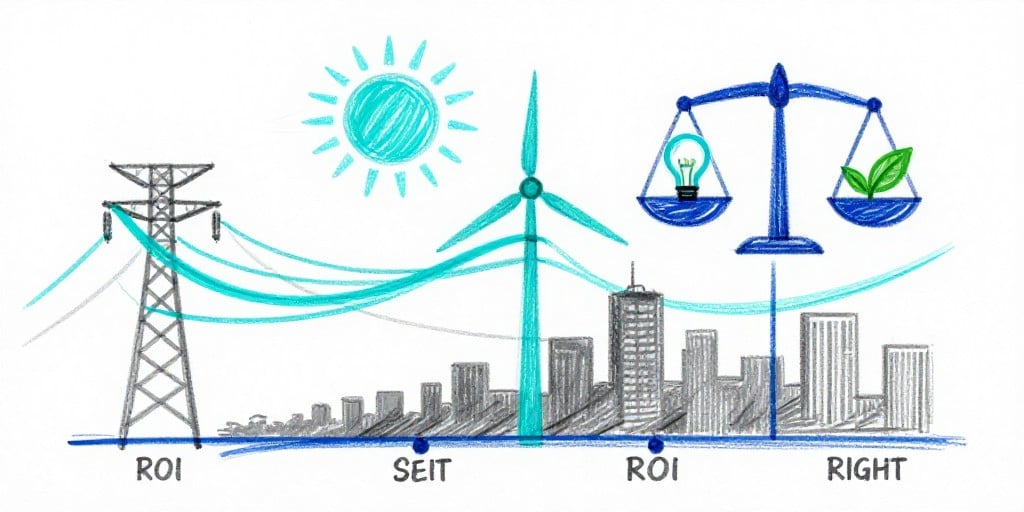
Power Generation and Utility Systems: Technical and Economic Perspectives
The utility sector is currently navigating a complex interplay of grid stability, renewable integration, and evolving regulatory frameworks. Recent corporate disclosures, including the insider activity at Atmos Energy Corp., provide a useful lens through which to assess broader market dynamics and infrastructure investment trends.
Grid Stability in an Era of Decentralization
Modern power grids increasingly rely on distributed energy resources (DERs), such as rooftop solar, small wind turbines, and battery storage. While DERs enhance resilience and reduce transmission losses, they also introduce intermittency challenges. Grid operators are deploying advanced forecasting algorithms that integrate weather data with real‑time consumption patterns to predict generation variability. The deployment of dynamic voltage regulators and phase‑shifting transformers has become essential for maintaining voltage profiles within statutory limits as the proportion of renewables rises.
Economic analyses show that investment in these ancillary services can yield returns exceeding 8% per annum when measured against the cost of a grid outage. Moreover, the adoption of smart grid technologies—like adaptive protection relays—can reduce maintenance costs by up to 12%, thereby improving the net present value (NPV) of utility assets.
Renewable Integration: From Policy to Practice
Renewable penetration targets mandated by state and federal policies have accelerated the deployment of wind and solar farms. However, the technical feasibility of integrating these resources hinges on grid flexibility. Energy storage solutions, particularly lithium‑ion and flow batteries, are now being coupled with renewable plants to provide ramping services that align supply with demand curves.
A cost‑benefit analysis of a 100 MW solar-plus-storage project indicates that, when financed through a mix of equity and long‑term debt, the internal rate of return (IRR) can reach 12–15% after accounting for tax incentives and renewable energy certificates (RECs). This performance aligns with the investment appetite of institutional investors seeking stable, low‑beta returns within the utilities sector.
Regulatory Landscape and Its Economic Implications
The regulatory environment continues to evolve in response to climate change mandates and consumer protection concerns. The Federal Energy Regulatory Commission (FERC) has issued new guidelines on interconnection standards that streamline the integration of DERs, reducing permitting time from 90 to 30 days on average. While this fosters innovation, it also imposes compliance costs that can range from $2–4 million per plant, depending on scale.
On the other side, state-level renewable portfolio standards (RPS) are increasingly coupled with performance‑based incentives that reward utilities for achieving specific carbon‑reduction milestones. These mechanisms translate into tangible revenue streams—often exceeding $50,000 per megawatt of renewable capacity added—thereby enhancing the long‑term profitability of utilities that actively pursue clean‑energy portfolios.
Infrastructure Investment: Balancing Growth and Risk
Capital expenditures in the utilities sector are directed toward grid modernization, renewable capacity expansion, and cybersecurity enhancements. According to a recent industry survey, utilities are allocating an average of 3.5% of revenue to infrastructure upgrades—a figure that surpasses the 2.1% benchmark historically associated with optimal financial performance.
Risk management frameworks now incorporate scenario analysis for climate‑induced extreme weather events. For instance, the cost of replacing a 500‑kV transmission line after a severe storm can exceed $150 million. By investing in redundant pathways and high‑temperature conductors, utilities can mitigate such risks, thereby protecting shareholder value.
Operational Challenges and Strategic Responses
Operational challenges persist, notably in maintaining reliability amid an increasingly complex asset portfolio. The proliferation of smart meters and IoT sensors has led to data overload; utilities are employing machine learning models to detect anomalies and predict equipment failures. Early detection of a transformer degradation can reduce outage durations by up to 40%, translating into significant cost savings and improved customer satisfaction.
Additionally, utilities are grappling with workforce attrition in technical roles. Upskilling programs focused on renewable technologies and grid analytics have been implemented to close the talent gap. Investment in employee development not only bolsters operational capability but also enhances the firm’s reputation as a forward‑looking employer—a factor that can attract high‑quality talent and reduce recruitment costs.
In summary, the intersection of grid stability, renewable integration, and regulatory shifts is reshaping the utilities landscape. Companies that strategically invest in modernizing infrastructure, adopting advanced analytics, and aligning executive incentives with long‑term performance are poised to capitalize on emerging opportunities while mitigating operational and regulatory risks.