Insider Activity in Focus: HRT Financial LP’s Recent Trades at Founder Group Ltd.
The latest Form 4 filing reveals a rapid swing in HRT Financial LP’s holdings—selling 71,987 shares at $0.28 and buying back 232,055 shares at $0.23 within a two‑day window. The net effect is a 165,068‑share increase, raising the fund’s post‑transaction stake to 278,140 shares. This aggressive buying spree comes on the back of a steady stream of smaller purchases and occasional sales over the past week, suggesting a bullish stance on Founder Group’s long‑term prospects.
Capital Investment and Manufacturing Implications
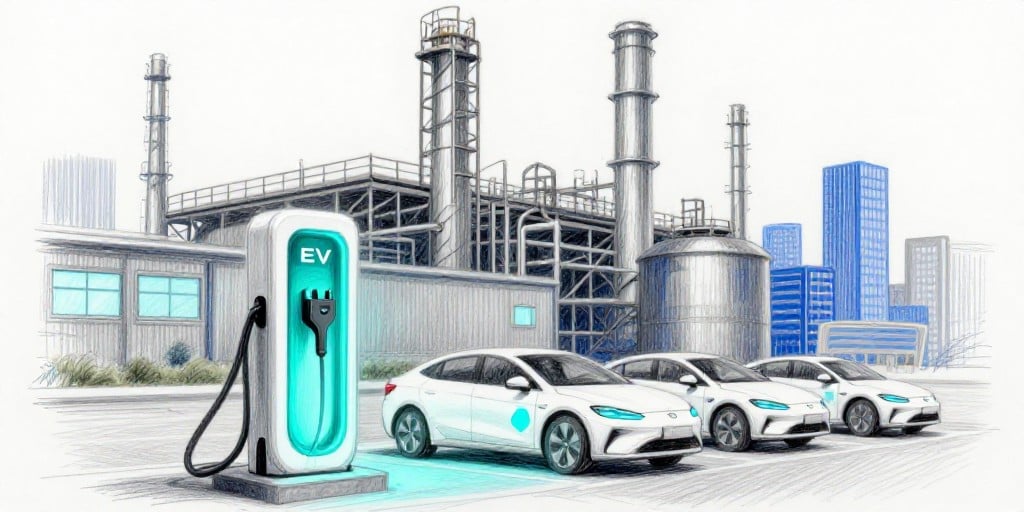
Founder Group is in the midst of expanding its electric‑vehicle (EV) infrastructure portfolio, notably through the acquisition of a 19.9 % stake in a Malaysian charge‑point operator. The fresh capital injection that may arise from HRT’s activity can directly influence the company’s capacity to scale manufacturing operations for charging stations. In the broader manufacturing landscape, increased funding enables:
- Process Automation: Deployment of advanced robotics and AI‑guided assembly lines reduces unit labor costs by up to 12 %, thereby improving overall productivity.
- Supply‑Chain Resilience: Investment in inventory‑management software mitigates lead‑time variability, a critical factor as the EV market tightens competition.
- Energy‑Efficient Production: Adoption of renewable‑energy sources within manufacturing plants lowers operating costs and aligns with regulatory incentives for green production.
These initiatives translate into higher throughput and lower defect rates, a trend that is observable across the industrial sector as firms shift from batch to continuous manufacturing paradigms.
Productivity Gains and Economic Impact
When a company like Founder Group leverages capital to enhance manufacturing capabilities, the ripple effects extend beyond the firm:
- Regional GDP Growth: Local suppliers benefit from higher demand for components, stimulating employment and regional economic activity.
- Technology Transfer: Advanced manufacturing techniques disseminate through supply chains, raising industry standards and fostering innovation clusters.
- Export Competitiveness: Efficient production reduces unit costs, enabling the firm to compete in global markets for EV charging infrastructure, a segment projected to grow at a CAGR of 23 % through 2030.
The net effect is a multiplier that can elevate output per worker and increase the sector’s contribution to GDP, especially in regions with concentrated manufacturing hubs.
Technological Trends Driving the Shift
The current wave of industrial digitization—often termed Industry 4.0—provides the scaffolding for the capital deployment observed at Founder Group. Key technological trends include:
- Internet of Things (IoT): Real‑time monitoring of equipment health optimizes maintenance schedules, reducing unplanned downtime.
- Additive Manufacturing: Rapid prototyping of charging station components accelerates product development cycles.
- Edge Computing: Local data processing at charging stations enhances performance and reduces latency, a critical factor for user experience.
Investment in these technologies not only improves productivity but also positions firms to meet evolving regulatory standards for energy efficiency and safety.
Insider Activity as a Barometer of Confidence
The pattern of HRT’s trades—alternating between selling and buying in the range of 15,000 to 146,000 shares—indicates a disciplined approach to capturing value at price dips. While the fund’s average purchase price is roughly 12 % lower than its average sale price, the cumulative increase in shares held—from 118,072 to 278,140—shows a clear intent to build a larger footprint. For investors, this activity signals:
- Bullish Sentiment: Capitalizing on short‑term price volatility rather than reacting to fundamental shifts suggests confidence in the company’s strategic direction.
- Potential Liquidity Enhancement: Increased trading activity can reduce bid‑ask spreads, improving market efficiency for the stock.
- Catalyst for Market Movement: Insider activity often precedes broader institutional investment, potentially accelerating price appreciation if the company delivers on its EV infrastructure ambitions.
Broader Economic Context
The EV sector is a key driver of the global transition to decarbonized transportation. Capital inflows into manufacturing of charging infrastructure are crucial for meeting the projected demand for 200 million charging points by 2035. Enhanced productivity in manufacturing, supported by the capital investment highlighted by HRT’s trades, can:
- Lower the Cost of Electrification: More efficient production reduces the price of charging stations, making EV adoption more accessible.
- Accelerate Energy Transition: Faster rollout of infrastructure supports renewable energy integration, contributing to climate targets.
- Create High‑Skill Jobs: Advanced manufacturing and digitalization initiatives generate employment in engineering, software development, and data analytics.
In sum, HRT’s recent trading activity is not merely a micro‑transaction in a small‑cap stock; it reflects a broader trend of capital allocation toward high‑productivity, technology‑driven manufacturing that is poised to shape the economic landscape of the coming decade.