Insider Buying Fuels Speculation at CVR Energy
The latest 4‑form filing from Carl C. Icahn and his affiliated entities shows a steady accumulation of CVR Energy shares: 263,452 on February 20, 2026, 244,940 on February 23, and 275,012 on February 24, bringing Icahn’s stake to roughly 71.2 million shares. At a closing price of $21.07 the cumulative outlay amounts to about $5.8 million. The buy‑only pattern, coupled with a modest 0.03 % price lift on the trade day, signals confidence rather than a quick flip. With the company trading near 50 % of its 52‑week low and a PE of 77.12, the market is still far from the October 2025 high, creating room for upside if operating fundamentals improve.
Implications for Investors and the Company’s Outlook
Icahn’s continued purchases suggest he sees hidden value or an impending catalyst—perhaps a strategic merger, a shift to renewable‑fuel production, or a dividend recap. In the energy space, a sizable holding can translate into board influence or a push for governance changes. For shareholders, the move may validate concerns about under‑valuation and could trigger a modest rally as the market digests the sentiment signal (+41) and the high buzz (69 %). However, the company’s weak weekly (‑3.6 %) and monthly (‑2.25 %) drift, combined with a high valuation multiple, warns that any upside will need to be driven by earnings growth or cost discipline rather than speculation alone.
Carl C. Icahn: A History of Aggressive Accumulation
Icahn’s transaction trail at CVR Energy in April 2025 shows a consistent buying rhythm: from 61,108 shares in early April to over 98,875 by April 23, raising his position from 68.6 million to 70.3 million shares. Prices ranged from $16.11 to $18.21, indicating willingness to buy across a 10 % price swing. In February 2026 the purchases accelerated, with three separate trades totaling 783,404 shares. The pattern aligns with Icahn’s classic “buy low, hold long” philosophy and his track record of driving operational turnarounds. His stake now exceeds 70 % of the shares he owns post‑transaction, a significant concentration that could enable a decisive push on strategic initiatives.
What This Means for the Future
If Icahn’s agenda follows past precedent, we could see a strategic review of the company’s refining portfolio, potential divestitures of under‑performing assets, or a shift toward ammonia‑based fertilizers, where CVR has existing production capabilities. A successful turnaround could lift earnings and support a higher PE, while also providing a platform for future capital deployments. For investors, the key will be to watch for any formal proposals, board nominations, or changes in dividend policy. In the interim, the share price may react to the momentum of insider buying, but a sustained upside will likely hinge on tangible operational improvements rather than speculative enthusiasm alone.
| Date | Owner | Transaction Type | Shares | Price per Share | Security |
|---|---|---|---|---|---|
| 2026‑02‑20 | ICAHN CARL C () | Buy | 263,452.00 | 20.78 | Common Stock, $0.01 par value per share |
| 2026‑02‑23 | ICAHN CARL C () | Buy | 244,940.00 | 20.75 | Common Stock, $0.01 par value per share |
| 2026‑02‑24 | ICAHN CARL C () | Buy | 275,012.00 | 21.41 | Common Stock, $0.01 par value per share |
Energy Market Analysis: Production, Storage, and Regulatory Dynamics
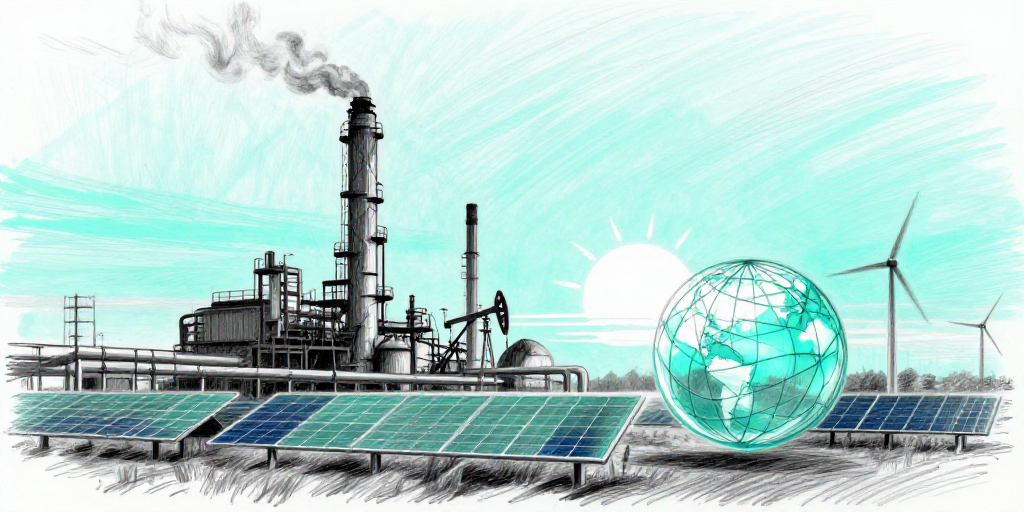
The global energy landscape continues to evolve under the twin pressures of decarbonisation commitments and geopolitical volatility. In 2026, production volumes remain heavily weighted toward conventional hydrocarbons, but renewable output is expanding at a compound annual growth rate that exceeds 9 % in most regions. The interaction of these trends with storage capacity, regulatory frameworks, and international politics shapes the economic prospects for both traditional and emerging power sources.
Production Trends
- Oil and Gas: The International Energy Agency projects that peak crude output will occur around 2028, after a sustained decline in Middle‑East supply due to OPEC‑plus output cuts. U.S. shale production, however, is expected to grow modestly (≈ 3 % annually) thanks to advances in hydraulic fracturing economics and tighter environmental compliance.
- Renewables: Solar PV installations have surpassed 1.2 TW of cumulative capacity worldwide, with solar in the United States, China, and India driving the majority. Wind energy, especially offshore, is gaining ground as turbine technology improves and levelised cost of energy (LCOE) falls below that of new fossil‑fuel plants in many markets.
- Hydrogen: Green hydrogen production is accelerating, largely driven by policy incentives in the EU and Japan. Electrolyzer capacities have tripled since 2023, although the cost remains 30–40 % higher than grey hydrogen produced from natural gas.
Storage Dynamics
Energy storage remains a critical lever for integrating variable renewables:
- Battery Energy Storage Systems (BESS): The cost of lithium‑ion batteries has declined by 35 % since 2023, enabling more utility‑scale projects. Grid operators in Germany and California now operate BESS units that provide frequency regulation and peak‑shaving services, reducing the need for backup fossil plants.
- Hydropower Reservoirs: While not new technology, reservoir management has become more sophisticated, allowing better matching of supply and demand during periods of high renewable penetration.
- Synthetic Fuels and Power-to-X: Technologies that convert surplus renewable electricity into liquid fuels are still niche but show potential for balancing grids in regions with limited battery storage infrastructure.
Regulatory Landscape
Governments are tightening emissions standards and revising subsidies to accelerate the energy transition:
- Carbon Pricing: The EU’s Emissions Trading System (ETS) has increased its carbon price ceiling from €60 to €70 per tonne of CO₂ in 2025, a trend that is expected to continue. In the U.S., states such as California have implemented a cap‑and‑trade system with a 12 % annual reduction target.
- Renewable Portfolio Standards (RPS): The RPS in the United States now requires that 50 % of electricity be renewable by 2035, with many states adopting higher targets. The RPS framework also encourages the development of energy storage and demand‑response programmes.
- Regulatory Uncertainty in Fossil‑Fuel Markets: In regions such as the Middle East, regulatory risk remains high due to fluctuating political alliances, affecting long‑term investment decisions in exploration and production.
Technical and Economic Factors
- Technology Diffusion: The rapid deployment of floating offshore wind and advanced photovoltaic modules has reduced capital expenditures (CAPEX) for renewable projects. Likewise, improvements in drilling technologies are lowering operating costs for shale wells.
- Fuel Prices: Volatility in oil and natural gas prices continues to influence the economic competitiveness of renewables. A spike in crude oil can temporarily improve the cost‑effectiveness of natural gas power plants, but long‑term trends favour low‑carbon sources.
- Supply Chain Constraints: The global shortage of critical minerals, such as lithium and cobalt, threatens to slow battery production, potentially impacting storage capacities and renewable deployment timelines.
Geopolitical Considerations
- Energy Security: European countries are diversifying away from Russian gas, accelerating investments in renewables and LNG infrastructure. The U.S. and China are engaged in a strategic rivalry over hydrogen technology and the global supply chain for critical minerals.
- Trade Policies: Tariffs on solar panels and battery components have reshaped manufacturing bases, prompting a shift toward domestic production in the U.S. and Europe to mitigate supply risks.
- Climate Agreements: The 2025 Paris Agreement amendments set more ambitious emission reduction targets, increasing the demand for clean energy technologies across all major economies.
Outlook for Investors
Companies positioned to navigate the transition—those with diversified portfolios that include renewable generation, energy storage, and low‑carbon fuels—are likely to benefit from favorable regulatory incentives and falling technology costs. Conversely, firms heavily reliant on fossil‑fuel production may face declining demand, stricter carbon pricing, and increased capital expenditure requirements to meet environmental standards.
Insider activity, such as the sustained purchasing by Carl C. Icahn at CVR Energy, can serve as a barometer for perceived hidden value in companies operating at the intersection of traditional and renewable energy sectors. While the immediate impact on share prices may be limited, persistent insider buying often precedes strategic shifts that could unlock long‑term value, particularly when accompanied by tangible operational improvements and favorable regulatory developments.