
Corporate Update: Pampa Energia’s Insider Activity Amidst Sector‑Wide Dynamics
The recent insider purchase by Mindlin Marcos Marcelo—287,916 shares of Pampa Energia at $3.37 per share—has drawn significant attention across financial media and social‑media platforms. While the transaction itself reflects a 10 % increase in Marcelo’s stake, its timing and context provide a window into broader operational and regulatory themes that shape the Argentine utility landscape.
1. Technical Context: Grid Stability and Renewable Integration
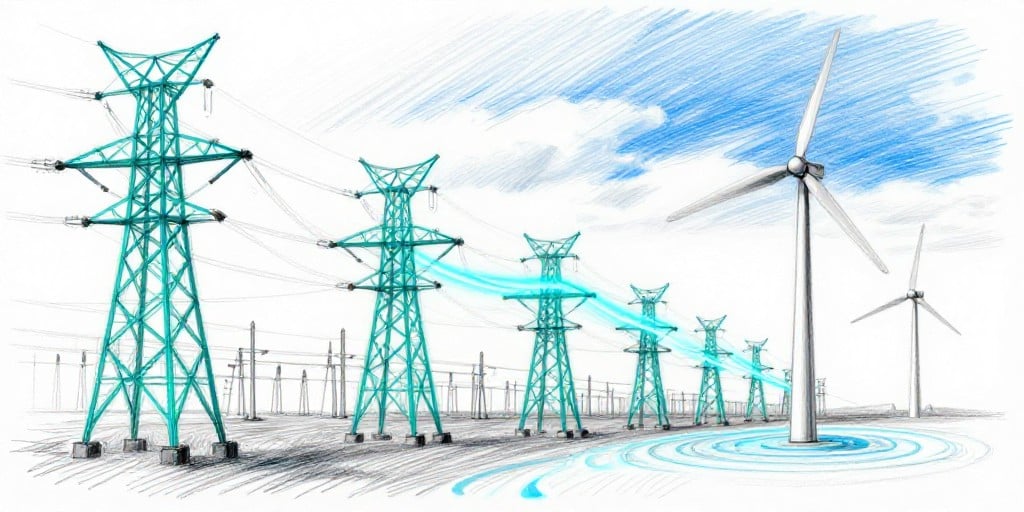
Pampa Energia operates a diversified portfolio that includes conventional power generation, gas production, and a growing network of transmission assets. The company’s recent expansion of high‑capacity transmission lines—particularly those linking the Pampa basin to metropolitan grids—has been designed to enhance grid stability amid increasing renewable penetration.
- Grid Stability: The firm’s transmission upgrades support voltage regulation and fault‑clearing capabilities, essential for maintaining supply continuity during peak demand periods. Advanced substation automation and real‑time SCADA monitoring have been deployed across key nodes, reducing the likelihood of cascading outages.
- Renewable Integration: Pampa’s integration strategy incorporates wind farms in the western provinces and solar PV arrays in the north. These assets are interlinked with the upgraded transmission network, allowing the utility to balance variable generation with load demand efficiently. By deploying energy storage solutions—particularly lithium‑ion batteries at strategic substations—the company can buffer short‑term fluctuations and maintain power quality.
The technical investments align with Argentina’s National Energy Plan, which aims to increase renewable share to 45 % of total generation by 2030. Pampa’s proactive stance positions it to capture forthcoming policy incentives while mitigating the risks of intermittency.
2. Economic Analysis: Cost of Capital, Revenue Streams, and Investment Outlook
Pampa’s diversified revenue base provides a hedge against market volatility. The company’s conventional generation plants—primarily gas‑fired—offer stable, low‑margin returns, whereas renewable projects deliver higher marginal profitability but require upfront capital.
| Asset Type | Average Capital Cost | Expected Return | Sensitivity to Policy |
|---|---|---|---|
| Gas Power | $1,500 MWh‑1 | 6–8 % IRR | Moderate |
| Wind Farm | $1,800 MWh‑1 | 8–10 % IRR | High (renewable subsidies) |
| Solar PV | $1,600 MWh‑1 | 7–9 % IRR | High (feed‑in tariffs) |
| Transmission | $1,200 MWh‑1 | 5–6 % IRR | Low |
The company’s net debt position has improved modestly, with debt‑to‑EBITDA decreasing from 2.8x to 2.5x in the latest quarter. This leverage reduction enhances creditworthiness, potentially lowering future borrowing costs. However, the cost of capital remains influenced by Argentina’s macroeconomic environment—particularly currency volatility and inflation expectations—which can affect project financing terms.
3. Regulatory Environment: Impact of Policy Changes and Market Reform
Argentina’s regulatory framework for utilities has undergone significant evolution since the 2014 reform that introduced greater market competition and transparent tariff structures. Recent policy developments include:
- Renewable Energy Incentives: The 2025 Renewable Energy Support Scheme offers a 5 % feed‑in tariff for wind and solar projects exceeding 100 MW. Pampa’s existing wind farms qualify, providing predictable revenue streams that bolster project economics.
- Tariff Review: The National Energy Commission (CEN) is revising tariff caps for distribution utilities, potentially increasing rates for high‑usage customers. This change could elevate Pampa’s distribution revenue, offsetting any decline in generation‑based earnings.
- Transmission Fee Reform: Proposed adjustments to the transmission fee structure aim to better align costs with network usage, which may reduce transmission revenue for Pampa in the short term but incentivize efficient network operation.
The regulatory trajectory indicates a shift toward a more market‑oriented environment, encouraging utilities to innovate and optimize assets. Insiders’ confidence—exemplified by Marcelo’s purchase—suggests that management believes the company can navigate these changes effectively.
4. Infrastructure Investment: Capital Expenditure and Operational Challenges
Pampa has earmarked $1.2 billion for infrastructure upgrades over the next three years, focusing on:
- Transmission Line Extension – 600 km of high‑voltage lines to connect remote generation sites with urban loads.
- Renewable Expansion – Two new wind farms (250 MW total) and a 200 MW solar PV array.
- Grid Modernization – Deployment of smart‑grid technologies, including advanced metering infrastructure (AMI) and automated fault‑recovery systems.
Operational challenges arise primarily from logistical constraints—such as terrain difficulties and permitting delays—as well as the need to coordinate with local communities and environmental regulators. Mitigation strategies involve phased construction schedules, stakeholder engagement initiatives, and contingency funding provisions.
5. Insider Activity: Signaling Confidence and Market Implications
Mindlin Marcos Marcelo’s recent buy, occurring when the share price hovered near its 52‑week low, demonstrates a tactical investment philosophy. Over the past three months, Marcelo’s net purchases total approximately 3.5 million shares, equating to a 4–5 % increase in his overall stake. This incremental accumulation, executed at market prices, indicates:
- Strategic Confidence: Marcelo’s actions suggest belief in the long‑term upside of Pampa’s diversified utility platform and its ability to capitalize on regulatory incentives.
- Signal for Market Participants: The insider buying spree, coupled with a 239 % spike in social‑media discussion and a +71 sentiment score, may prompt traders to anticipate short‑term price movements.
- Alignment with Institutional Investors: Concurrently, Pinnacle Investment Management’s increased voting stake signals institutional alignment, reinforcing shareholder confidence.
6. Conclusion
The insider transaction is more than a routine trade; it reflects a confluence of technical, economic, and regulatory factors shaping the Argentine utility sector. Pampa Energia’s commitment to grid stability, renewable integration, and infrastructure investment positions it favorably to navigate forthcoming policy reforms. While short‑term market volatility may persist, the company’s diversified revenue streams and improving financial metrics provide a robust foundation for sustained growth. Investors monitoring Pampa’s earnings releases, regulatory updates, and Marcelo’s subsequent transactions will be better equipped to assess the full impact of this insider buying wave.