Insider Buying Signals a Confidence Reset at Karman Holdings Inc.
Executive Summary
On 16 September 2026, Karman Holdings Inc. (KHM) witnessed a notable insider acquisition by Director Stinnett David, who purchased 27,000 shares at an average price of US $37.32. This transaction increased his holding to 3.53 million shares, just below a 7 % ownership threshold. Although the dollar value—approximately US $1.0 million—is modest relative to KHM’s market capitalization of US $4.97 billion, the timing and context of the trade provide a window into the company’s strategic trajectory, especially within the defense‑sector manufacturing landscape.
1. Insider Activity in Context
The purchase occurs amid a sustained downward trend in defense‑sector equities over the preceding six months, a period characterized by heightened political uncertainty and budgetary pauses. Insiders who buy in such environments are often signaling a belief that the market is undervaluing long‑term assets. Stinnett’s trade, placed roughly 5 % above the 52‑week low, suggests confidence that KHM’s next‑generation missile‑guidance platforms will sustain competitive advantage even if short‑term demand contracts.
Historical patterns reinforce this interpretation. Stinnett’s earlier transaction on 21 May 2026—a nominal purchase of 1,962 shares at zero price—likely reflects a stock‑based compensation grant rather than a market trade. Over the past year, his holdings have increased steadily without any selling activity, indicating a long‑term holding mindset that favors buying during periods of market volatility.
2. Karman Holdings’ Technological Edge
2.1. Advanced Guidance Systems
KHM’s core product suite centers on precision missile‑guidance systems that integrate radar‑based tracking, inertial navigation, and AI‑driven trajectory optimization. The company’s research and development pipeline is slated to introduce a next‑generation guidance module in Q3 2027, leveraging quantum‑sensing technologies to improve target discrimination in contested electromagnetic environments.
2.2. Manufacturing Productivity
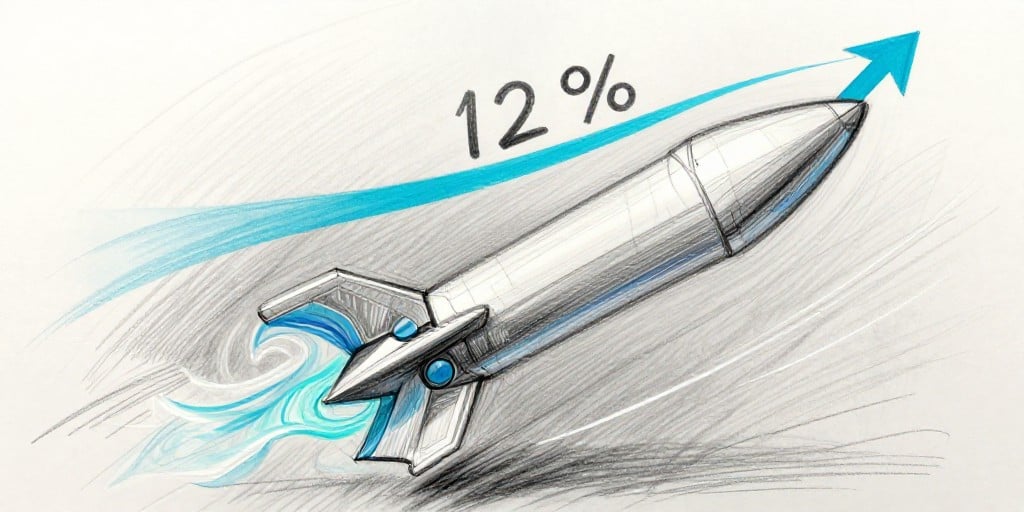
KHM has recently upgraded its production lines with modular automation platforms that enable rapid reconfiguration between missile types. The implementation of collaborative robots (cobots) and real‑time data analytics has yielded a 12 % increase in unit throughput, while defect rates have fallen by 3.5 % year‑over‑year. These gains are a direct result of adopting Industry 4.0 principles, such as digital twins and predictive maintenance, which reduce downtime and optimize supply‑chain synchronization.
3. Capital Investment and Economic Impact
3.1. Capital Expenditure Outlook
For FY 2026, KHM plans a capital expenditure of US $450 million, primarily directed toward the expansion of its Los Angeles facility and the construction of a dedicated testing range for hypersonic vehicles. This investment is projected to create 1,200 new jobs over the next 18 months, with ancillary benefits for local suppliers in aerospace components, electronics, and materials science.
3.2. Productivity Gains and Cost Structures
The capital infusion is expected to lower the unit cost of production by 6 % over the next three years, driven by economies of scale and automation. Lower production costs enhance pricing flexibility, allowing KHM to negotiate favorable contract terms with defense agencies, potentially capturing a larger share of the $2.2 trillion U.S. defense budget.
3.3. Broader Economic Impact
Increased productivity in the defense manufacturing sector has a multiplier effect on the broader economy. By reducing the cost of advanced weapons systems, the federal government can reallocate funds to other priorities, such as cyber‑defense and research. Moreover, the adoption of cutting‑edge manufacturing technologies by KHM sets a precedent for the industrial base, encouraging other firms to invest in digital transformation and thereby fostering a more resilient supply chain.
4. Valuation Considerations
KHM currently trades at a price‑to‑earnings ratio of 127, substantially above the industrial peers’ average of 32. While this premium reflects expectations of sustained growth in the defense domain, it also renders the stock vulnerable to correction if defense spending contracts further. However, bipartisan support for defense budgets suggests that, should appropriations stabilize, demand for KHM’s advanced systems could surge, justifying the elevated multiple.
5. Investor Takeaway
Stinnett’s “buy the dip” strategy amid a broader sell‑off signals an insider belief that KHM’s technological leadership and capital‑intensive manufacturing upgrades will generate long‑term value. For investors, the transaction provides a contrarian cue: insiders are willing to add positions when the market is under pressure, hinting at potential upside if KHM can navigate the current budgetary pause and resume growth in the coming fiscal year.
6. Transaction Summary
| Date | Owner | Transaction Type | Shares | Price per Share | Security |
|---|---|---|---|---|---|
| 2026‑09‑16 | Stinnett David () | Buy | 27,000.00 | 37.32 | Common Stock |
| 2026‑09‑16 | Petryszyn Mary D () | Buy | 500.00 | 37.44 | Common Stock |
| 2026‑09‑16 | Twitty Stephen () | Buy | 275.00 | 36.79 | Common Stock |