
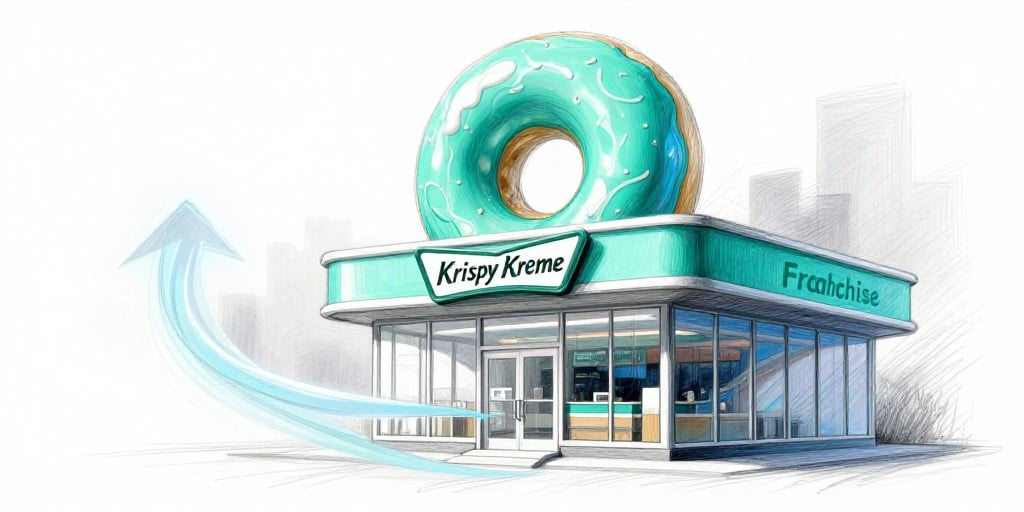
Corporate News Analysis: Insider Accumulation at Krispy Kreme Inc. (KCR) and Implications for the Consumer‑Goods Sector
The recent series of purchases by Hees Bernardo, an individual shareholder affiliated with BHBK LLC, has generated considerable discussion among equity analysts and retail investors. Although the dollar amount of each transaction is modest, the cumulative effect—over 900 000 shares, representing roughly 0.16 % of the company’s diluted equity—signals a noteworthy shift in insider sentiment. This development invites a broader examination of how incremental insider buying can influence market perception, brand strategy, and strategic decision‑making within the consumer‑goods landscape.
1. Insider Behavior as a Market Signal
Bernardo’s buying pattern is characterized by a disciplined, incremental approach. Rather than executing large block trades that could distort the share price or attract regulatory scrutiny, he has opted for a series of purchases that collectively reflect confidence in the firm’s underlying fundamentals. Historically, this style of accumulation has been associated with a long‑term, patient investment philosophy, suggesting that the insider prioritises strategic value over short‑term volatility.
In the context of Krispy Kreme, a company that has faced persistent negative earnings and a sharp decline in its price‑earnings ratio, such a buying trend can be interpreted as a bullish stance on brand equity and franchise growth. Analysts often view insider purchases as a proxy for managerial insight: when executives or close associates acquire shares, they are signalling that they believe the market is undervaluing the firm’s prospects.
2. Cross‑Sector Patterns in Consumer‑Goods
The consumer‑goods sector is witnessing a broader shift from traditional retail to experience‑centric and franchised business models. Krispy Kreme’s franchise strategy—particularly its focus on high‑growth international markets—mirrors trends seen in companies such as Dunkin’ Brands and Starbucks. These firms have leveraged global brand recognition to drive incremental revenue, even when core retail sales are under pressure.
Insider confidence in a franchised model can indicate that the company is poised to scale its operations without incurring proportionate capital expenditure. For investors, this dynamic suggests that brand equity and franchise expansion may become increasingly critical levers for profitability, especially when operating margins in brick‑and‑mortgage retail are constrained.
3. Market Shifts and Investor Sentiment
Krispy Kreme’s share price has displayed pronounced volatility over the past year—modest weekly gains offset by significant monthly declines, and a 52‑week swing from $5.73 to $2.50. The current price of $3.41 represents an 18 % year‑to‑date gain, yet the negative price‑earnings ratio (-1.12) and ongoing net loss highlight the speculative nature of the stock.
Investor sentiment, as captured by social‑media metrics (+48) and buzz (557 %), underscores a growing interest in insider activity. In the consumer‑goods space, social media can amplify brand narratives, and a surge in chatter often precedes a price uptick when the narrative shifts from “loss” to “rebound.” Consequently, the market is primed for a potential rally if Krispy Kreme can deliver on its growth propositions.
4. Innovation Opportunities for Decision Makers
4.1 Franchise Expansion in Emerging Markets
Strategic entry into high‑growth regions—particularly Asia‑Pacific and Latin America—offers an opportunity to capitalize on local consumer preferences for premium, experiential pastries. Leveraging localized product innovation, such as regionally inspired flavors, can enhance brand relevance and drive franchisee enthusiasm.
4.2 Digital Integration and Direct‑to‑Consumer Channels
Integrating a robust digital platform—mobile ordering, loyalty programs, and data‑driven personalization—can mitigate the impact of retail downturns. The consumer‑goods sector increasingly rewards brands that can convert experiential engagement into repeat digital transactions, thereby enhancing margins.
4.3 Cost‑Control and Supply‑Chain Optimization
Addressing the current net‑loss trajectory requires a disciplined approach to cost management. Opportunities exist in renegotiating supplier contracts, adopting lean inventory practices, and exploring alternative sourcing for core ingredients. Such efficiencies would improve the price‑earnings ratio and restore investor confidence.
5. Risks and Catalysts for Narrative Change
While the insider buying pattern suggests optimism, several risks remain:
- Regulatory Constraints: Franchising operations are subject to varying regulations across jurisdictions. Any significant regulatory hurdle could impede expansion plans.
- Competitive Pressure: The snack‑pastry market is crowded, and competitors are aggressively pursuing similar franchise and digital strategies.
- Earnings Volatility: Without a clear path to profitability, sustained negative earnings could erode shareholder value and deter further investment.
Conversely, catalysts that could validate Bernardo’s bullish view include:
- Successful Franchise Rollouts: A visible increase in franchise agreements, especially in high‑margin markets, would directly impact top‑line growth.
- Turnaround in Net Losses: Effective cost controls or new product lines generating higher gross margins could shift the price‑earnings ratio into positive territory.
- Sector‑Wide Consumer‑Discretionary Rally: A broader rebound in consumer‑discretionary stocks could lift Krispy Kreme’s share price as investor sentiment improves.
6. Conclusion for Business Audiences
Hees Bernardo’s recent purchases, while modest in aggregate dollar terms, serve as a potent signal of insider confidence in Krispy Kreme’s strategic direction. For corporate leaders and decision makers, this scenario underscores the importance of aligning brand strategy with franchise expansion, digital innovation, and cost discipline. The cross‑sector pattern—where experience‑centric franchising is emerging as a growth engine—provides a roadmap for similar consumer‑goods firms seeking sustainable profitability. Investors with a high‑risk tolerance should monitor forthcoming earnings releases, strategic initiatives, and regulatory developments to gauge whether the insider buying activity translates into a tangible bottom‑line turnaround.