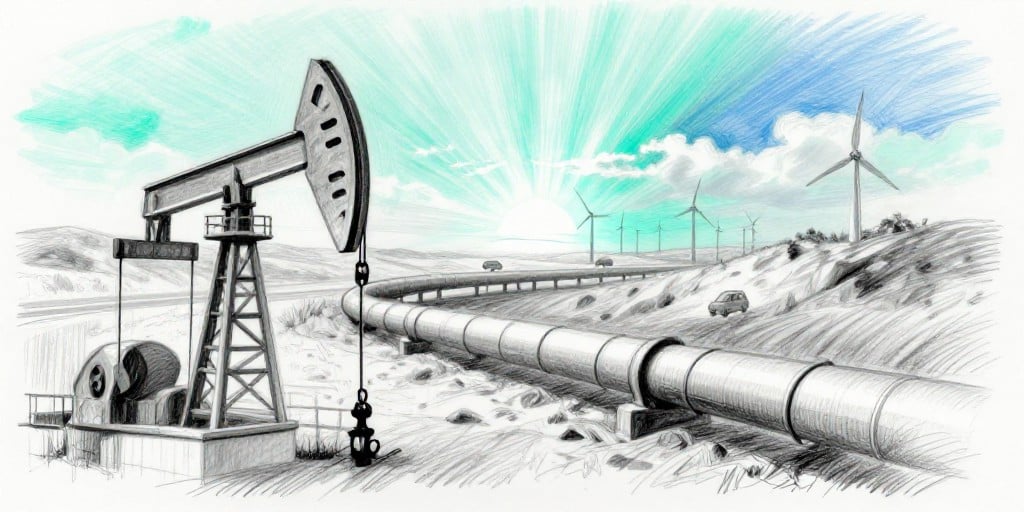
Contextualizing Insider Activity within Energy Market Dynamics
The recent insider purchases of limited‑partner interests in MPLX LP by directors Bruce L. Niemeyer and Michael G. Dunn occur against a backdrop of evolving energy production, storage, and regulatory frameworks. Although the transactions were modest relative to the company’s $60 billion market cap and executed at a nominal price, they signal management confidence in the firm’s strategic direction, which aligns with broader market trends that are reshaping both traditional and renewable energy sectors.
Production Landscape
Traditional Energy Production
- Crude Supply Tightening: The global crude market has experienced intermittent supply constraints driven by OPEC+ production cuts and geopolitical tensions in key producing regions. These dynamics elevate pipeline utilization and bolster marginal revenue for midstream operators such as MPLX.
- Technological Upgrades: Advances in hydraulic fracturing and horizontal drilling continue to extend the productive life of existing oil and gas fields, thereby increasing the volume of hydrocarbons that require midstream transport.
Renewable Energy Production
- Solar and Wind Growth: Solar PV installations have surpassed 300 GW of cumulative capacity, while onshore wind has added 20 GW annually over the past three years. These developments increase the demand for renewable energy storage and transport infrastructure.
- Battery Storage Deployment: Large‑scale battery projects, particularly in the United States and China, are scaling up at an accelerating pace, creating new opportunities for midstream services in the renewable sector.
Storage Dynamics
- Hydrogen Infrastructure: The push toward decarbonization is accelerating investment in hydrogen production, compression, and transport. MPLX’s existing pipeline assets could be repurposed for hydrogen, offering a diversification pathway.
- Grid Storage: Lithium‑ion and flow batteries are being integrated into power grids to mitigate intermittency, which in turn necessitates sophisticated distribution networks that overlap with midstream logistics.
Regulatory and Policy Environment
- U.S. Energy Policy: The 2026 Inflation Reduction Act and subsequent revisions emphasize carbon capture, storage, and renewable portfolio standards. These policies create incentives for pipeline operators to secure long‑term contracts for green gas and renewable energy transport.
- International Standards: The European Union’s Green Deal and the International Energy Agency’s net‑zero pathways are prompting cross‑border infrastructure projects, heightening the importance of regulatory compliance and cross‑jurisdictional coordination.
Technical and Economic Factors
| Category | Traditional Energy | Renewable Energy |
|---|---|---|
| Capital Expenditure | High, driven by field development and pipeline extensions | Moderate to high, driven by renewable farm construction and storage deployment |
| Operating Costs | Relatively stable, linked to fuel and maintenance | Variable, influenced by renewable intermittency and storage costs |
| Revenue Streams | Volume‑based transport fees and storage rates | Fixed contracts, capacity payments, and green premium for renewable transport |
Geopolitical Considerations
- Regional Instabilities: Conflicts in the Middle East and Eastern Europe can disrupt crude supply chains, prompting a shift toward alternative transportation routes and increasing reliance on U.S. domestic pipelines.
- Trade Policies: Tariff adjustments and trade agreements, particularly in the Asia‑Pacific region, affect the cost and feasibility of exporting renewable energy and related infrastructure components.
Implications for MPLX LP
- Pipeline Utilization: The insider confidence suggests anticipation of rising utilization rates, potentially driven by both tightened crude supplies and the increasing need for renewable energy transport.
- Asset Portfolio Expansion: MPLX’s focus on acquisitions in the Midwest and Gulf Coast positions it favorably to capture growing demand from both traditional and renewable producers.
- Regulatory Alignment: By aligning its operations with emerging decarbonization mandates, MPLX can secure long‑term revenue streams through green contracts and carbon‑capture transport agreements.
Conclusion
The synchronized purchases by Niemeyer and Dunn, although modest in size, underscore a strategic endorsement of MPLX’s pipeline strategy amid a dynamic energy environment. Investors should monitor capacity utilization metrics, regulatory approvals, and commodity price trends, as these factors collectively influence the firm’s trajectory. The convergence of traditional and renewable energy production, coupled with evolving storage solutions and regulatory incentives, creates a complex yet potentially lucrative landscape for midstream operators.