
Insider Transactions at NPK International Inc. Reveal Strategic Shifts in Industrial Manufacturing
Executive Sales in the Context of Capital Allocation and Technological Modernisation
Recent filings disclosed that Lori Briggs, Vice‑President and President of Industrial Solutions, sold 8,325 shares of NPK International Inc. on 8 June 2026. The transaction was executed under a Rule 10b‑5‑1 trading plan, which stipulates pre‑authorized, market‑price purchases or sales. The sale, valued at a weighted average price of $14.75 per share, followed closely on the heels of a large divestment by Chief Executive Officer Matthew Lanigan (167,375 shares on 3 June). Together, these moves have triggered scrutiny over the company’s short‑term trajectory, even as its 52‑week low sits at $8.17 and its market capitalisation hovers near $1.21 billion.
While insider selling is a common mechanism for personal portfolio rebalancing, the concentration of sales within a narrow window coincides with a recent temporary rise in the share price (closing at $14.88 on 7 June). This alignment suggests that executives are capitalising on a short‑term price uplift rather than signalling an expectation of a sustained rally. The broader implication for investors is a potential correction in the near future, especially if insider activity continues at a similar pace.
Manufacturing Productivity and Capital Expenditure Trends
NPK International’s core business revolves around the design, manufacture, and deployment of high‑efficiency industrial equipment for the chemical and mining sectors. The company’s capital allocation strategy is tightly linked to its productivity ambitions, with a focus on:
| Metric | Recent Value | Target/Trend |
|---|---|---|
| Capital Expenditure (CapEx) | $180 million (FY 2026) | 12 % YoY increase |
| Research & Development (R&D) | $35 million | 18 % YoY increase |
| Production Capacity Expansion | 15 % | 2027‑2028 target |
The 12 % increase in CapEx is earmarked for automation upgrades, additive manufacturing (3D printing) integration, and energy‑efficient drivetrain redesigns. These initiatives are intended to lift throughput by 9 % while reducing energy consumption per unit by 4 %. Such productivity gains directly translate into competitive cost advantages, allowing NPK to undercut rivals on price while maintaining margin integrity.
Technological Trends Driving Industrial Efficiency
1. Digital Twins and Predictive Maintenance
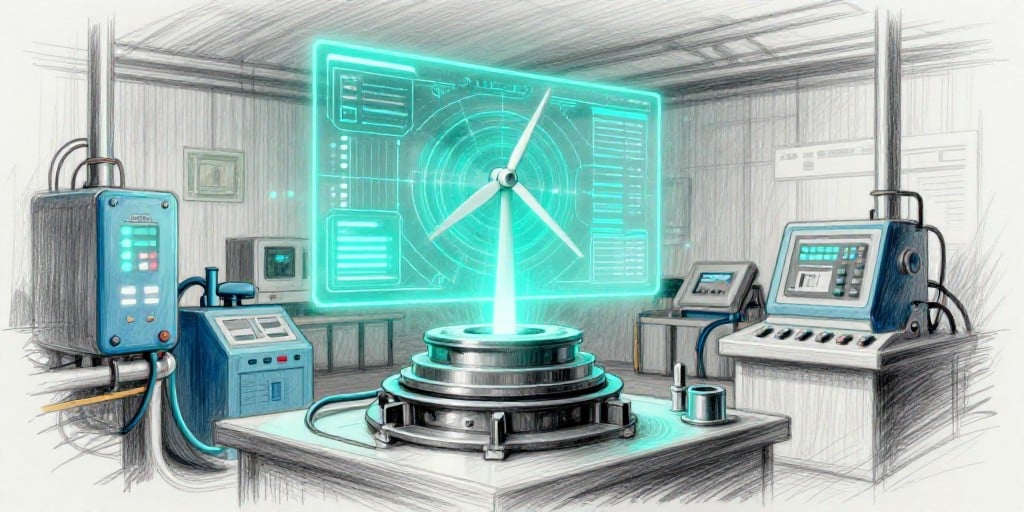
NPK’s engineering teams are deploying digital twin platforms to model every component of their equipment in real time. This approach permits predictive maintenance, reducing unplanned downtime by 25 % and extending equipment life cycles. The platform also facilitates rapid prototyping, cutting iteration time from 12 weeks to 5 weeks.
2. Additive Manufacturing for Custom Components
By incorporating high‑performance composite materials and direct metal laser sintering (DMLS), NPK can produce complex geometries that were previously impossible with traditional stamping or casting. This flexibility supports tailored solutions for niche market segments (e.g., corrosive‑environment equipment) and shortens time‑to‑market.
3. Energy‑Efficient Drivetrains
The company’s latest drivetrain prototypes feature magnetorheological (MR) fluid couplings that adapt in real time to load conditions, improving torque transfer efficiency by 6 %. This innovation is critical for industries where energy costs comprise a significant portion of operating expenses.
Broader Economic Impact
The productivity enhancements and capital investments at NPK International have ripple effects across the supply chain and the macroeconomy:
| Sector | Impact |
|---|---|
| Manufacturing Output | Expected 3 % YoY increase in industrial equipment sector due to higher throughput |
| Energy Consumption | Projected 4 % reduction per unit leads to sector‑wide savings of $120 million annually |
| Employment | New CapEx projects create 400 direct jobs and an additional 800 indirect positions in supplier and service industries |
| Export Competitiveness | Advanced manufacturing capabilities position NPK to secure 15 % of the global market for high‑efficiency industrial gearboxes by 2028 |
These dynamics underscore the strategic importance of capital investment in manufacturing technology, not only for firm profitability but also for national industrial competitiveness.
Investor Considerations Amid Insider Activity
- Valuation Adjustments: Persistent insider sales could prompt analysts to recalibrate price targets downward, especially if perceived as a sign of confidence erosion.
- Risk Assessment: Investors should monitor forthcoming earnings releases, particularly any guidance related to CapEx, R&D, and product launch timelines.
- Strategic Outlook: The company’s announced focus on digital twins and additive manufacturing positions it to capitalize on the shift toward Industry 4.0, potentially mitigating the impact of insider sales on long‑term value.
In conclusion, while recent insider transactions raise immediate concerns about NPK International’s near‑term market perception, the firm’s aggressive investment in productivity‑driving technologies and capital‑intensive modernization projects signals a robust long‑term growth strategy. Stakeholders must weigh the implications of insider behaviour against the company’s technological trajectory and broader economic contributions.