
Insider Buying and Market Sentiment: A Case Study of InterDigital
InterDigital’s most recent insider filing, submitted by director Abel Derek K on 22 April 2026, records a purchase of 1.94 shares at the close price of $359.45. This transaction, while modest relative to the company’s market capitalization, is part of a broader pattern of incremental accumulation that dates back to June 2025. By the end of the period, Mr K’s holdings totaled 7 236.86 shares, reflecting a deliberate, long‑term commitment to the firm’s prospects.
Significance of Director‑Level Purchases
Director‑level purchases often signal confidence in a company’s trajectory. In InterDigital’s case, the buy coincides with:
- Year‑over‑year performance: an 84.75 % return over the past 12 months.
- Strong valuation metrics: a 32.19 P/E ratio that sits comfortably within the sector’s median.
- Strategic positioning: a focus on advanced wireless technologies that underpin the next generation of 5G and beyond.
The purchase, executed at market close, suggests a passive accumulation strategy rather than opportunistic trading. This aligns with the broader insider activity on the same day, where senior executives—including the CEO, CFO, and chief licensing officer—also bought shares, cumulatively reinforcing leadership confidence.
Market‑Wide Implications
The overall market sentiment remains upbeat. Social‑media sentiment scores at +91 and a buzz level exceeding 1 000 % indicate that investors are actively discussing InterDigital’s prospects. The stock’s recent decline of 3.64 % from the previous week is a reminder of short‑term volatility but does not detract from the underlying bullish case supported by insider activity and solid performance metrics.
Emerging Technology and Cybersecurity Threats
While insider buying reflects confidence in corporate strategy, it also highlights the importance of robust cybersecurity practices, especially for companies operating at the cutting edge of wireless technology. InterDigital’s focus on 5G infrastructure exposes it—and its stakeholders—to a range of evolving threats.
1. Supply‑Chain Attacks on RF Components
- Real‑world example: The 2022 “Cobalt Strike” supply‑chain infiltration of a semiconductor supplier affected multiple telecom vendors.
- Regulatory implication: The U.S. Cybersecurity and Infrastructure Security Agency (CISA) issued guidance in 2024 requiring detailed component provenance documentation for critical infrastructure vendors.
- Actionable insight for IT security professionals:
- Implement a Component Trust Model (CTM) that tracks the origin, integrity, and chain‑of‑custody of every RF part.
- Use hardware root‑of‑trust (RoT) mechanisms to verify firmware authenticity at the lowest levels.
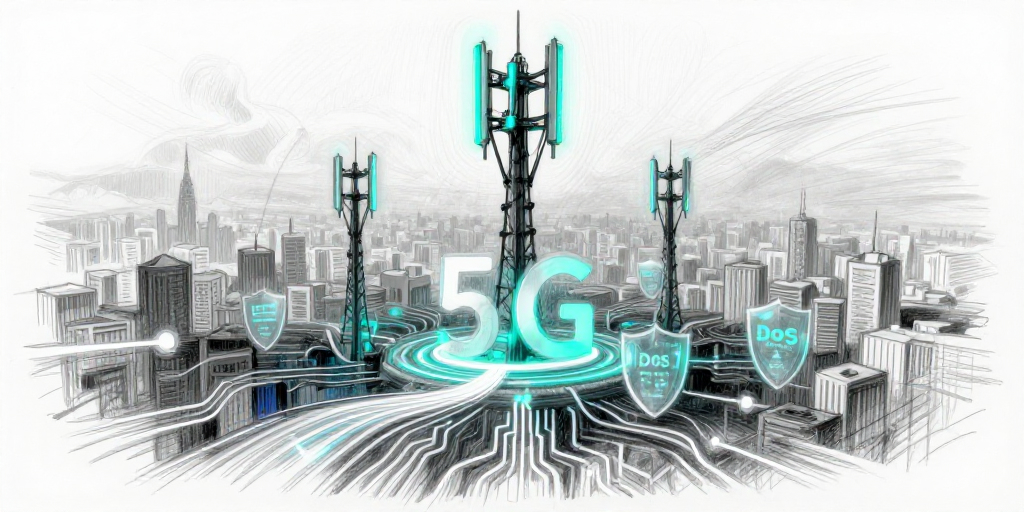
2. Denial‑of‑Service (DoS) Threats Targeting 5G Core Networks
- Real‑world example: In 2025, a coordinated DoS campaign disrupted several national 5G core networks, demonstrating the feasibility of large‑scale attacks on the control plane.
- Regulatory implication: The European Union’s 5G Security Directive (2025) mandates real‑time monitoring and rapid incident reporting for all 5G operators.
- Actionable insight for IT security professionals:
- Deploy Distributed Denial‑of‑Service (DDoS) mitigation appliances that can dynamically block anomalous traffic patterns.
- Configure Zero Trust Network Access (ZTNA) for core‑network components to enforce least‑privilege connectivity.
3. Data Privacy Concerns in Edge Computing
- Real‑world example: The 2026 “EdgeData” breach exposed sensitive user data from a popular smart‑home platform, illustrating the risk of decentralized data storage.
- Regulatory implication: The General Data Protection Regulation (GDPR) Amendments (2026) introduce stricter controls on data residency for edge devices.
- Actionable insight for IT security professionals:
- Enforce encryption‑at‑rest and in‑transit across all edge nodes.
- Conduct regular data residency audits to ensure compliance with jurisdictional requirements.
Societal and Regulatory Implications
Societal Impact
- Digital Inclusion: Strengthening 5G infrastructure supports broader access to high‑speed internet, enabling remote education, telemedicine, and economic participation in underserved regions.
- Privacy vs. Innovation: The balance between leveraging data for service improvement and protecting individual privacy remains a public concern. Transparent data practices can build consumer trust.
Regulatory Landscape
- Cross‑Border Data Flows: New U.S. and EU regulations are tightening restrictions on transferring sensitive data across borders. Companies must adopt data localization strategies where necessary.
- Cyber Insurance: The 2024 Cyber Insurance Act requires larger firms to maintain coverage that meets minimum loss‑coverage thresholds, influencing risk‑management priorities.
- Public‑Private Partnerships: Governments increasingly collaborate with telecom firms to secure critical infrastructure, offering incentives for adopting advanced security controls.
Practical Takeaways for IT Security Professionals
| Threat Domain | Mitigation Strategy | Implementation Tip |
|---|---|---|
| Supply‑Chain RF Components | Component Trust Model | Maintain an immutable ledger of component provenance |
| 5G Core Network DoS | DDoS mitigation appliances, ZTNA | Deploy anomaly‑based detection with automated response |
| Edge Data Privacy | Encryption, data residency audits | Use homomorphic encryption for selective processing |
| Regulatory Compliance | Continuous monitoring of GDPR/5G directives | Adopt a compliance‑oriented DevSecOps pipeline |
By integrating these best practices, organizations can protect their wireless assets while capitalizing on the growth opportunities presented by next‑generation technologies. The insider buying activity at InterDigital underscores a corporate confidence that, if coupled with rigorous security posture, can translate into sustained shareholder value.