Corporate News Analysis: Insider Activity at Intuitive Machines and Implications for the Lunar‑Tech Sector
Intuitive Machines (NASDAQ: INTM) has attracted significant attention following a series of Rule 10b‑5‑1 transactions executed by its chief executive officer, Altemus Stephen J. On 15 January 2026 the CEO purchased 428,503 Class A shares at $21.16, just below the daily close, while simultaneously selling an equivalent number of Class C shares and Common Units. The transactions were part of a broader pattern of insider trading that has emerged across senior leadership, notably SVP Timothy Price, who has also engaged in multiple Class A purchases and Class C divestitures over the past month.
1. Regulatory Context and Market Framework
| Regulation | Application to INTM | Impact |
|---|---|---|
| Rule 10b‑5‑1 | Governs the execution of large block trades under the Securities Exchange Act of 1934. | Enables the CEO and senior executives to reposition holdings without triggering market‑impact disclosures, preserving liquidity. |
| Section 13 and 15(d) Filings | Require public disclosure of insider transactions. | The timely filing of Form 4s by INTM provides transparency, allowing investors to assess insider sentiment. |
| Securities Act of 1933 | Ensures fair disclosure of material information. | The company’s recent analyst upgrade and subsequent market rally fall within the purview of fair disclosure, mitigating the risk of material misstatement. |
The regulatory environment has not introduced new constraints for lunar‑tech companies; however, the increasing scrutiny on insider activity in high‑growth sectors underscores the importance of robust governance practices. INTM’s adherence to these regulations, coupled with the transparency of its insider reports, mitigates reputational risk but does not eliminate the inherent volatility associated with a nascent industry.
2. Market Fundamentals and Recent Performance
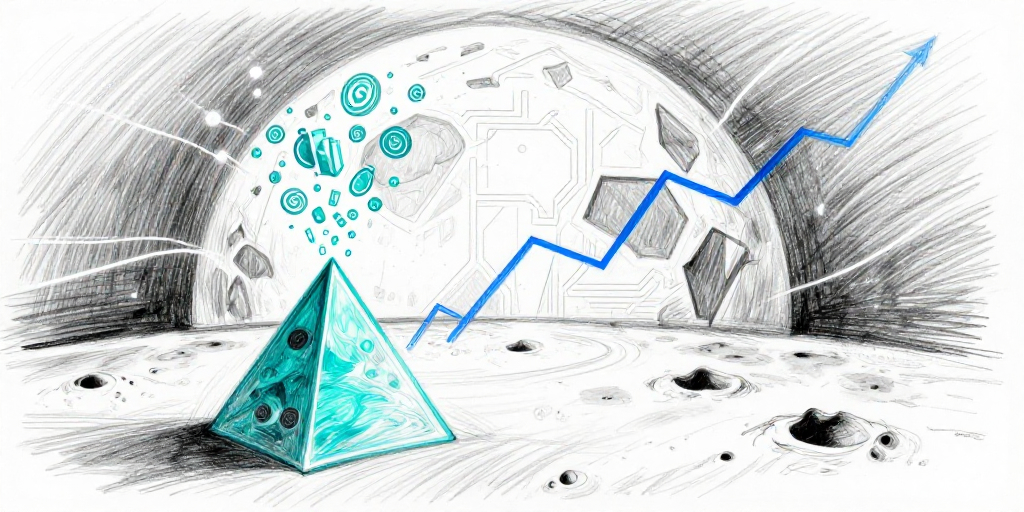
- Stock Performance: Since the CEO’s January 15th transaction, INTM shares have risen 8.96 %. The month‑to‑date gain of 91.67 % reflects strong investor enthusiasm for lunar‑orbit and surface services contracts.
- Valuation Metrics: The company currently trades at a negative price‑to‑earnings ratio of –5.29, a common feature among growth‑stage space firms that have yet to generate consistent positive earnings. The negative P/E, however, is offset by a robust 52‑week high and a market cap of $307 million.
- Liquidity Profile: The CEO’s swap of Class C shares (less liquid, lower voting power) for Class A shares (higher liquidity) signals a strategic move to improve liquidity and voting concentration, a trend mirrored by SVP Price.
These fundamentals suggest that the market perceives INTM as a compelling bet on the commercial lunar economy, notwithstanding the speculative nature of its valuation metrics.
3. Competitive Landscape and Industry Trends
| Competitor | Core Offering | Market Position | Recent Developments |
|---|---|---|---|
| Axiom Space | Lunar orbit and surface infrastructure | Early mover with NASA contracts | Expansion into commercial payloads |
| SpaceX | Lunar lander prototypes (Starship) | High‑visibility, vertically integrated | Progress toward lunar missions |
| Blue Origin | Lunar lander (Blue Moon) | Strong government partnership | Upcoming crewed lunar landing plans |
INTM competes on technology, cost efficiency, and the ability to deliver niche services such as lunar surface operations. The company’s recent NASA contracts and private partnerships position it favorably in a market that is increasingly valuing modular, reusable lunar infrastructure. However, competition from larger, diversified space firms poses a risk of market share erosion, especially if those firms leverage economies of scale.
Hidden Trends
Shift Toward Multi‑Class Share Structures The CEO’s repeated swapping between Class C and Class A shares indicates a broader industry trend of adopting multi‑class structures to balance liquidity and governance. This can reduce dilution risk while enabling strategic capital allocation.
Increased Insider Rebalancing Activity Senior leaders are engaging in frequent portfolio rebalancing rather than speculative trading, suggesting a focus on maintaining a stable ownership base during rapid growth phases.
Social Media Sentiment Dynamics A 97.87 % buzz index paired with a negative sentiment score of –61 highlights intense but neutral/mildly negative public discourse. This may reflect investor caution despite underlying positive fundamentals.
4. Risks and Opportunities
| Category | Risk | Opportunity |
|---|---|---|
| Regulatory | Potential tightening of insider‑trading disclosure rules. | Transparent filings can enhance investor confidence. |
| Market | Negative P/E and high volatility may deter risk‑averse investors. | Strong monthly performance indicates momentum that can attract growth capital. |
| Competitive | Larger firms could outscale INTM in technology development. | Niche specialization in lunar surface services offers differentiation. |
| Operational | Delays in contract fulfillment could impact revenue streams. | Existing NASA and private contracts provide a pipeline for future revenue. |
| Reputational | Insider activity may raise governance concerns. | Consistent rebalancing signals prudent management. |
Monitoring the next tranche of insider transactions—particularly any large sales that could dilute existing holdings—will be crucial to assessing whether the current buying momentum is sustainable. A sustained pattern of CEO purchases, coupled with positive earnings guidance, could reinforce bullish expectations, whereas abrupt divestitures might signal impending challenges.
5. Outlook
Intuitive Machines’ recent insider activity, when viewed alongside its favorable market fundamentals and strategic positioning within the lunar‑tech sector, suggests a cautiously optimistic outlook. The company’s ability to navigate a complex regulatory environment, maintain liquidity through share‑class swaps, and secure high‑profile contracts positions it well to capitalize on the burgeoning commercial lunar economy. However, investors should remain vigilant regarding the inherent valuation risks and competitive pressures that characterize this nascent industry.