Corporate Developments at KLX Energy Services Holdings Inc.
The recent resignation of Chief Financial Officer Keefer M. Lehner and the concurrent insider buying activity by senior executives Geoffrey Stanford and Max Bouthillette highlight a period of managerial transition and strategic repositioning for KLX Energy Services Holdings Inc. The moves occur against a backdrop of heightened volatility in both traditional and renewable energy markets, driven by production dynamics, storage constraints, and evolving regulatory frameworks.
Leadership Transition and Share Forfeiture
On 7 January 2026, KLX announced the immediate resignation of CFO Keefer M. Lehner. In accordance with a restricted‑stock agreement, Lehner forfeited 94,306 shares of common stock and 10,148 restricted‑stock units. Because the shares were surrendered upon termination, the transaction price was zero, leaving Lehner with 24,895 shares—a reduction from his pre‑resignation holding of 119,201 shares. The exit of a CFO who had deep familiarity with the company’s financial structure introduces short‑term uncertainty, yet the firm has not indicated a successor, suggesting that an interim arrangement may be in place until a permanent replacement is named.
Insider Buying Amid Market Volatility
In stark contrast to Lehner’s sell‑off, senior executives have increased their positions during the last quarter of 2025. Senior Vice President Geoffrey Stanford purchased 50,000 shares at $1.85–$1.94, raising his stake to 77,262 shares. Max Bouthillette added 16,500 shares, bringing his holdings to 142,865 shares. These purchases occurred after a modest 20 % weekly rise and 40 % monthly gain, indicating that upper management remains optimistic about the company’s trajectory despite negative earnings and valuation multiples.
Implications for Shareholders
The CFO’s departure and share forfeiture may signal a leadership transition that could bring fresh strategic focus. However, the loss of a CFO with a deep understanding of the company’s financials could increase short‑term uncertainty. The concurrent insider buying by Stanford and Bouthillette, both senior executives, signals confidence in KLX’s long‑term prospects, potentially offsetting the negative sentiment from Lehner’s exit. For shareholders, the net effect is a modest dilution of ownership but a reinforcement of insider support during a period of price volatility.
Energy Market Context
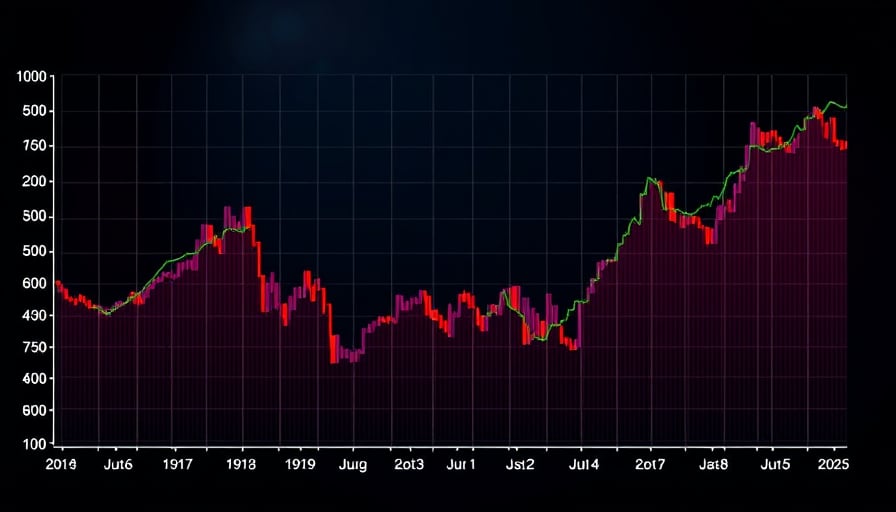
KLX’s stock has swung from a 52‑week high of $7.40 to a low of $1.46, reflecting broader turbulence in the oil‑field services sector. The company’s negative price‑to‑earnings and price‑to‑book ratios suggest that investors are pricing in significant earnings uncertainty. Yet the recent insider purchases could be interpreted as a bet on a turnaround, possibly driven by cost‑control initiatives or new service contracts.
The energy market itself is undergoing a structural shift. Traditional oil and gas production has reached a plateau in many regions, while storage infrastructure—particularly for natural gas and crude oil—remains a bottleneck that can limit supply flexibility. Regulatory dynamics are also evolving, with governments tightening emissions standards and incentivizing renewable energy deployment. Technological advances in hydraulic fracturing, enhanced oil recovery, and digital oilfield management are helping traditional operators lower costs, but the pace of transition to renewables is accelerating, driven by declining solar and wind costs and growing demand for carbon‑neutral power.
Geopolitical considerations add another layer of complexity. Regional conflicts, sanctions, and trade agreements can disrupt supply chains and affect commodity prices. For instance, tensions in the Middle East and disruptions in Russian gas flows have historically heightened market volatility, influencing both the cost of drilling services and the strategic priorities of oil‑field service companies.
Strategic Outlook
Given the confluence of leadership changes and market dynamics, investors should closely monitor forthcoming earnings releases and any further insider disclosures. A successful transition in the CFO role, combined with disciplined cost management and a strategic pivot toward high‑margin service contracts, could mitigate earnings uncertainty. At the same time, the firm’s ability to adapt to regulatory changes and invest in storage and digital technologies will be pivotal in maintaining competitiveness amid the evolving energy landscape.
| Date | Owner | Transaction Type | Shares | Price per Share | Security |
|---|---|---|---|---|---|
| 2026-01-07 | Lehner Keefer McGovern (See Remarks) | Sell | 94,306.00 | N/A | Common stock |
| 2026-01-07 | Lehner Keefer McGovern (See Remarks) | Sell | 10,148.00 | N/A | Restricted Stock Unit |