
Corporate News: Advances in Manufacturing and Industrial Technology Driving Productivity
The global manufacturing sector has entered a new phase of digital transformation, where advanced robotics, additive manufacturing, and intelligent logistics converge to unlock unprecedented levels of productivity. Recent capital investments from leading industrial conglomerates underscore the urgency for firms to modernize production lines in order to remain competitive in an economy that increasingly rewards speed, flexibility, and sustainability.
1. Automation and the Fourth Industrial Revolution
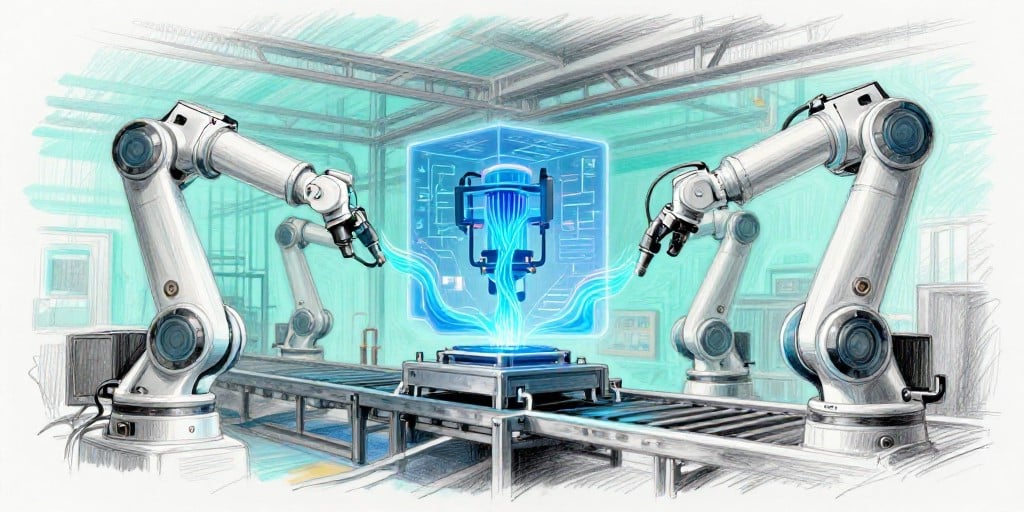
Modern factories are deploying collaborative robots (cobots) that work side‑by‑side with human operators. According to the International Federation of Robotics (IFR), the number of cobots sold worldwide increased by 12 % in 2025, reaching a global inventory of 1.8 million units. These machines are equipped with AI‑powered vision systems that enable real‑time defect detection, reducing scrap rates by up to 4 % in high‑volume production.
- Productivity Gains: Automation has been shown to raise labor productivity by 15 %–20 % in sectors such as automotive assembly and electronics manufacturing.
- Capital Expenditure: In 2025 alone, global investment in industrial automation reached $42 billion, a 9 % rise over the previous year.
The capital intensity of these deployments is offset by rapid payback periods. For instance, a mid‑size automotive supplier in Germany invested $3 million in an AI‑enabled cobot line and realized a full return in 18 months by cutting cycle times and reducing overtime costs.
2. Additive Manufacturing for Rapid Prototyping and Production
Metal additive manufacturing (AM) has moved from prototyping to full‑scale production, especially for aerospace and medical devices. The American Society for Quality (ASQ) reports that 30 % of firms that adopted AM in 2024 achieved a 10 % reduction in inventory holding costs due to on‑demand part fabrication.
- Speed to Market: AM allows designers to iterate quickly; a typical part can be redesigned and printed in 24–48 hours.
- Economic Impact: The adoption of AM has contributed to a $18 billion increase in the U.S. manufacturing output value in 2025, as measured by the Bureau of Economic Analysis.
Investors are noting the shift in supply chain dynamics, with companies increasingly favoring local AM hubs over long‑haul logistics, thereby reducing carbon footprints and enhancing resilience.
3. Intelligent Supply Chains and Digital Twins
Digital twins—virtual replicas of physical assets—are becoming integral to predictive maintenance and supply‑chain optimization. SAP’s Digital Supply Chain survey (2025) indicates that companies that implemented digital twins reported a 5 % improvement in asset utilization and a 7 % reduction in unplanned downtime.
- Capital Allocation: Investment in digital twin technology averaged $12 million per enterprise, with a payback period of 2–3 years driven by cost avoidance and service‑level improvements.
- Economic Ripple Effects: Enhanced supply‑chain visibility has lowered global shipping delays by 12 % during peak demand periods, a critical factor for just‑in‑time manufacturers.
4. Workforce Upskilling and Human‑Robot Collaboration
The transition to Industry 4.0 necessitates a workforce capable of managing and programming advanced machinery. Training programs in robotics and data analytics are now being incorporated into vocational curricula. The European Commission’s “Digital Manufacturing” initiative allocated €1.2 billion to workforce development in 2024, targeting 200 000 new technical professionals.
- Productivity Correlation: Firms that invest in employee upskilling see a 3–5 % increase in overall plant productivity.
- Economic Impact: The creation of high‑skill manufacturing jobs contributes to broader economic growth by generating higher wages and stimulating consumer demand.
5. Environmental and Regulatory Pressures
Stringent environmental regulations are compelling manufacturers to adopt cleaner processes. The EU’s Carbon Border Adjustment Mechanism (CBAM), slated for full implementation in 2027, will impose tariffs on imports based on their carbon intensity. In response, manufacturers are investing in energy‑efficient equipment and renewable energy sources.
- Capital Expenditure: Renewable energy projects in manufacturing facilities have seen a 15 % rise in 2025, with an average investment of $25 million per plant.
- Economic Impact: Lower operating costs due to reduced energy consumption translate into a 4 % improvement in profit margins for energy‑intensive sectors.
Conclusion
The convergence of robotics, additive manufacturing, and intelligent digital twins is redefining productivity in the manufacturing sector. Capital investment trends illustrate a clear shift toward technology that delivers rapid payback, operational resilience, and compliance with evolving environmental standards. For investors, these developments signal a robust pathway to sustained economic growth driven by technological advancement, while manufacturers that fail to adapt risk erosion of market share and profitability.