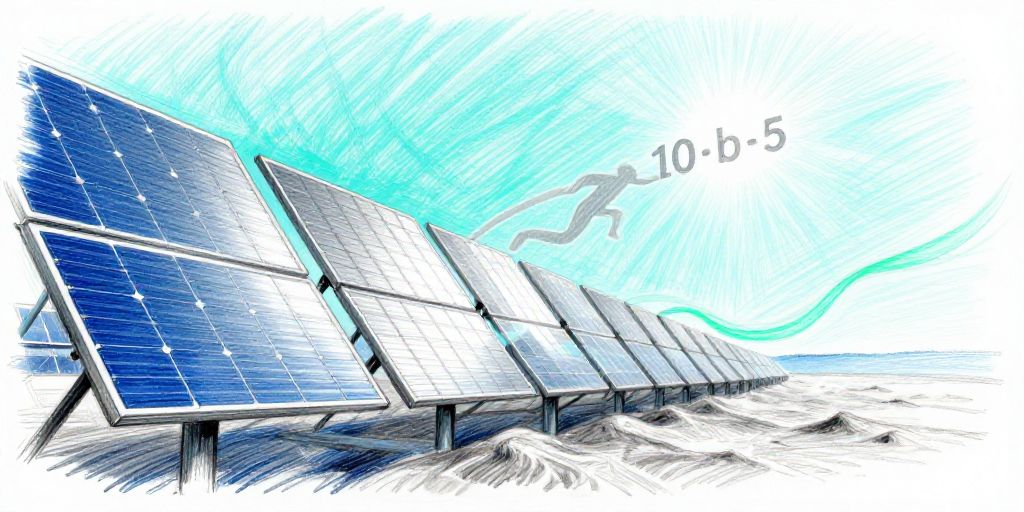
Executive‑Level Share Disposals and Their Implications for Nextpower Inc. and the Broader Industrials Landscape
1. Executive Context and Transaction Details
On March 4 2026, Daniel Shugar, Chief Executive Officer of Nextpower Inc., executed a 10‑b‑5‑1 plan sale of 39,892 shares of the company’s common stock at $101.04 per share. The price was marginally below the closing price of $103.41 on that day. The transaction, filed with the SEC under Regulation Fair Disclosure (Reg FD) and compliant with insider‑trading statutes, represents only 0.2 % of the CEO’s total equity position. It follows a pattern of insider divestments that includes the CFO and Chief Accounting Officer, who sold between 4,500 and 33,725 shares in the preceding year.
| Date | Owner | Transaction Type | Shares | Price per Share | Security |
|---|---|---|---|---|---|
| 2026‑03‑04 | SHUGAR DANIEL S | Sell | 39,892.00 | 101.04 | Common Stock |
| 2026‑03‑06 | SHUGAR DANIEL S | Sell | 220,805.00 | N/A | Common Stock |
| 2026‑03‑06 | SHUGAR DANIEL S | Buy | 220,805.00 | N/A | Common Stock |
The 10‑b‑5 plan was initiated on December 2025, predating the current market environment, thereby reducing the likelihood that the sale was a reactive measure to recent volatility.
2. Regulatory Environment
- Insider Trading Compliance: All transactions were reported in accordance with the Securities Exchange Act of 1934 and the Securities and Exchange Commission’s (SEC) Regulation Fair Disclosure, ensuring transparency for shareholders.
- 10‑b‑5 Plan Governance: The plan’s pre‑arranged schedule mitigates the risk of material adverse information influencing trade timing, aligning with the SEC’s “no‑diligence” requirement for such plans.
- Cross‑Industry Regulatory Trends: Across the industrials sector, regulators are tightening scrutiny on executive compensation and equity transactions to curb conflicts of interest. Companies that adopt robust internal controls, as Nextpower does, are positioned favorably for audit and compliance reviews.
3. Market Fundamentals
- Valuation Metrics: Nextpower’s price‑to‑earnings ratio of 26.3 is within the mid‑range for industrials, suggesting investors are pricing in continued growth from the company’s solar‑tracker technology.
- Performance Trajectory: The stock has appreciated 143 % year‑to‑date, despite a 3.5 % weekly decline. This rebound demonstrates resilience in the company’s core business model and investor confidence in its long‑term strategy.
- Capital Structure: With a market capitalization of $15 billion and modest insider divestments, the firm maintains a stable capital base, enabling continued investment in research and development and market expansion.
4. Competitive Landscape
- Solar Tracker Technology: Nextpower competes with firms such as SolarEdge and NexTracker, both of which are advancing dual‑axis tracking capabilities. The company’s integrated hardware‑software platform offers a differentiator in utility‑scale deployments.
- Utility‑Scale Projects: The expansion of utility‑scale solar farms in North America and Europe has intensified demand for efficient tracking solutions. Nextpower’s existing pipeline of projects provides a competitive moat through contractual commitments and established field infrastructure.
- Emerging Disruptors: New entrants leveraging artificial intelligence for predictive maintenance could erode market share. However, Nextpower’s data analytics suite, combined with a strong partnership network, positions it to absorb such innovations.
5. Hidden Trends, Risks, and Opportunities
| Category | Trend / Risk / Opportunity | Implications |
|---|---|---|
| Regulatory | Increased ESG disclosure requirements | Opportunity to enhance transparency and attract ESG‑focused investors |
| Market | Rising interest rates affecting project financing | Risk: higher capital costs; Mitigation: lock‑in financing terms |
| Competitive | Consolidation in the tracker market | Opportunity: potential acquisition targets for Nextpower to expand technology portfolio |
| Technological | Integration of machine learning for real‑time performance optimization | Opportunity: higher margins through value‑added services |
| Geopolitical | Trade tensions impacting component supply chains | Risk: supply chain disruptions; Mitigation: diversify suppliers |
6. Investor Guidance
While the CEO’s sale does not materially alter Nextpower’s fundamental outlook, it could amplify short‑term volatility among traders sensitive to insider activity. Investors should:
- Monitor Upcoming Earnings: Key metrics such as gross margin, R&D spend, and project pipeline updates will be pivotal.
- Track Further Insider Transactions: Continued insider sales may signal underlying concerns; conversely, purchases can reinforce confidence.
- Maintain a Long‑Term Perspective: The company’s technology pipeline and strategic positioning in the growing solar market support a growth trajectory that outweighs short‑term price fluctuations.
7. Broader Industry Context
The industrials sector is experiencing a convergence of sustainability mandates, digital transformation, and supply‑chain resilience demands. Companies that successfully integrate advanced analytics with sustainable product lines—such as Nextpower—are poised to capture premium valuations. Regulatory pressures around data security and ESG reporting further elevate the importance of robust governance structures, where Nextpower’s adherence to insider‑trading compliance sets a benchmark.
This article synthesizes publicly available information with market analysis to provide a comprehensive view of the implications of the CEO’s 10‑b‑5 sale for Nextpower Inc. and its position within the broader industrials ecosystem.