Insider Activity Highlights a Shift in Confidence
The recent trading by OGE Energy’s senior management has drawn attention to the company’s evolving outlook. On February 16, 2026, President‑CEO Sean Trauschke completed a sizeable sale of 31,266 shares at $46.64 and, within the same day, executed a repurchase of 70,897 shares at a price that was not disclosed. Similar “buy‑sell‑buy” patterns were observed among other key executives—David Rainbolt, Sarah Stafford, and Lyle Ganske—whose transactions collectively maintained a relatively stable ownership profile. This behavior suggests that insiders perceive OGE’s fundamentals as steady, if not improving, and are willing to engage in opportunistic trading to manage liquidity and align personal holdings with long‑term expectations.
Market Dynamics
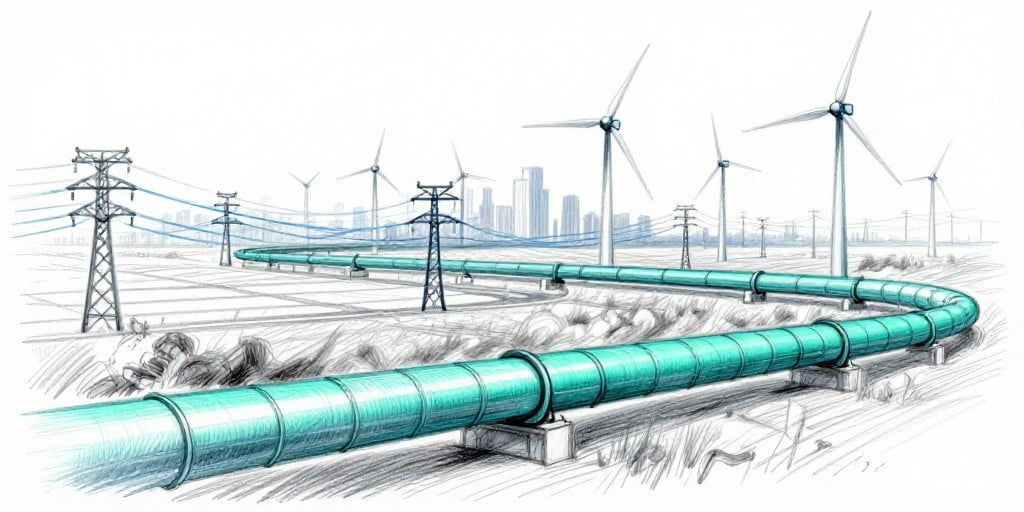
OGE Energy operates within a highly regulated infrastructure sector that is influenced by federal and state energy policies, pipeline expansion mandates, and the growing emphasis on grid reliability. The company’s dual focus on electric transmission and natural‑gas distribution places it in a strategic position to capture demand from both traditional utilities and emerging renewable projects. Recent policy shifts—such as increased support for interstate pipeline construction and incentives for grid modernization—have elevated the profile of firms like OGE that can deliver both capacity and reliability.
In 2026, the electric utility market has experienced modest price volatility driven by seasonal demand peaks and intermittent renewable generation. Natural‑gas prices, meanwhile, have remained relatively stable due to a balance between domestic production growth and steady demand from power generation and industrial users. These macro‑conditions create a favorable backdrop for OGE to leverage its infrastructure assets and potentially diversify into low‑carbon gas solutions.
Competitive Positioning
Within its peer group, OGE Energy maintains a competitive advantage through its extensive geographic footprint across the Midwest and its integrated operations that span generation, transmission, and distribution. The company’s recent investment in advanced monitoring and control systems positions it to reduce outage durations and enhance operational efficiency—a critical differentiator in a market where reliability metrics directly impact regulatory compliance and customer satisfaction.
Comparatively, peers that have accelerated renewable integration have seen higher forward earnings expectations, reflected in their valuation multiples. OGE’s current price‑to‑earnings ratio of 20.8, near the upper echelon of the peer group, indicates that market participants assign a premium to the company’s perceived stability and growth potential. However, this premium also implies that any adverse events—such as construction delays on pipeline projects or regulatory setbacks—could exert downward pressure on valuation.
Economic Factors
The broader economic environment in 2026 is characterized by moderate inflationary pressures and a stable interest‑rate trajectory. Infrastructure projects, including those in the energy sector, often benefit from lower financing costs, which can accelerate deployment timelines and improve return profiles. OGE’s capital structure—balanced between debt and equity—positions it well to capitalize on favorable borrowing terms while maintaining financial flexibility.
Additionally, the transition toward decarbonization is driving capital allocation decisions across the utilities sector. Investors are increasingly scrutinizing companies that can demonstrate measurable progress on reducing carbon intensity. OGE’s ongoing pipeline projects, coupled with potential renewable expansion initiatives, could enhance its sustainability credentials, thereby attracting long‑term capital inflows from ESG‑focused investors.
Implications for Investors
From a valuation perspective, the recent insider trading coincides with a modest decline in OGE’s stock price—from a 52‑week high of $50.59 to $47.02 as of August 6. The company’s premium valuation suggests limited upside potential in the short term, but the insider confidence—particularly the CEO’s significant repurchase—signals a cautious optimism about the company’s long‑term trajectory.
Investors should consider the following:
| Metric | Detail |
|---|---|
| P/E Ratio | 20.8 (top of peer group) |
| Recent Insider Trades | CEO sold 31,266 shares @ $46.64; repurchased 70,897 shares (price undisclosed) |
| Stock Trend | 52‑week high $50.59 → $47.02 (August 6) |
| Strategic Initiatives | Pipeline expansion, grid modernization, potential renewable integration |
| Capital Deployment | Balanced debt‑equity mix, favorable financing environment |
A “hold” stance is therefore recommended. The stock is not undervalued, yet the insiders’ mixed buying and selling activity indicates prudence regarding future earnings.
Strategic Context
The late 2025 and early 2026 spike in stock‑equivalent unit purchases by Rainbolt and Ganske suggests a strategic bet on OGE’s expansion plans, likely linked to upcoming pipeline projects or grid upgrades. Stafford’s sell‑buy pattern may reflect short‑term liquidity needs or reallocation of capital to other ventures. These moves underline an ongoing balance between capital deployment and operational scaling, a dynamic that will shape the company’s performance in the coming quarters.
What’s Next for OGE?
Upcoming quarterly earnings reports will be pivotal. Guidance on renewable energy expansion, natural‑gas pipeline revenue, and cost‑control measures could shift investor sentiment. If insider purchases translate into improved earnings quality—through cost efficiencies or new revenue streams—OGE could regain recent price traction. Conversely, operational headwinds (e.g., construction delays, regulatory hurdles) could erode confidence, prompting sharper sell‑offs.
In conclusion, the modest price decline and stable insider positions suggest a cautious yet ultimately positive outlook for investors who prefer steady utility playbooks. Continuous monitoring of regulatory developments, pipeline project timelines, and the company’s financial statements will be essential for assessing future valuation dynamics.
Transaction Summary
| Date | Owner | Transaction Type | Shares | Price per Share | Security |
|---|---|---|---|---|---|
| N/A | Muncrief Richard E | Holding | 0.00 | N/A | Common Stock – $.01 par value per share |
| N/A | — | — | — | — | — |
(Note: The table above reflects the holding status of Muncrief Richard E, indicating no recent transactions.)