Corporate News Analysis: OKLO’s Insider Activity and Its Implications for Power Generation and Utility Operations
Overview The recent insider transactions executed by Chief of Staff Hanson John and Chief Product Officer Renner Alexandra provide a micro‑cosm of how executive equity activity can signal both routine corporate finance operations and underlying confidence in a company’s strategic trajectory. While the trades themselves are modest in size and appear driven largely by vesting and tax considerations, they intersect with OKLO’s broader ambitions in fast‑reactor nuclear technology and the evolving regulatory landscape that governs the utilities sector.
1. Insider Transactions in Context
| Date | Owner | Transaction Type | Shares | Price per Share | Security |
|---|---|---|---|---|---|
| 2026‑10‑13 | Hanson John (Chief of Staff) | Buy | 961 | — | Class A Common Stock |
| 2026‑10‑13 | Hanson John | Sell | 961 | — | Restricted Stock Units |
| 2026‑10‑13 | Renner Alexandra (CPO) | Buy | 1,521 | — | Class A Common Stock |
| 2026‑10‑14 | Renner Alexandra | Sell | 688 | 30.75 | Class A Common Stock |
| 2026‑10‑13 | Renner Alexandra | Sell | 1,521 | — | Restricted Stock Units |
John’s purchase of 961 shares at the market price of $30.01, immediately following a Rule 144 sale and a large RSU sale, reflects a pattern of short‑term trading aligned with vesting schedules rather than strategic accumulation. The transaction’s timing—mere days after a Rule 144 sale—suggests it is principally a liquidity‑management move, with the modest 0.03 % premium over the closing price indicating an absence of speculative intent.
Conversely, Renner’s activity, which includes larger buy and sell blocks, points to a more dynamic engagement with the company’s equity, potentially reflecting confidence in the Aurora Powerhouse fast‑reactor project. However, like John, the trades appear to be reactive to vesting events rather than a deliberate stake build.
2. Power Generation and Grid Stability
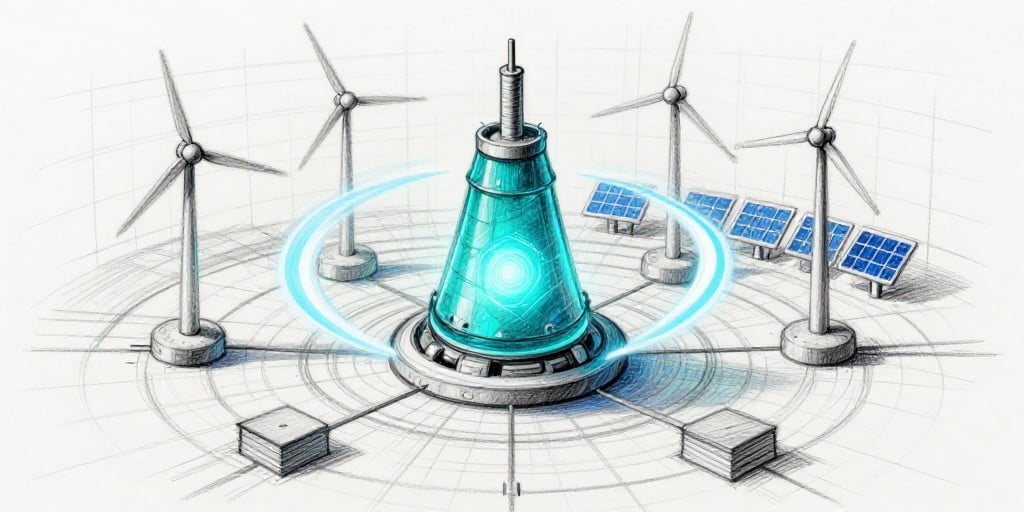
OKLO’s Aurora Powerhouse technology is positioned to provide high‑capacity, low‑reactivity nuclear power that can be rapidly dispatched to support grid stability. The project’s technical specifications—particularly its fast‑reactor core design—enable sub‑second response times to frequency deviations, a critical attribute as renewable penetration increases.
Technical Implications
- Rapid Dispatch: The reactor’s inherent ability to modulate output quickly reduces the need for conventional peaking plants, thereby lowering operating costs and carbon emissions.
- Load Following: Aurora’s load‑following capability can accommodate the intermittency of wind and solar resources, mitigating the “duck curve” challenge.
- Grid Resilience: By providing a stable, dispatchable base load, the technology enhances the overall resilience of the electricity grid against extreme events and cyber‑physical attacks.
Economic Analysis
- Capital Expenditure: Initial capital outlays for Aurora projects are projected to be comparable to advanced gas‑fired units but with lower lifetime operating expenses due to minimal fuel costs and reduced maintenance requirements.
- Levelised Cost of Energy (LCOE): Early modeling suggests an LCOE that is competitive with large‑scale solar plus storage, particularly under high carbon pricing regimes.
- Return on Investment: The expected payback period of 12–15 years aligns with utility procurement cycles, making Aurora attractive to both public utilities and private developers.
3. Renewable Integration and the Role of Fast‑Reactor Technology
The utilities sector is undergoing a rapid transition to renewable generation, necessitating sophisticated grid‑management strategies. OKLO’s fast‑reactor technology can bridge the gap between the variable output of renewables and the steady demand for electricity.
- Curtailment Reduction: By absorbing excess renewable generation during peak output periods, Aurora can reduce curtailment, thereby improving the overall efficiency of renewable assets.
- Frequency Regulation: The reactor’s fast‑response capability can deliver ancillary services such as frequency regulation and spinning reserve, traditionally supplied by battery storage or hydroelectric facilities.
- Long‑Term Planning: The deployment of Aurora units can be phased in to coincide with the retirement of aging fossil‑fuel plants, ensuring a smooth transition in the generation mix.
4. Regulatory Impacts
The regulatory environment for nuclear and renewable energy is becoming increasingly intertwined. Key considerations for OKLO include:
- Nuclear Licensing: Fast‑reactor projects must navigate rigorous licensing processes, which can extend the project timeline by 5–7 years compared to conventional nuclear plants.
- Renewable Portfolio Standards (RPS): State‑level RPS mandates can incentivize utilities to invest in dispatchable nuclear assets that complement renewable portfolios.
- Carbon Pricing: The imposition of carbon taxes or cap‑and‑trade systems enhances the economic competitiveness of low‑carbon technologies such as Aurora.
- Grid Code Compliance: The integration of fast‑reactor units requires adherence to updated grid codes that specify frequency response and voltage support capabilities.
5. Infrastructure Investment and Operational Challenges
Deploying Aurora Powerhouses demands substantial infrastructure investment and presents operational hurdles.
- Construction Complexity: Fast‑reactor cores require advanced materials and precision engineering, necessitating collaboration with specialized nuclear fabrication facilities.
- Supply Chain Resilience: The procurement of critical components (e.g., fuel assemblies, control rod systems) must account for potential bottlenecks, especially in a post‑pandemic supply environment.
- Safety and Public Perception: Ensuring public trust through transparent safety protocols and community engagement remains paramount, particularly for nuclear projects.
- Maintenance Paradigms: Unlike traditional reactors that rely on scheduled shutdowns, Aurora’s continuous operation requires a maintenance regime that balances uptime with component longevity.
6. Investor Perspective
The insider activity highlighted in the October 13, 2026 transaction report offers limited signals regarding the company’s strategic direction. Nevertheless, it underscores:
- Liquidity Management: Executives are actively managing vesting schedules and tax obligations, a routine but essential practice in large organizations.
- Confidence in Technology: The willingness to purchase shares at a modest premium, coupled with the high social‑media buzz, may reflect underlying confidence in the Aurora Powerhouse’s prospects.
- Short‑Term Market Dynamics: The modest gains from recent trades can influence short‑term liquidity and market perception, which, if leveraged effectively, can support share price stability amid sector volatility.
7. Conclusion
OKLO’s insider transactions, while primarily driven by vesting and tax considerations, provide a backdrop against which the company’s ambitious fast‑reactor technology must be evaluated. The Aurora Powerhouse has the technical potential to deliver rapid dispatch, enhance grid stability, and facilitate higher renewable integration, all while offering competitive economic metrics under current and projected regulatory frameworks. The challenges—particularly in infrastructure investment, supply chain resilience, and safety perception—require strategic coordination with regulators, utilities, and technology partners. For investors, the key takeaway is that insider trades, though routine, can signal confidence in the company’s long‑term strategic trajectory, especially when considered alongside the broader market dynamics of the utilities and energy‑technology space.