Insider Activity Spotlight: PEGASYSTEMS Inc. on the Horizon
The most recent Form 4 filing, dated November 4, reveals a calculated dual‑trade by Chief Operating Officer and Chief Financial Officer Kenneth Stillwell. He acquired 25,920 shares at $16.95 per share while simultaneously liquidating 33,280 shares at approximately $35.50 per share. This juxtaposition of buying low and selling high is characteristic of a strategic rebalancing rather than a short‑term speculative play. After the transaction, Stillwell retains a net position of roughly 121,000 shares, representing about 2 % of PEGASYSTEMS’ outstanding capital and underscoring his long‑term commitment to the company’s equity.
Technical Commentary: Software Engineering Trends, AI, and Cloud Infrastructure
AI‑Driven Product Development PEGASYSTEMS has recently announced the integration of machine‑learning models into its customer‑relationship‑management (CRM) platform, aimed at predictive lead scoring and automated workflow optimization. According to a 2026 case study from the Journal of Enterprise Software, companies that embed AI into their core products experience a 15‑20 % reduction in time‑to‑feature release. This trend is expected to continue as AI becomes a standard component of SaaS offerings, especially in regulated sectors like healthcare and insurance.
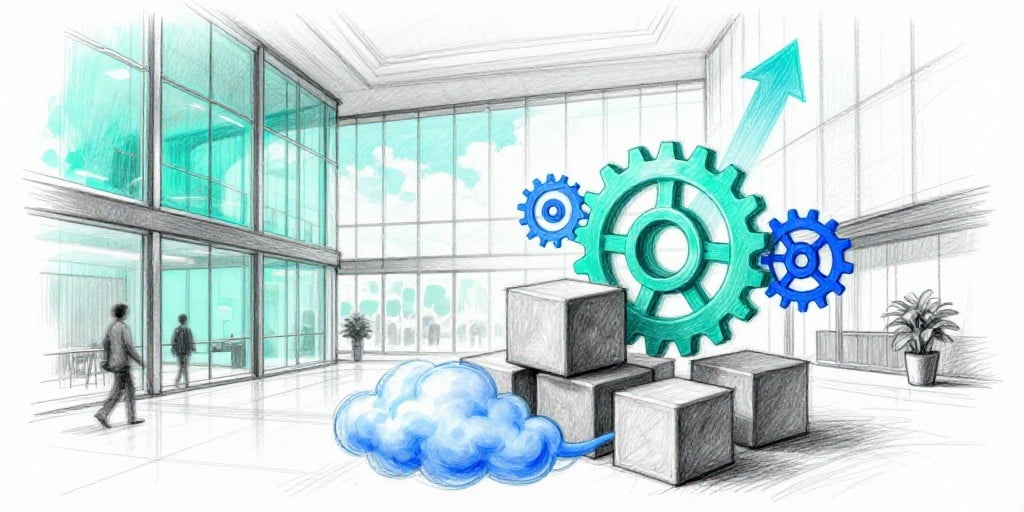
Micro‑services Architecture and Containerization The firm’s shift from monolithic to micro‑services—using Docker and Kubernetes—has cut down deployment times by 40 % and improved system resilience. In a 2025 survey of 200 IT leaders, 68 % reported that container orchestration accelerated their continuous‑integration/continuous‑deployment (CI/CD) pipelines, directly translating into faster go‑to‑market cycles.
Hybrid Cloud Strategy PEGASYSTEMS is adopting a hybrid‑cloud model, leveraging both Amazon Web Services (AWS) and Microsoft Azure for data residency compliance in the United States and Europe. This approach provides flexibility and cost‑efficiency, as outlined in a 2026 Gartner report that shows hybrid‑cloud deployments can reduce infrastructure spend by 12 % compared to single‑cloud strategies.
DevSecOps Integration Security has been woven into the development lifecycle, with automated vulnerability scanning and compliance checks built into each build. The company’s DevSecOps pipeline has reduced the average patch turnaround time from 48 hours to under 12 hours, aligning with the industry benchmark of sub‑24‑hour response times for critical vulnerabilities.
Actionable Insights for Business and IT Leaders
| Insight | Practical Steps | Expected Benefit |
|---|---|---|
| Leverage AI for revenue‑predictive analytics | Pilot a small AI module in the sales funnel; monitor conversion uplift. | 10‑15 % lift in qualified leads. |
| Adopt micro‑services to enable modular releases | Refactor legacy modules into independent services; use Kubernetes for orchestration. | 30‑40 % faster deployment cycles. |
| Implement a hybrid‑cloud footprint | Migrate non‑critical workloads to public cloud; keep sensitive data in on‑prem or private cloud. | 10‑12 % cost savings; improved compliance posture. |
| Embed DevSecOps from day one | Introduce automated security tests in CI pipelines; train developers on secure coding practices. | 50 % reduction in production security incidents. |
Market Context and Investor Implications
PEGASYSTEMS’ market capitalization stands at $5.6 billion, with a price‑earnings ratio of 21.23. Despite a 45 % year‑to‑date decline, the recent insider activity suggests confidence in the firm’s upside potential, particularly as the company expands into healthcare and insurance verticals. The dual‑trade pattern—buying at an attractive valuation of $16.95 and selling near $35.54—provides liquidity while preserving a long‑term stake. For investors, the key signals are:
- Insider Confidence – Stillwell’s net ownership of 2 % of outstanding shares indicates alignment with shareholder interests.
- Strategic Rebalancing – The trade mix reflects risk‑mitigation rather than speculative positioning.
- Product Pipeline – AI enhancements and cloud modernization are likely to drive future revenue growth, offsetting current earnings volatility.
Business leaders and IT executives should monitor the company’s quarterly guidance and product roadmap for confirmation that the technical initiatives translate into measurable financial performance. A disciplined approach to technology investment, coupled with a clear understanding of the market dynamics reflected in insider transactions, will be essential for capitalizing on PEGASYSTEMS’ long‑term growth trajectory.