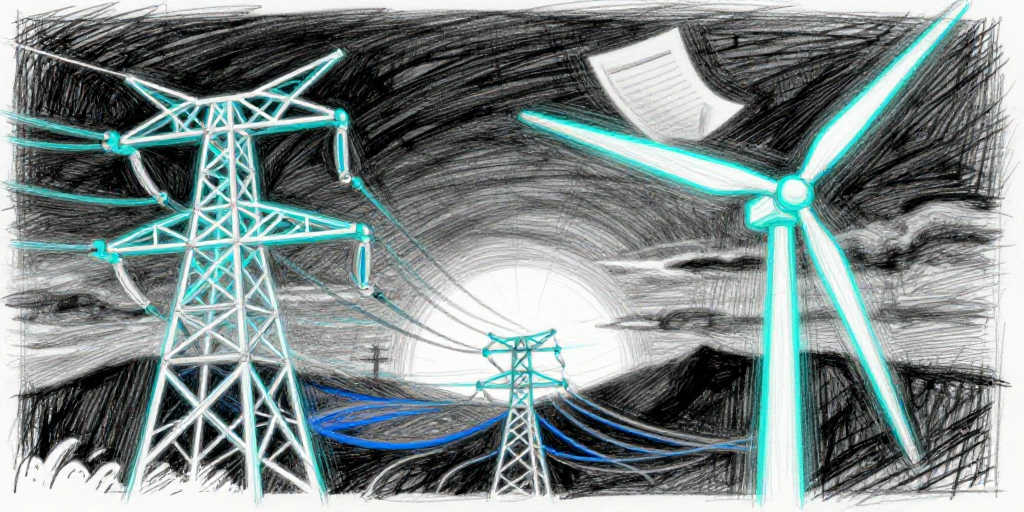
Power Generation and Utility Systems: A Technical and Economic Overview
Grid Stability in an Era of Decentralization
Modern electric grids are increasingly complex, incorporating distributed generation, storage, and advanced metering infrastructure. Maintaining voltage and frequency stability requires real‑time monitoring and adaptive controls. Utility operators employ phasor measurement units (PMUs) and automatic generation control (AGC) systems to balance supply and demand within milliseconds. The proliferation of electric vehicles, rooftop photovoltaics, and industrial energy‑efficiency projects introduces rapid, bidirectional power flows that challenge conventional grid paradigms.
Economic analysis shows that grid reliability costs exceed $10 billion annually in the United States, with a significant portion attributable to equipment aging and reactive power deficiencies. Investment in wide‑area monitoring and grid‑flexibility services is projected to yield a return on investment (ROI) of 12‑15 % over a 10‑year horizon, driven by reduced outage durations and lower corrective‑action expenditures.
Renewable Integration: Opportunities and Constraints
The utility sector is accelerating the deployment of renewable energy resources, with solar and wind accounting for over 25 % of new capacity additions in 2025. While these sources enhance environmental credentials and can reduce operating costs, their intermittent nature requires sophisticated forecasting and dispatch strategies.
Key technical challenges include:
- Curtailment Management – Excess renewable output during low‑demand periods forces utilities to curtail generation, impacting revenue streams.
- Grid Congestion – High penetration in specific corridors can overload transmission lines, necessitating upgrades or reactive power compensation.
- Energy Storage – Battery storage systems are the most scalable solution, yet their high upfront capital costs and limited lifecycle require careful financial modeling.
From an economic standpoint, the Levelized Cost of Energy (LCOE) for utility‑scale solar has fallen 40 % since 2010, while wind has seen a 30 % decline. However, the integration costs—encompassing grid upgrades, forecasting algorithms, and storage—can add 5–10 % to the LCOE. Utilities are responding by adopting hybrid portfolios that blend renewables with flexible peaking units and demand‑response programs.
Regulatory Landscape and Its Impact on Investment
Regulators play a pivotal role in shaping the utility investment environment. Recent policy developments include:
- Renewable Portfolio Standards (RPS) – Many states have raised their RPS targets to 50 % or higher by 2030, creating a mandate for renewable procurement.
- Time‑of‑Use Tariffs – Encouraging load shifting reduces peak demand, indirectly supporting distributed generation and storage projects.
- Grid Modernization Mandates – Federal and state incentives, such as the Federal Energy Regulatory Commission’s (FERC) Order 2222, promote non‑utility distributed energy resources, altering traditional revenue models.
These regulatory shifts drive utilities to reassess asset lifecycles. Capital‑intensive assets like fossil‑fueled plants face decommissioning risks, while renewable and storage projects must account for evolving incentive structures and market mechanisms. The economic rationale for investment now hinges on a balanced portfolio that mitigates regulatory risk while capitalizing on cost‑efficient renewable generation.
Infrastructure Investment: Balancing Cost and Reliability
Large‑scale infrastructure projects—transmission line upgrades, substation automation, and interconnection corridors—require multi‑year planning and substantial capital outlays. Utilities conduct cost‑benefit analyses that incorporate:
- Avoided Outage Costs – Quantified in terms of lost productivity, safety risks, and reputational damage.
- Regulatory Compliance Costs – Including penalties for non‑compliance with emissions standards or reliability criteria.
- Operational Efficiency Gains – Such as reduced line losses and improved voltage regulation.
Financial models often employ discounted cash flow (DCF) techniques, with a weighted average cost of capital (WACC) ranging from 6–8 % for regulated utilities. Recent trends show a shift toward “asset‑light” strategies, where utilities lease or purchase generation assets rather than owning them outright, thereby reducing debt burden and improving balance sheet flexibility.
Operational Challenges and Mitigation Strategies
Operational challenges in the utility sector encompass:
- Aging Asset Management – Over 40 % of transmission assets in the U.S. are over 30 years old, necessitating proactive replacement or retrofitting.
- Cybersecurity Threats – The interdependence between IT and OT systems creates vulnerabilities that can disrupt grid operations.
- Workforce Skill Gaps – The transition to digital grid operations requires new skill sets in data analytics, control engineering, and cybersecurity.
Utilities are adopting comprehensive risk‑management frameworks, integrating advanced analytics, and investing in workforce development programs. Pilot projects deploying artificial intelligence for predictive maintenance demonstrate a 20 % reduction in unplanned outages, translating into tangible cost savings.
Conclusion
The utility sector sits at a critical juncture where technological innovation, regulatory evolution, and economic imperatives converge. Ensuring grid stability while integrating high levels of renewable generation demands significant infrastructure investment, sophisticated operational controls, and strategic regulatory engagement. Utilities that align capital deployment with forward‑looking financial models and robust risk management will be best positioned to deliver reliable, cost‑effective power to end‑users in an increasingly dynamic market environment.