Power Generation and Utility Systems: Technical and Economic Analysis
The evolving landscape of power generation and utility infrastructure continues to shape the economic and regulatory frameworks that govern the sector. In this report, we examine the current state of grid stability, the integration of renewable energy resources, and the regulatory environment that influences infrastructure investment and operational challenges.
Grid Stability in a Multi‑Source Landscape
Modern electricity grids are increasingly fed by a heterogeneous mix of generation sources, including coal, natural gas, nuclear, and renewable assets. The shift toward renewable penetration introduces variable supply profiles that can compromise grid frequency and voltage stability. To counterbalance this volatility, utilities are deploying a combination of:
- Energy Storage Systems (ESS) – Battery technologies provide rapid ramp‑rate capabilities that absorb sudden generation dips or surges, maintaining the 50/60 Hz frequency standard.
- Demand Response (DR) – Time‑of‑use pricing and automated load‑shifting programs reduce peak demand, easing strain on the grid.
- Advanced Grid Management Software – Predictive analytics forecast renewable output and demand, enabling pre‑emptive dispatch decisions.
Recent pilot projects across the United States and Europe demonstrate that integrating 30–40 % renewable generation is achievable without compromising reliability, provided that storage and DR resources are scaled proportionally.
Renewable Integration: Technical Pathways and Economic Implications
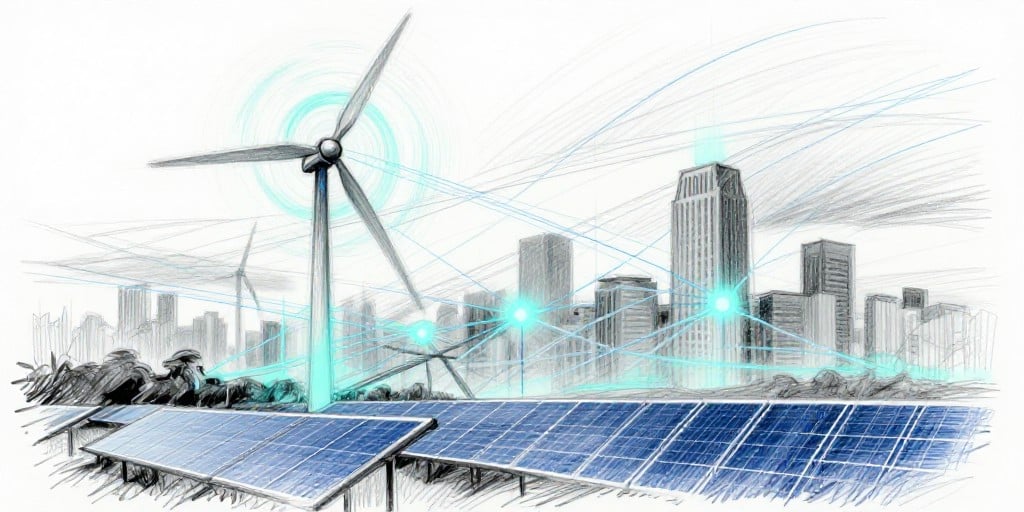
Renewable energy assets—particularly wind and solar—have reached cost parity with traditional baseload plants. However, their intermittent nature requires complementary technologies:
- Hybrid Systems – Combining wind turbines with battery storage or pumped‑hydro units increases dispatchability and reduces curtailment.
- Grid‑Scale Interconnection – Upgrading transmission corridors allows renewable farms located in remote, windy, or sunny regions to feed into central loads, improving overall system economics.
- Smart Inverters – These devices regulate voltage and reactive power, mitigating the impact of large solar farms on distribution networks.
From an economic standpoint, renewable integration reduces long‑term operating costs by lowering fuel expenses and decreasing maintenance on aging fossil‑fuel plants. Additionally, utilities that aggressively adopt renewable portfolios often qualify for state and federal incentives, further improving return on investment (ROI).
Regulatory Impacts on Investment and Operations
Regulatory bodies—such as the Federal Energy Regulatory Commission (FERC), state Public Utility Commissions (PUCs), and international agencies—are increasingly mandating renewable portfolio standards (RPS) and carbon pricing mechanisms. These regulations influence investment decisions in several ways:
- Capital Allocation – Utilities prioritize projects with favorable net present value (NPV) under projected policy scenarios.
- Risk Assessment – Regulatory certainty reduces investment risk. Conversely, policy uncertainty can delay or scale back new projects.
- Market Participation Rules – Requirements for renewable energy credits (RECs) and net metering shape how utilities structure their revenue streams.
Additionally, the recent push toward decarbonization has accelerated the retirement of legacy coal and natural‑gas plants, prompting utilities to redeploy stranded assets toward renewable and storage projects.
Infrastructure Investment: Capital Expenditure and Asset Modernization
Investing in grid modernization requires substantial capital outlays, yet the long‑term benefits—enhanced reliability, lower operating costs, and compliance with environmental mandates—justify the expense. Key investment areas include:
- Transmission Upgrades – High‑voltage direct current (HVDC) lines reduce losses over long distances, making it economically viable to transport wind and solar generation from remote sites.
- Distribution Automation – Smart meters, sensors, and automated switches enable real‑time monitoring and fault isolation, reducing outage durations.
- Cybersecurity Measures – As grids become more digital, protecting against cyber threats becomes essential to maintain operational integrity.
Financial analysis shows that a 10 % reduction in transmission losses can translate to a 1–2 % increase in overall system efficiency, yielding significant cost savings over a 20‑year horizon.
Operational Challenges and Strategic Responses
Utilities face several operational hurdles in this dynamic environment:
- Capacity Planning – Accurately forecasting future load growth amid shifting consumption patterns (e.g., electrification of transport) requires sophisticated modeling tools.
- Reserve Management – Balancing spinning reserve requirements with cost constraints demands innovative solutions, such as virtual power plants (VPPs) aggregating distributed energy resources (DERs).
- Regulatory Compliance – Meeting evolving emissions standards necessitates continuous monitoring and reporting, adding administrative overhead.
Strategic responses involve adopting flexible resource plans, leveraging data analytics for predictive maintenance, and engaging in collaborative market mechanisms (e.g., capacity markets) to share risk and optimize resource utilization.
This comprehensive analysis underscores that the power generation and utility sector is undergoing a paradigm shift, driven by renewable integration, technological innovation, and regulatory evolution. Successful navigation of these changes hinges on proactive investment strategies, robust grid management practices, and a keen understanding of the economic and policy landscapes.