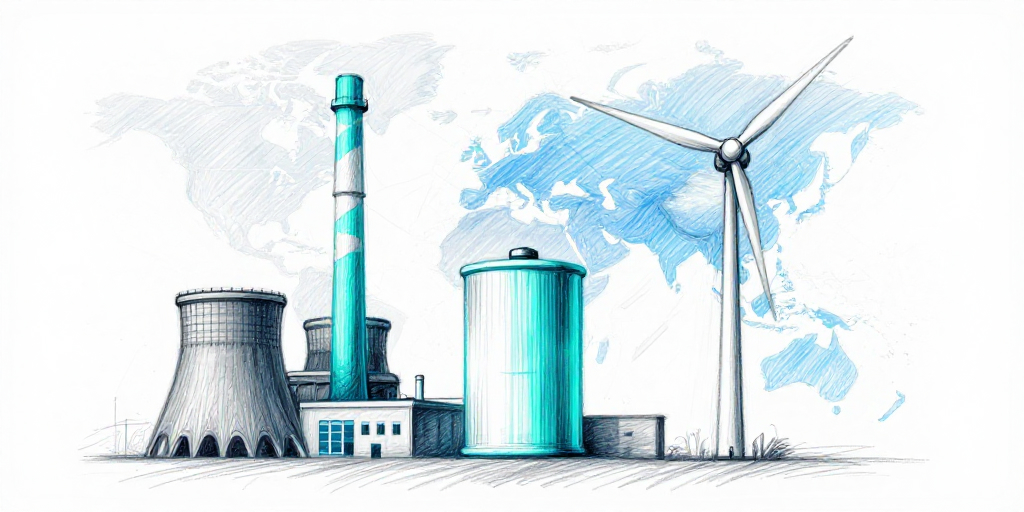
Energy Market Outlook: Production, Storage, and Regulatory Dynamics
Production Trends in Conventional and Renewable Sectors
The global energy landscape is currently experiencing a marked shift in production patterns. Conventional hydrocarbon output, particularly from the United States and Middle East, has entered a plateau phase. U.S. shale production remains steady at approximately 10 million barrels per day (mbpd), while Middle Eastern output continues to be influenced by geopolitical tensions in the Gulf region. In contrast, renewable energy production—chiefly solar photovoltaics (PV) and wind—has surged, with global installations reaching 110 GW of new capacity in 2025, a 12 % year‑over‑year increase.
Key drivers behind renewable production growth include:
- Technological Advancement: The cost of solar PV modules fell 25 % since 2019, driven by improvements in inverter efficiency and cell technology. Wind turbine blade design now allows for larger rotor diameters, increasing energy capture at lower wind speeds.
- Policy Incentives: European Union’s “Fit for 55” package and China’s 14th Five‑Year Plan provide substantial subsidies and feed‑in tariff structures that bolster renewable output.
- Corporate Power Purchase Agreements (PPAs): Multinational corporations are signing long‑term PPAs, creating guaranteed revenue streams that enable developers to finance new projects.
Storage Capacity and Its Impact on Market Volatility
Energy storage, particularly lithium‑ion battery systems, has become a critical component in balancing supply and demand. The global installed storage capacity reached 25 GW in 2025, a 40 % increase from 2024. Battery storage is increasingly deployed in three primary roles:
- Grid Frequency Regulation: Storage can react within milliseconds to stabilize grid frequency, mitigating the risk of blackouts.
- Peak Shaving: Utility-scale batteries store excess renewable generation during low demand periods and release it during peak demand, reducing reliance on fossil fuel peaking plants.
- Energy Arbitrage: Storage operators buy electricity during off‑peak hours (often at lower wholesale prices) and sell during peak hours, capturing price differentials.
The expansion of storage has reduced price volatility in wholesale markets, especially in regions with high renewable penetration. However, storage deployment remains constrained by raw material supply chains (lithium, cobalt, nickel) and regulatory approvals for large‑scale battery projects.
Regulatory Dynamics and Geopolitical Considerations
Regulatory frameworks are rapidly evolving to accommodate the transition to a cleaner energy mix. Several developments are particularly noteworthy:
- Carbon Pricing Mechanisms: The European Union Emission Trading System (ETS) is expanding to cover aviation and shipping, raising the price of carbon credits and incentivizing low‑carbon alternatives.
- Export Controls on Critical Minerals: The United States and European Union have introduced export restrictions on strategic minerals (e.g., rare earth elements) used in renewable technology, aiming to secure domestic supply chains while mitigating geopolitical risks associated with China.
- Net‑Zero Legislation: Countries such as the United Kingdom, Canada, and Brazil have enacted binding net‑zero targets by 2050, mandating significant reductions in fossil fuel use and encouraging investment in renewable infrastructure.
- Cross‑Border Interconnectors: The European Network of Transmission System Operators (ENTSO‑E) is pursuing the EU‑Energy Corridor, a 5‑GW interconnector that will enhance power trading across the continent and reduce the need for domestic peaking plants.
Geopolitical tensions in the Middle East, particularly in the Strait of Hormuz, continue to pose a risk to oil supply continuity. Conversely, the United States’ strategic pivot to Asia has led to increased collaboration with Japan and South Korea on battery storage and green hydrogen projects, mitigating some supply chain vulnerabilities.
Economic Factors Shaping the Energy Transition
The interplay between cost structures, market demand, and policy incentives determines the pace of energy transition:
- Capital Expenditure (CapEx): Renewable CapEx has fallen dramatically, with solar PV at $0.28 per watt and onshore wind at $1,200 per kilowatt. These reductions are driven by economies of scale and improved manufacturing processes.
- Operating Expenditure (OpEx): Renewable OpEx remains lower than fossil fuels due to minimal fuel costs, though maintenance and grid interconnection costs are rising as systems scale.
- Energy Return on Energy Invested (EROEI): Renewable technologies now boast EROEI values exceeding 20:1, surpassing conventional hydrocarbon extraction, which is around 10:1.
- Financing Landscape: Green bonds and climate‑linked loans are increasingly available, offering lower interest rates for renewable projects. However, the cost of capital for fossil fuel projects has risen due to heightened ESG (Environmental, Social, and Governance) scrutiny.
Conclusion
The energy market is in a state of dynamic equilibrium, with production trends, storage capabilities, and regulatory frameworks converging to reshape both traditional and renewable energy sectors. While conventional hydrocarbons maintain a dominant position in global energy supply, the accelerated decline in production costs, coupled with supportive policy environments and geopolitical considerations, is driving a sustained shift toward renewable generation. Investors and policymakers alike must monitor these evolving technical and economic parameters to anticipate future market movements and to formulate strategies that align with the broader objective of achieving a resilient, low‑carbon energy system.