
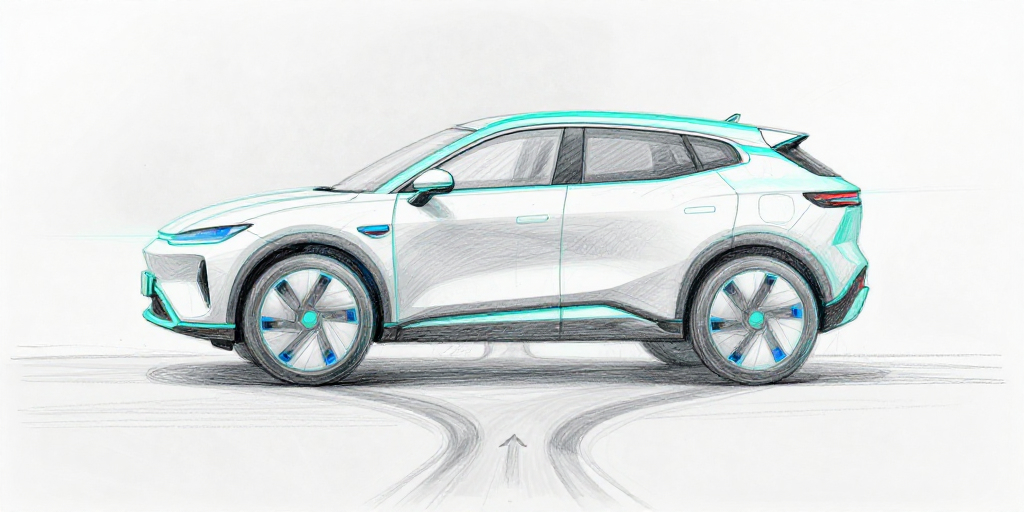
Insider Activity Highlights a Mixed Signal for Rivian Investors
Insider transactions provide a window into executive sentiment and can offer clues about a company’s strategic direction. On April 20, 2026, Rivian’s owner Aidan Gomez exercised a block of restricted stock units (RSUs) that vested that day, purchasing 810 shares at no cash cost. To satisfy tax‑withholding requirements, Gomez simultaneously sold 406 shares at $17.23 per share, leaving the net effect as a modest increase in his holdings to 39,984 shares. At the time of the transaction, Rivian’s share price was $17.74.
Contextualising the Transaction
The RSU vesting is a routine element of executive compensation, often linked to performance milestones or time‑based schedules. Gomez’s decision to exercise the RSU award—while simultaneously selling a portion of the shares for tax purposes—does not signal an impending liquidity event. Instead, it demonstrates confidence that the company’s long‑term strategy, notably its foray into software licensing, will support shareholder value.
The transaction occurred on a day of subdued market movement (an 8.1 % weekly gain and a 12.5 % monthly gain). Meanwhile, social‑media activity spiked by 562 % in intensity, though overall sentiment remained mildly positive (+67). This juxtaposition suggests that investors were attentive to the company’s operational developments (e.g., the recent tornado incident at the Normal plant) but remained cautious about immediate price swings.
Insider Trading Patterns
Gomez’s recent trading history shows a pattern of alternating small purchases and sales. His largest prior purchase—862 shares on October 20, 2025—was followed by a 414‑share sale on the same day. The current 810‑share purchase is roughly double that prior buy, aligning with a broader trend of insider buying observed among Rivian leadership in April 2026. Other senior executives—John Krafcik, Harold Schwartz Sanford, and Peter Krawiec—executed single purchases on the same day (1,255, 1,255, and 897 shares respectively), reinforcing a collective bullish stance.
In contrast, the company’s chief executive, Robert Scaringe, and chief financial officer, Claire McDonough, have sold shares over the past year. These sales largely stem from liquidity events and tax planning rather than strategic repositioning. Nonetheless, the overall insider buying volume in April 2026 surpassed the average for the month, suggesting confidence in Rivian’s near‑term product roadmap, including the forthcoming R2 SUV and an expanding autonomous‑software portfolio.
Sector‑Wide Implications
Rivian operates at the intersection of electric vehicle (EV) manufacturing and autonomous‑software development, two sectors with distinct regulatory, competitive, and market dynamics.
| Sector | Regulatory Landscape | Market Fundamentals | Competitive Landscape |
|---|---|---|---|
| EV Manufacturing | Stringent emissions standards and safety regulations in the U.S., EU, and China; increasing subsidies for zero‑emission vehicles | Growth driven by consumer demand for sustainable transport; capital‑intensive supply chain; reliance on battery technology | Established players (Tesla, NIO, BYD) plus emerging entrants; high capital expenditure and brand differentiation are key |
| Autonomous Software | Emerging framework for autonomous driving (SAE levels 4–5); data‑privacy and cybersecurity regulations; liability frameworks still evolving | Revenue from software licensing and data analytics; potential for recurring revenue streams; high upfront R&D investment | Competition from tech firms (Waymo, Mobileye, NVIDIA) and automakers investing in in‑house capabilities |
Rivian’s move into software licensing positions it to generate predictable revenue streams that could stabilize earnings against the cyclical nature of vehicle sales. However, this strategy also exposes the company to risks associated with cybersecurity, regulatory approval of autonomous features, and the need for continual innovation to maintain a competitive edge.
Identifying Hidden Trends, Risks, and Opportunities
| Category | Trend | Risk | Opportunity |
|---|---|---|---|
| Insider Sentiment | Modest insider buying suggests cautious optimism | Potential for over‑valuation if market expectations are unmet | Alignment of executive and shareholder interests may encourage disciplined capital allocation |
| Market Dynamics | Increasing focus on software licensing | Dependence on regulatory approvals for autonomous features | Recurring revenue model enhances cash flow stability |
| Competitive Position | Rivian’s R2 SUV and autonomous software portfolio expansion | Intense competition from established and emerging players | Differentiation through integrated vehicle‑software ecosystems |
| Operational Risks | Recent tornado incident at the Normal plant | Disruption to production and supply chain | Opportunity to modernize facilities and improve resilience |
Investor Takeaway
For investment professionals evaluating Rivian, the insider activity on April 20, 2026 underscores a cautiously optimistic outlook. The modest increase in Gomez’s holdings, coupled with a broader trend of insider buying, indicates that senior management expects the company’s valuation to improve as its software licensing strategy matures. While short‑term volatility may persist—evidenced by the muted market movement and heightened social‑media buzz—Rivian’s positioning within the EV and autonomous‑software markets offers a compelling long‑term play for investors willing to weather short‑term fluctuations and capitalize on the company’s evolving revenue streams.