
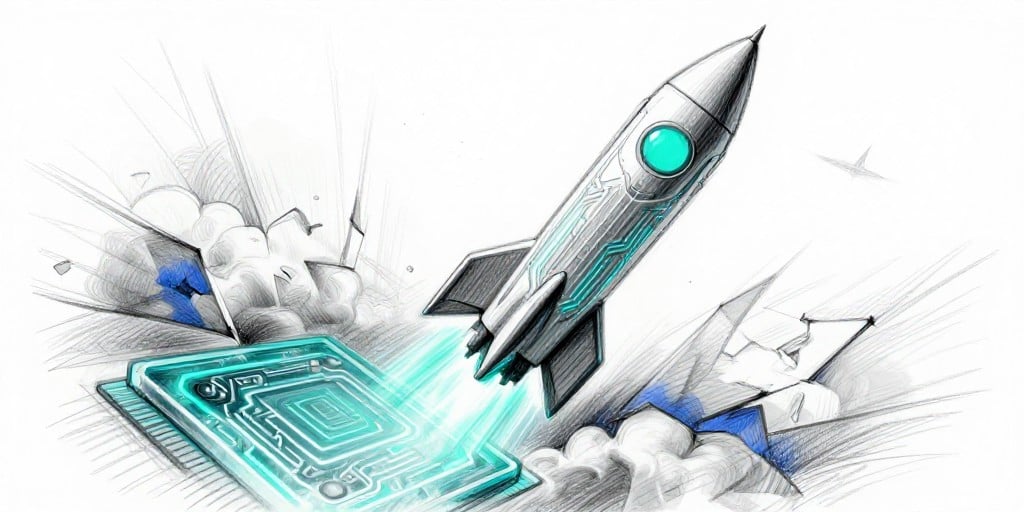
Analysis of Insider Activity and Strategic Pivot in the Biotech and Pharmaceutical Landscape
Executive Alignment and Incentive Structure
On 26 May 2026, Rocket One Inc. (formerly Hoth) executed a significant internal restructuring that coincides with its re‑branding and ticker change to RKTO. The owner, Linsley Wayne, purchased 75,000 options at zero cost under the Equity Incentive Plan, a move that aligns executive remuneration with the newly articulated orbital‑economy strategy. By vesting these options immediately, Wayne signals confidence that the transition from a conventional biopharma model to an AI‑enabled, radiation‑tolerant computing platform will generate shareholder value.
The same transaction was mirrored by senior leadership: CEO Knie Robb acquired 550,000 options, while other executives (Sarnoff David, Camarra Christopher Michael, and Pavell Jeff) each secured 75,000 options. Historically, Robb has been the most active insider, having purchased 800,000 shares in August 2025 and liquidating 310,744 shares the following day. This pattern of recurring option purchases demonstrates a collective commitment to the company’s new strategic direction and mitigates concerns about misaligned incentives that often accompany biopharma spin‑offs.
Market Positioning and Commercial Strategy
Rocket One’s shift from a drug‑development focus to a high‑tech orbital platform represents a fundamental change in its commercial trajectory. While the biopharma phase was characterized by operating losses—reflected in a market cap of approximately $13.5 million and a trailing P/E of –0.88—the new focus on chip‑and‑AI technology aims to unlock a higher growth trajectory. The company’s strategy now hinges on penetrating defense and space markets, where the demand for radiation‑tolerant computing is increasing.
The insider activity suggests that management anticipates profitability within 12–18 months, contingent upon successful development milestones and the acquisition of defense contracts. For investors, the breadth of insider confidence can temper skepticism during this transition, particularly as the company trades under a new ticker and may experience liquidity adjustments. However, the introduction of new technology also brings heightened operational risk, capital intensity, and regulatory scrutiny, especially given the dual-use nature of defense and space technologies.
Competitive Positioning and Market Access
Rocket One’s competitive positioning will depend on its ability to differentiate its orbital computing solutions from incumbents that dominate the defense and aerospace sectors. Key success factors include:
- Technological Innovation – Demonstrating superior radiation tolerance and AI integration will be essential to win contracts and establish market leadership.
- Regulatory Compliance – Navigating export controls, national security regulations, and space‑sector certification processes will require robust compliance frameworks.
- Partnerships and Alliances – Forming strategic alliances with established aerospace and defense contractors could accelerate market access and reduce time‑to‑market.
The company’s current market cap and negative earnings metrics imply limited financial headroom; thus, securing strategic partnerships or pursuing government grants may be critical to sustaining R&D efforts and managing cash burn.
Feasibility of Drug Development Programs vs. New Tech Initiatives
While Rocket One has exited the biopharma domain, it’s instructive to compare the feasibility of its former drug development programs to its current chip‑and‑AI roadmap. Biopharma ventures typically require extensive preclinical studies, clinical trials across multiple phases, and regulatory approval from bodies such as the FDA. These programs are capital‑intensive, time‑consuming, and subject to high failure rates—factors that contributed to the company’s pre‑pivot losses.
Conversely, the current orbital computing initiative involves a different set of risks:
- Technology Development Risk – The challenge lies in scaling prototype chips and integrating AI workloads in radiation‑tolerant environments, which may be faster to validate than multi‑phase clinical trials but still demanding.
- Capital Requirements – Building fabrication facilities or securing access to existing fabs will require significant upfront investment.
- Market Acceptance – Success hinges on securing early adopters in defense and space sectors, where procurement cycles can be lengthy but contracts are lucrative.
Overall, the new strategy reduces the time horizon for potential returns compared to drug development but introduces unique technical and regulatory hurdles that warrant close monitoring.
Investor Outlook
The insider purchases, coupled with the company’s re‑branding, suggest a deliberate effort to align internal incentives with a high‑growth, high‑risk technology pivot. Investors should consider the following when assessing Rocket One’s prospects:
- Capital Structure – The possibility of additional share issuances under the new sales agreement could dilute existing shareholders, impacting valuation.
- Milestone Tracking – Early chip development achievements and the signing of defense contracts will serve as critical indicators of progress.
- Risk Management – Evaluating the company’s approach to regulatory compliance and risk mitigation will be essential, given the sensitive nature of space and defense technologies.
In summary, Rocket One’s insider activity reflects a concerted shift toward a technologically ambitious and strategically distinct market. While the new direction offers a potentially higher growth trajectory than its biopharma past, it also brings increased uncertainty, capital intensity, and regulatory complexity. Investors and analysts must therefore scrutinize both the commercial strategy and the feasibility of the underlying technology development programs to gauge the long‑term viability and value creation potential of RKTO.