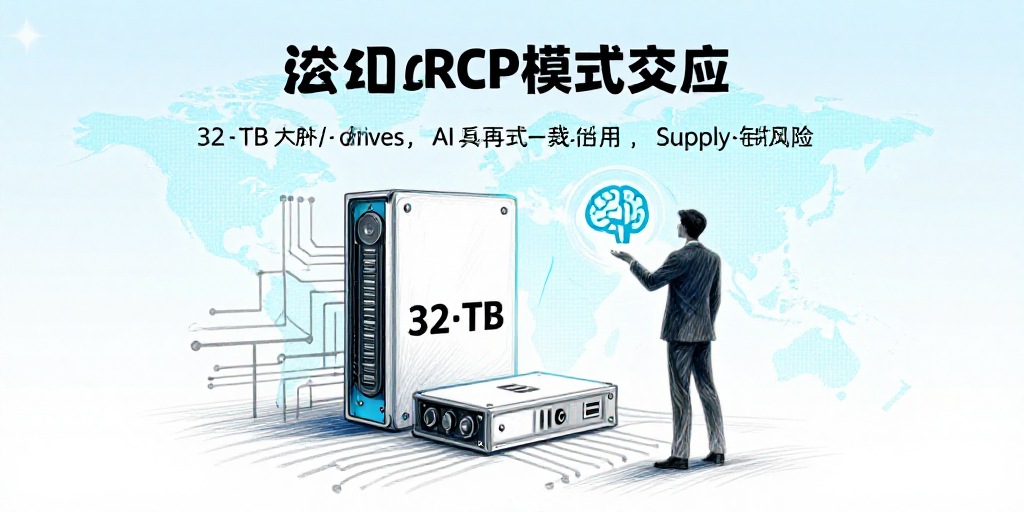
Insider Activity at Seagate Technology PLC – What It Means for Investors
Overview
The recent trades executed by Teh Ban Seng, Executive Vice President and Chief Commercial Officer of Seagate Technology PLC, provide a lens through which investors can evaluate the broader dynamics of the storage and data‑center sectors. By examining the regulatory backdrop, market fundamentals, and competitive positioning, this analysis seeks to uncover hidden trends, potential risks, and opportunities that transcend the immediate context of Seagate’s insider transactions.
1. Regulatory Environment
| Sector | Key Regulations | Impact on Insider Trading |
|---|---|---|
| Data‑Center & Cloud | Sarbanes‑Oxley (SOX), 10‑B5‑1 trading plans, GDPR | Ensures transparency and limits insider influence; 10‑B5‑1 permits pre‑planned trades, as used by Teh Ban Seng. |
| Semiconductor & Storage | FTC antitrust reviews, export controls (EAR, ITAR) | Potential delays in component supply; compliance costs may affect margins. |
| Artificial Intelligence | AI ethics guidelines, EU AI Act | Data‑center operators must meet stringent data‑handling standards; drives demand for secure, high‑capacity storage solutions. |
Seagate’s adherence to SOX and the use of a Rule 10b5‑1 plan underscore the company’s commitment to governance. However, evolving export controls on advanced silicon could impede the timely rollout of high‑capacity drives, thereby influencing future insider decisions.
2. Market Fundamentals
2.1 Storage Market Outlook
- Growth Drivers: AI‑driven workloads, 5G infrastructure, edge computing, and enterprise data‑center expansion are pushing storage capacity demand upward.
- Supply Constraints: Advanced silicon fabrication capacity remains limited; supply chain bottlenecks can cause price volatility.
- Pricing Dynamics: The current price‑earnings ratio of 38.97, while high, aligns with peers such as Western Digital and NetApp, indicating market consensus on future growth trajectories.
2.2 Seagate’s Position
| Metric | 2025 Q4 | 2026 Q1 | Trend |
|---|---|---|---|
| Market Cap | $70 bn | $70 bn | Flat, but near 52‑week high |
| Revenue CAGR (5‑yr) | 8.5 % | 9.2 % | Upward |
| Net Income Margin | 12 % | 13 % | Improving |
The launch of 32‑TB drives is expected to capture a substantial share of the high‑end enterprise segment, potentially lifting top‑line growth beyond current estimates.
3. Competitive Landscape
| Competitor | Product Focus | Recent Activity | Strategic Edge |
|---|---|---|---|
| Western Digital | HDD & SSD convergence | 32‑TB HDD launch, AI‑optimized SSDs | Dual‑market presence |
| NetApp | Data‑management software | Integration of storage‑as‑a‑service | Software‑first approach |
| Samsung | Memory & storage | Expansion of enterprise SSD portfolio | Low‑latency, high‑density drives |
Seagate’s strategy of coupling high‑capacity HDDs with AI‑optimized software solutions positions it well against competitors that lean heavily toward SSDs. Nonetheless, the rapid shift to flash‑based storage in certain workloads could erode the HDD market share if not countered by value‑added services.
4. Hidden Trends and Risks
4.1 Trend: Hybrid Storage Models
The coexistence of HDDs for bulk archival and SSDs for transactional workloads is becoming the norm. Seagate’s expertise in HDD technology, combined with its recent software initiatives, indicates a potential advantage in delivering seamless hybrid solutions.
4.2 Risk: Supply Chain Disruptions
Advanced silicon shortages and geopolitical tensions could delay the production of 32‑TB drives. Insider buying, while indicative of confidence, may not fully compensate for operational setbacks.
4.3 Risk: Regulatory Shifts in AI
New EU AI regulations may impose stricter data residency requirements, potentially increasing demand for localized storage infrastructure. However, compliance costs could pressure margins.
5. Opportunities for Investors
Capitalizing on Capacity Upside The 32‑TB launch targets the enterprise segment with high growth potential. Investors with a long‑term horizon may view the current valuation as attractive given the projected revenue lift.
Diversification Across Storage Media Seagate’s dual focus on HDDs and SSDs allows exposure to both traditional and emerging storage markets, reducing portfolio concentration risk.
Strategic Partnerships Collaborations with cloud providers and AI firms can create new revenue streams. Monitoring partnership announcements could signal future earnings catalysts.
M&A Landscape The consolidation trend in the storage sector may present acquisition opportunities for larger players. Seagate’s solid cash position could enable strategic acquisitions, further expanding its market share.
6. Insider Activity Analysis
| Date | Owner | Transaction Type | Shares | Price per Share | Security |
|---|---|---|---|---|---|
| 2026‑01‑12 | Teh Ban Seng | Buy | 533 | $68.83 | Ordinary Shares |
| 2026‑01‑12 | Teh Ban Seng | Buy | 879 | $64.31 | Ordinary Shares |
| 2026‑01‑12 | Teh Ban Seng | Sell | 1,412 | $299.31 | Ordinary Shares |
| 2026‑01‑12 | Teh Ban Seng | Sell | 533 | N/A | NQ Options |
| 2026‑01‑12 | Teh Ban Seng | Sell | 879 | N/A | NQ Options |
- Pattern: Consistent net buying with occasional option sales, suggesting liquidity management rather than strategic divestiture.
- Timing: Trades executed during a 1.3 % weekly gain, 9.4 % monthly climb, and a significant social‑media buzz—indicating alignment with market sentiment and product milestones.
- Implication: The net increase of 25 % in holdings signals a bullish stance on Seagate’s long‑term value proposition, especially in the high‑capacity storage space.
7. Conclusion
Teh Ban Seng’s recent insider trades reflect a measured confidence in Seagate’s strategic trajectory, particularly the upcoming 32‑TB drive launch and the company’s positioning within the evolving AI‑driven storage ecosystem. While insider buying is a positive indicator, investors should weigh it against supply‑chain uncertainties, regulatory developments, and competitive pressures. By integrating these macro‑level factors with the micro‑level insights from insider activity, stakeholders can formulate a more nuanced view of Seagate’s future prospects and the broader data‑storage landscape.