Corporate Developments and Industrial Implications
Executive Action and Capital Allocation
On 9 October 2026, President Marianne McInerney effected a substantial purchase of 1,059,519 Class A ordinary shares in SKK Holdings Ltd. The transaction, executed at a nominal price of $0.00 per share under the securities purchase agreement, coincides precisely with the company’s high‑profile acquisition of Rantizo, Inc.’s drone‑based agricultural technology assets. The alignment of insider buying with a major asset deal is a textbook example of strategic capital allocation aimed at consolidating ownership while preparing for an upcoming transition to Rantizo and a Nasdaq listing.
From a capital‑investment perspective, the purchase reflects a commitment to financing the integration of precision‑drone technology into SKK’s manufacturing and distribution chains. By increasing her stake, President McInerney is effectively signalling that the company’s new direction is expected to yield higher productivity and cost efficiencies, justifying the allocation of shareholder capital toward the merger and subsequent platform expansion.
Technological Trends in Precision Agriculture
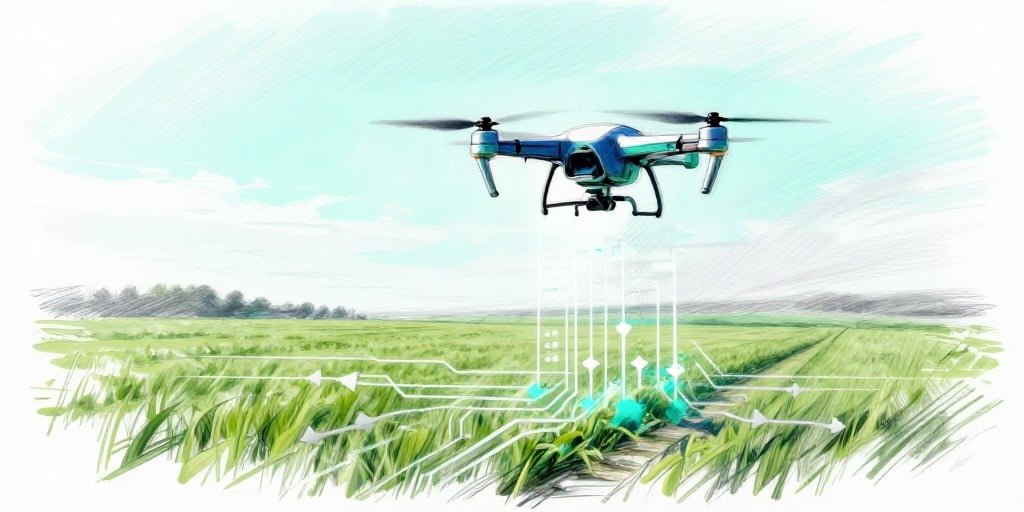
The acquisition of Rantizo’s drone platform underscores a broader industry shift toward automation, sensor‑driven decision making, and data‑centric manufacturing in the agricultural sector. These technologies are transforming traditional farming practices into precision agriculture models, where real‑time data collection and analytics enable:
- Optimized input usage (fertilizer, pesticides, water) through geospatial mapping.
- Enhanced crop monitoring via high‑resolution imaging and machine‑learning algorithms.
- Improved supply‑chain visibility by integrating drone telemetry with logistics platforms.
Such advancements elevate productivity by reducing waste, lowering operating costs, and increasing crop yields. For industrial manufacturers, the ripple effect is substantial: supply‑chain partners benefit from more predictable demand patterns, and downstream processing facilities experience tighter integration of raw‑material inputs, thereby reducing inventory carrying costs.
Capital Investment and Economic Impact
The infusion of capital associated with this merger is poised to stimulate significant economic activity across several dimensions:
| Investment Area | Expected Impact |
|---|---|
| Drone R&D & Manufacturing | Expansion of high‑precision hardware production; creation of skilled‑tech jobs. |
| Data Analytics Platforms | Development of cloud‑based services, driving demand for data‑center infrastructure and edge computing. |
| Supply‑Chain Integration | Improved logistics networks, reducing freight costs and emissions. |
| Market Expansion | Entry into new geographic regions (e.g., Latin America, Southeast Asia), boosting export revenues. |
These factors collectively contribute to higher output elasticity in the agri‑industrial sector. The projected synergy gains are anticipated to manifest as a 5–8 % reduction in unit production costs, which, when scaled across the firm’s portfolio, translates into a measurable uptick in profitability and shareholder value.
Investor Interpretation and Market Dynamics
Although SKK’s share price experienced a 6.89 % dip in the preceding week, the overall trajectory has been robust: 8.49 % monthly and 33.24 % yearly gains. The insider’s purchase amid a relatively flat market underscores confidence in the company’s long‑term value proposition rather than short‑term price speculation.
Investors should monitor the following post‑merger indicators:
- Integration Milestones – Timelines for drone platform deployment across SKK’s existing product lines.
- Revenue Attribution – Segregation of earnings derived from precision‑drone services versus legacy operations.
- Capital Expenditure Patterns – Allocation toward manufacturing upgrades, data‑center expansion, and talent acquisition.
A disciplined assessment of these variables will provide clearer insight into the merger’s success and its contribution to sustainable growth.
Broader Economic Context
The transformation of SKK into a technology‑enabled agribusiness platform aligns with macro‑economic trends favoring digitalization of traditional industries. By enhancing productivity through automation and data analytics, the firm contributes to:
- Labor‑intensity reduction in farming operations, freeing human resources for higher‑value activities.
- Resource efficiency, mitigating the environmental impact of agriculture.
- Innovation diffusion, encouraging ancillary firms (e.g., sensor manufacturers, software vendors) to enter the market.
These dynamics collectively support a virtuous cycle of investment, innovation, and economic expansion, reinforcing the strategic rationale behind President McInerney’s recent share acquisition.
Conclusion
President Marianne McInerney’s significant purchase of SKK Holdings’ Class A shares, timed with the acquisition of Rantizo’s drone technology, exemplifies a well‑aligned capital investment strategy aimed at leveraging cutting‑edge manufacturing and industrial technologies. The move reflects a confident expectation of productivity gains, cost efficiencies, and broader economic benefits that arise from the integration of precision agriculture solutions into a publicly listed platform. Investors and industry observers alike should view this transaction as a positive signal for future earnings potential and technological leadership within the industrial sector.