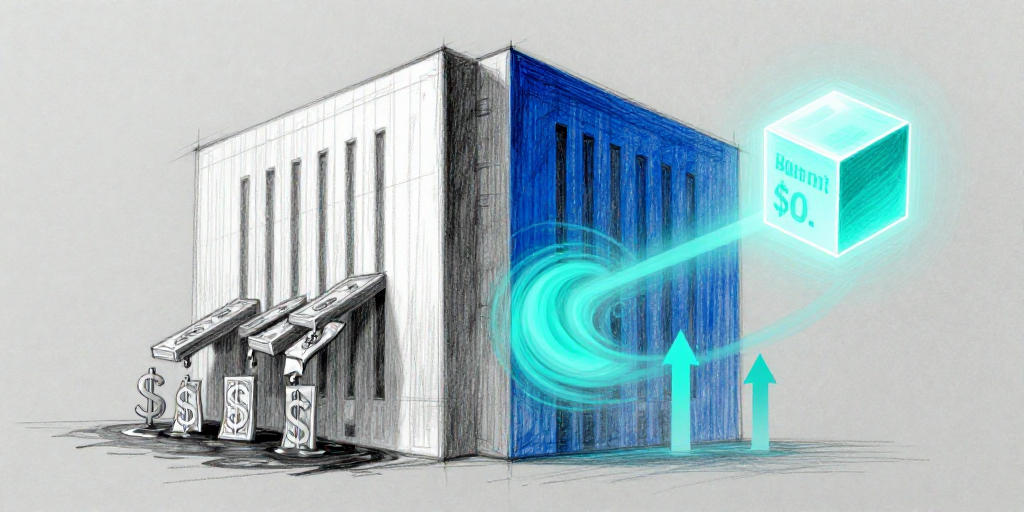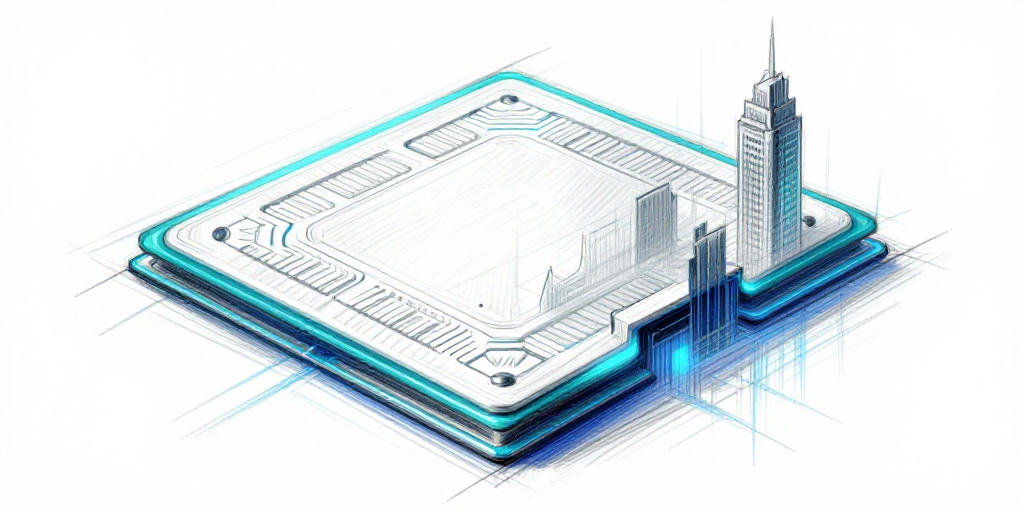
Insider Activity Signals Confidence in SkyWater’s Growth Path
The most recent Form 4 filing reveals that SkyWater’s chief executive, Thomas Sonderman, received 50 455 restricted‑stock units (RSUs) on March 15, 2026. Although the grant is “at no cost” to the company, the RSUs will vest over a three‑year period, thereby aligning the CEO’s personal incentives with the long‑term interests of shareholders. In a market where the stock has slipped 3.96 % during the week but remains up 238 % year‑to‑date, this move underscores a belief that SkyWater’s custom‑chip manufacturing platform will continue to attract demand.
What This Means for Investors
Sonderman’s historical insider transactions paint the picture of a cautious yet optimistic leader. Over the past eighteen months, he has sold approximately 50 000 shares, typically at market‑price levels that suggest an intent to liquidate cash or rebalance personal portfolios. The recent RSU grant, coupled with a modest 0.01 % decline in share price at the time of the transaction, signals that insiders remain willing to invest in the company’s future rather than exit early. For investors, this can be interpreted as a vote of confidence: the CEO believes SkyWater’s technology pipeline and market positioning will drive share price appreciation over the next three‑year vesting period.
Insider Profile
Thomas Sonderman has consistently balanced share sales with equity grants. His most recent sale on February 17 involved 5 767 shares traded at $28.77, while earlier sales in September and August of 2025 involved larger volumes (up to 24 936 shares). The pattern—selling a modest amount when the stock is near $30 and acquiring RSUs that vest over time—suggests a strategy aimed at maintaining liquidity while staying invested. The current grant of 50 455 RSUs represents the largest single equity allocation in his filing history and is the first RSU issuance in the past year, indicating a renewed emphasis on long‑term commitment.
Company‑Wide Insider Momentum
On March 15, several senior executives—CFO Steve Manko, COO John Sakamoto, and risk officer Christopher Hilberg—also acquired RSUs in a similar “no‑cost” fashion. The collective buying spree reflects a broader executive confidence in SkyWater’s strategic direction. Market analysts note that such synchronized equity grants often precede product launches or milestone achievements, and the company’s recent focus on expanding its advanced packaging capabilities could be a trigger.
Strategic Outlook
SkyWater’s FY 2026 performance has already delivered a 238 % year‑to‑year gain, driven by demand for custom silicon in AI and automotive sectors. The CEO’s RSU grant, together with the broader insider buying, signals that management expects continued upside, particularly as the company scales its manufacturing capacity and secures new long‑term customer contracts. For shareholders, the insider activity provides a tangible indicator that the top leadership’s incentives are aligned with maximizing shareholder value, making SkyWater an attractive option for those looking to back a high‑growth chip‑design and manufacturing specialist.
| Date | Owner | Transaction Type | Shares | Price per Share | Security |
|---|---|---|---|---|---|
| 2026‑03‑15 | SONDERMAN THOMAS (CEO) | Buy | 50 455.00 | N/A | Common Stock |
Expert Analysis: Semiconductor Technology, Manufacturing, and Market Trends
Production Challenges and Yield Management
The semiconductor industry continues to wrestle with escalating fabrication complexity as nodes shrink below 5 nm. SkyWater’s decision to focus on the 28 nm and 22 nm nodes, combined with advanced packaging techniques such as 2‑inch and 4‑inch fan‑out wafer‑level packaging, represents a strategic balance between technology maturity and market demand. While finer nodes promise higher transistor density, they also bring higher defect rates and longer development cycles. By leveraging mature nodes, SkyWater can maintain higher yields and faster time‑to‑market, a critical advantage for custom silicon projects that often require rapid prototyping.
Node Progression and Custom‑Chip Viability
SkyWater’s recent investment in a 12‑inch 7 nm pilot line illustrates the company’s intent to broaden its capability set. However, the economics of 7 nm and below nodes are heavily skewed toward large‑volume fabs operated by global leaders with massive capital expenditures. For a fab that serves niche markets—such as automotive safety, edge AI, and industrial IoT—maintaining a diversified node portfolio ensures resilience against supply‑chain disruptions and geopolitical uncertainties. Moreover, the continued demand for 28 nm–based silicon in automotive radar and sensor fusion indicates that custom‑chip manufacturing remains profitable even without the most advanced nodes.
Market Dynamics and Customer Segmentation
The custom‑chip market is driven primarily by three segments: automotive, consumer electronics, and industrial/edge applications. AI workloads, particularly in autonomous driving and infotainment, are the most resource‑hungry, necessitating bespoke silicon that balances power efficiency with performance. SkyWater’s focus on advanced packaging—especially silicon‑on‑insulator (SOI) wafers and through‑silicon vias (TSVs)—enables tighter integration of analog and digital blocks, critical for automotive safety and low‑latency AI inference.
In addition, regulatory pressures related to supply‑chain provenance and cybersecurity have accelerated the shift toward domestic fabrication capabilities. SkyWater’s U.S.-based facility, coupled with its partnership with the Department of Defense’s Advanced Manufacturing Program, positions the company advantageously within this trend. Investors increasingly value “inside‑the‑borderline” fabs that can assure end‑to‑end traceability for defense and critical infrastructure customers.
Long‑Term Trends: AI, 5G, and Automotive Electrification
The next decade will see an acceleration in AI inference workloads at the edge, driven by 5G and automotive electrification. Custom silicon solutions that can deliver high throughput at low power will be essential. SkyWater’s expansion into advanced packaging and potential future investment in 3 nm or 2.5 nm nodes could capture a share of this high‑margin market. However, the transition to sub‑5 nm nodes will also require deeper expertise in lithography, EUV, and defect inspection—areas where SkyWater currently leverages external partnerships.
Conclusion
SkyWater’s insider activity, particularly the CEO’s RSU grant, signals an alignment of management incentives with a strategic path that balances mature node manufacturing, advanced packaging, and niche‑market focus. From a technical perspective, the company’s emphasis on yield management and node diversification positions it to weather the volatile landscape of semiconductor manufacturing. For investors, the insider confidence, combined with robust demand in AI, automotive, and industrial sectors, suggests that SkyWater may continue to deliver value over the coming years, provided it successfully navigates the challenges inherent in scaling custom‑chip production.