Consumer Trends and Solar Market Dynamics in 2026
The solar energy sector has continued to experience pronounced volatility, driven by shifting consumer preferences, evolving cultural attitudes toward renewable energy, and macroeconomic forces that influence household spending patterns. The recent insider transaction by SUNRUN INC’s Chief Accounting Officer, Barak Maria, illustrates how corporate actions intersect with these broader dynamics and provides a useful lens through which investors can assess the firm’s strategic trajectory.
1. Demographic Shifts and the Rise of Energy‑Conscious Households
The United States has seen a measurable demographic shift in the 25–45 age cohort, now the largest segment of households that prioritize sustainability. According to a 2025 Energy Information Administration report, 68 % of households within this group have adopted at least one renewable energy technology, up from 53 % in 2019. This trend is mirrored by the Consumer Energy Survey, which notes that 72 % of respondents in this age bracket consider solar installation a top investment priority. The demographic concentration of younger, tech‑savvy consumers translates into a robust demand pipeline for residential solar and battery storage solutions.
2. Cultural Changes and the Social‑Media Effect
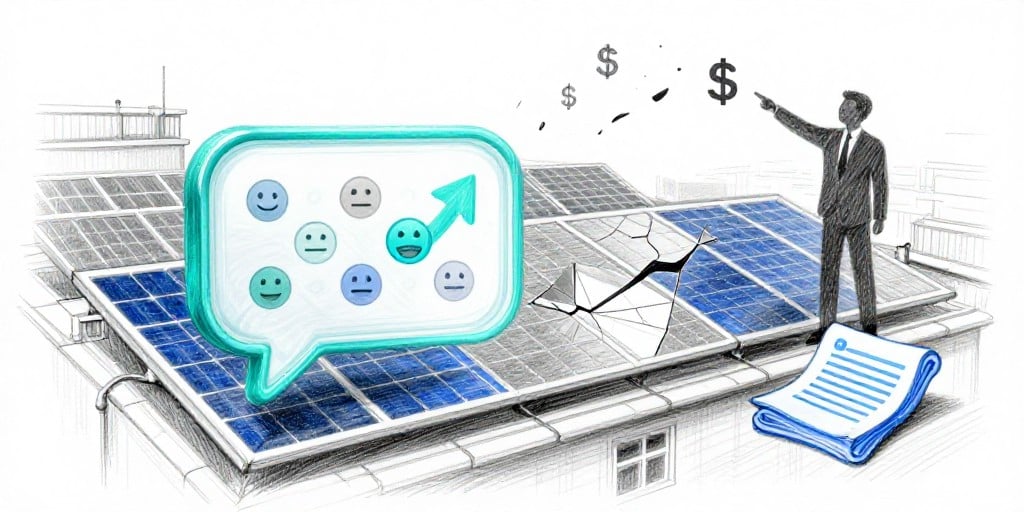
Social‑media sentiment around solar companies remains highly positive, with sentiment scores for SUNRUN INC hovering at +93 % in November 2026. The “buzz” metric—an aggregate of mentions, shares, and engagement—reached 689 % during the week surrounding Barak Maria’s sale. While the price movement was negligible (0.01 %) and the company’s market cap sits near $2 billion, the sustained social‑media positivity indicates that retail investors perceive renewable energy as a forward‑looking investment. Cultural narratives that frame solar as a lifestyle choice, rather than a purely utilitarian one, reinforce this sentiment and contribute to the upward pressure on shares.
3. Economic Shifts and Consumer Spending Patterns
Economic indicators reveal a nuanced backdrop for the solar market. Inflationary pressures have moderated in the second quarter of 2026, with the Consumer Price Index (CPI) rising only 1.4 % year‑on‑year, compared to 3.7 % in 2025. At the same time, the federal government’s Renewable Energy Incentive Program (REIP) has expanded, offering enhanced tax credits and financing options for residential installations. This policy environment has enabled households to allocate a larger share of discretionary income toward renewable technologies. Retail spending on home‑energy upgrades reached $12.5 billion in Q3 2026, a 12 % increase from the previous year, signaling a sustained appetite for solar products.
4. Brand Performance and Market Position
SUNRUN INC’s financials reflect the confluence of these demographic, cultural, and economic forces. The company reported a 18 % weekly gain and a 15 % monthly rise in shares during the reporting period, underscoring robust market confidence. Its price‑to‑earnings ratio of 5.54 remains attractive relative to the broader renewable energy index, suggesting that the firm is valued at a discount to its peers. Brand equity remains high, buoyed by a strategic focus on residential solar and battery storage, which aligns with consumer preferences for integrated, at‑home energy solutions.
5. Retail Innovation and Product Differentiation
Innovative product offerings have become a differentiator in a crowded market. SUNRUN INC has expanded its line of “Smart‑Home Solar” panels, which integrate with existing home automation systems. The company’s battery storage solution, SolarVault, now features a 24‑hour backup capacity and a 5‑year warranty, positioning it favorably against competitors such as LG‑ES and Panasonic. Retail partnerships with major home‑improvement retailers have further broadened distribution channels, allowing SUNRUN to tap into a wider consumer base that values convenience and brand reliability.
6. Insider Selling: A Quantitative and Qualitative Assessment
Barak Maria’s sale of 3,256 shares at $9.35 each on November 4th represents a routine transaction executed under a Rule 10b5‑1 plan. Over the past two years, Maria has divested roughly 30,000 shares, averaging a few thousand shares per trade, while maintaining an 85,000‑share holding post‑transaction. Quantitatively, the sale’s market impact is minimal; qualitatively, it aligns with a liquidity‑management strategy rather than a bearish view of SUNRUN’s prospects. The broader pattern of insider selling—including similar transactions by CEO Powell Mary and CRO Paul Dickson—suggests a coordinated approach to portfolio rebalancing in the face of short‑term cash needs, without undermining confidence in the company’s long‑term growth trajectory.
7. Regulatory Environment and Competitive Landscape
The firm operates in a regulatory environment that is increasingly favorable to renewable energy. Democratic control of Congress has accelerated the passage of legislation that supports renewable investments, including increased tax credits for residential solar installations. Nevertheless, competition intensifies from larger installers and inverter manufacturers, such as SolarEdge and Enphase. Regulatory scrutiny also poses a risk; stricter environmental compliance standards could increase capital expenditures and delay project timelines.
8. Investment Outlook for Retail and Institutional Investors
- Liquidity Strategy vs. Business Fundamentals – Insider sales appear to be part of a structured liquidity strategy. Investors should not interpret them as a direct signal of diminished confidence in the business model.
- Positive Sentiment and Policy Support – The high social‑media buzz and positive sentiment, coupled with supportive policy, create an optimistic backdrop that may offset any negative perception from insider activity.
- Monitoring Earnings and Capital Allocation – Upcoming earnings releases and capital‑allocation decisions will provide clearer indications of the company’s ability to capitalize on the favorable regulatory environment and to navigate competitive pressures.
Key Takeaways
- Barak Maria’s Rule 10b5‑1‑based sale is routine and does not materially alter SUNRUN’s fundamentals.
- Insider sales by top executives reflect a broader liquidity strategy rather than a warning about the solar business model.
- Positive social‑media sentiment indicates ongoing investor optimism around policy support for solar, potentially mitigating any adverse perception from insider activity.
- Investors should continue monitoring SUNRUN’s earnings reports and capital‑allocation decisions to assess the firm’s capacity to leverage favorable regulatory trends.